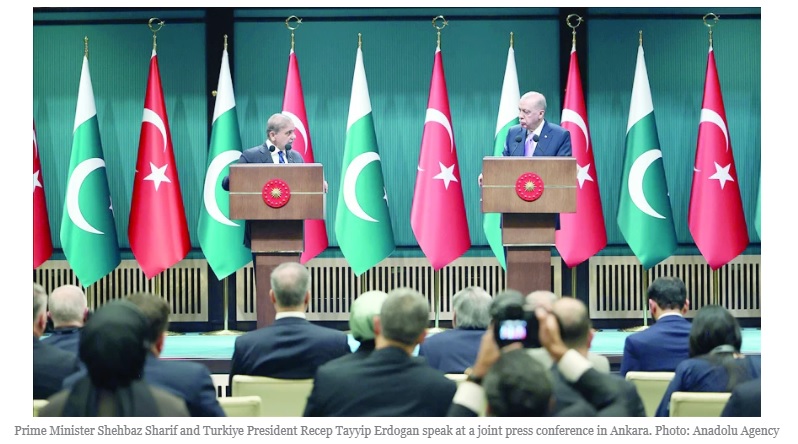
The Pahalgam terror attack in Jammu and Kashmir on April 22, 2025, escalated tensions between India and Pakistan, drawing international attention to Turkey-Pakistan relations.
Turkish President Recep Tayyip Erdoğan hosted Pakistani Prime Minister Shehbaz Sharif in Ankara shortly after the attack, where Erdoğan reiterated Turkey’s “unwavering support” for Pakistan, particularly on the Kashmir issue.
The meeting, part of the High-Level Strategic Cooperation Council (HLSCC) established in 2009, emphasized deepening defense, trade, and strategic ties. Erdoğan called for de-escalation but framed Pakistan as a victim of regional instability, aligning with Islamabad’s narrative.
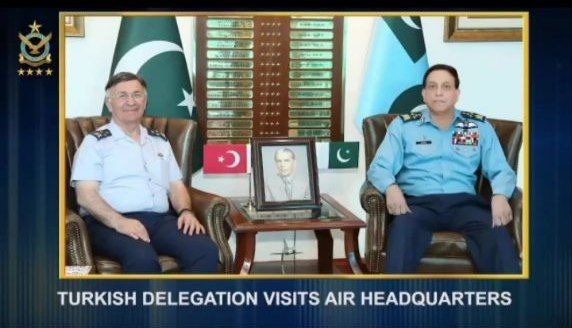
Further, on April 30, 2025, a high-level Turkish military delegation, led by Lt. Gen. Yasar Kadioglu, met with Pakistan Air Force officials, sparking speculation about enhanced defense collaboration amid the crisis.
These engagements signify Turkey’s role as a steadfast ally, with 24 agreements signed in 2025 covering trade, defense, and strategic cooperation.
The diplomatic flurry signals Turkey’s intent to bolster Pakistan’s position against India, particularly in the context of Kashmir, where Turkey has consistently supported Pakistan at forums like the United Nations.
Alleged Arms Shipments from Turkey to Pakistan
Reports of Turkish arms shipments to Pakistan surfaced post-Pahalgam, with social media and Indian outlets citing the landing of a Turkish C-130E Hercules aircraft in Karachi on April 28, 2025, allegedly carrying military equipment.
Some sources claimed multiple aircraft deliveries, fueling speculation of urgent arms transfers. However, Turkey’s Presidency’s Directorate of Communications denied these claims, stating the aircraft was only refueling.
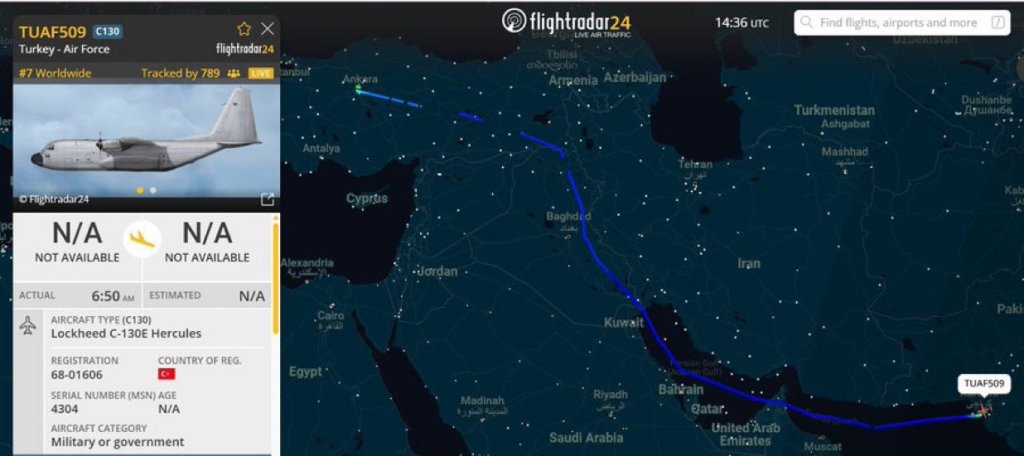
Turkey and Pakistan have a robust defense industry relationship. This military cargo plane flight has occurred yesterday.
Despite official denials, Turkey’s role as Pakistan’s second-largest arms supplier after China is well-documented. Between 2020 and 2024, 10% of Turkey’s arms exports went to Pakistan, including Bayraktar Akinci drones, T-37 aircraft, and corvettes for the Pakistani Navy.
Turkey and Pakistan are also collaborating on advanced projects, such as the co-production of the KAAN fifth-generation fighter jet and a joint helicopter design.
These ties, formalized through agreements in 2021, reflect a strategic shift as Western arms exports to Pakistan declined, positioning Turkey as a critical supplier. The lack of transparency in recent shipments, combined with Turkey’s history of supplying combat-proven weapons, raises concerns in New Delhi about Pakistan’s enhanced military capabilities.
Turkey’s Domestic Issues: Protests and Instability
Turkey faces significant domestic challenges that shape its foreign policy assertiveness.
In 2025, protests have surged due to economic stagnation, high inflation (reportedly exceeding 50% in early 2025), and dissatisfaction with Erdoğan’s authoritarian governance.
These protests, centered in cities like Istanbul and Ankara, have been met with heavy-handed police responses, further polarizing society. The Kurdish issue remains a flashpoint, with the outlawed Kurdistan Workers’ Party (PKK) conducting sporadic attacks, prompting military operations in southeastern Turkey and northern Syria.

Erdoğan’s promotion of political Islam and consolidation of power—evident in media crackdowns and judicial purges—has alienated secular and liberal segments of the population.
These domestic pressures incentivize Erdoğan to project strength abroad, particularly through alliances with Muslim-majority nations like Pakistan, to bolster his image as a leader of the Islamic world. However, Turkey’s economic constraints limit its ability to sustain large-scale military support, potentially tempering its commitments to Pakistan.
Turkey’s Bilateral Ties with India
Turkey-India relations have deteriorated significantly, primarily due to Turkey’s vocal support for Pakistan on Kashmir and its strategic alignment with Islamabad.
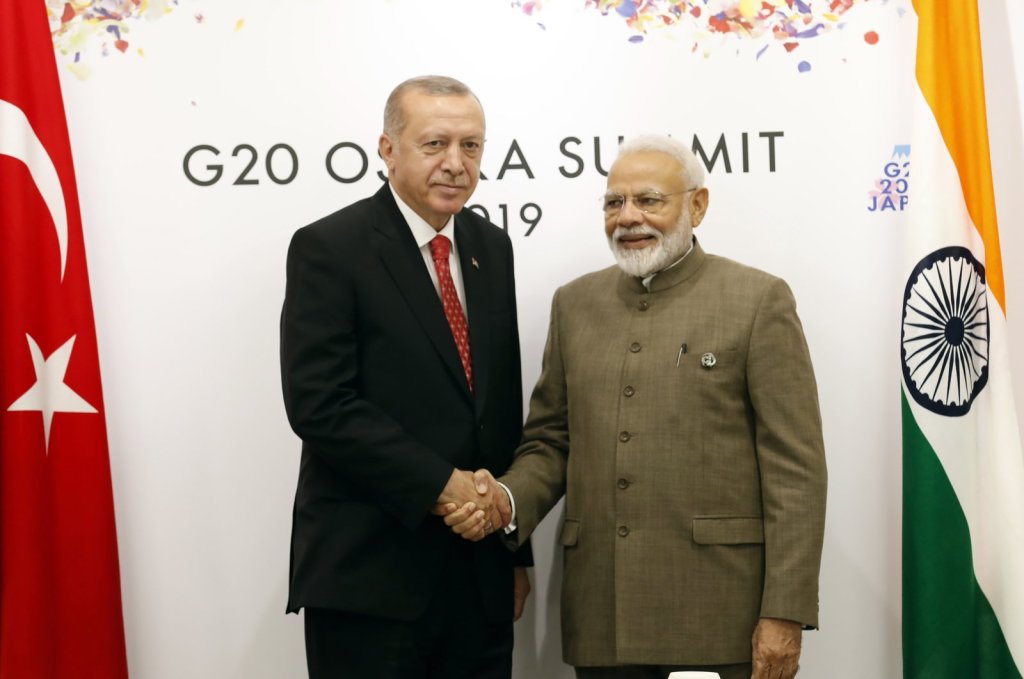
Turkey’s President Recep Tayyip Erdoğan, shakes hands with India’s Prime Minister Narendra Modi, prior to their meeting on the sidelines of the G-20 summit in Osaka, Japan, Saturday, June 29, 2019. (Presidential Press Service via AP, Pool)
In 2020, Erdoğan’s remarks at the UN General Assembly criticizing India’s abrogation of Article 370 prompted India to summon the Turkish ambassador in protest. India retaliated by canceling a $2.5 billion naval shipbuilding deal with a Turkish firm in 2023 and halting defense exports to Turkey.
In 2024, Turkey reportedly imposed a de facto ban on arms exports to India, further straining ties.
Despite economic ties valued at $10 billion in 2023, with India maintaining a trade surplus, political and strategic divergences overshadow cooperation.
India’s strengthening ties with Turkey’s adversaries, such as Armenia, Greece, and Cyprus, reflect a tit-for-tat strategy in response to Turkey’s pro-Pakistan stance. Prime Minister Narendra Modi’s absence of bilateral visits to Turkey, except for the 2015 G20 summit, underscores the frosty relationship.
Meanwhile, in the wake of the devastating 7.8-magnitude earthquake that struck Turkey and Syria in February 2023, India launched “Operation Dost”—a comprehensive humanitarian mission underscoring not just India’s technical capabilities but also its evolving role as a responsible global actor. Beyond emergency relief, the operation represents a calculated blend of humanitarianism and strategic diplomacy.

The Indian Army medical team before being airlifted to Turkey by the IAF, 7 February 2023.
Turkey’s Funding of Indian NGOs: Mechanisms, Data, and Implications
While concrete, verifiable data on Turkish funding to Indian NGOs is limited due to restricted transparency and the sensitive nature of such activities, available reports, government statements, and analyses provide insights into the mechanisms, scale, and implications of these activities.
Turkey is alleged to channel funds to Indian NGOs through a combination of state-sponsored and non-governmental entities, often under the guise of humanitarian aid, religious charity, or cultural exchange programs. Key mechanisms include:
- State-Controlled Agencies:
- The Turkish Cooperation and Coordination Agency (TİKA) is frequently cited as a primary vehicle for funding. TİKA operates globally to promote Turkey’s soft power, often through development projects, but Indian security reports allege it supports NGOs engaged in anti-India activities, particularly in Jammu and Kashmir.
- The Yunus Emre Institute (YEI), focused on cultural diplomacy, is accused of facilitating funds to NGOs that align with Turkey’s Islamist agenda, including those promoting narratives critical of India’s policies in Kashmir.
2. Turkish NGOs and Religious Foundations: The International Humanitarian Relief Foundation (IHH), a Turkish NGO with alleged ties to radical groups, is reported to provide funding to Indian NGOs, often framed as Zakat (Islamic charity) payments during Ramadan. These funds are suspected to support organizations linked to separatist or radical elements.
3. The Turkey Youth Foundation (TUGVA), led by President Recep Tayyip Erdoğan’s son Bilal, is alleged to have links with Islamic outfits in India, such as the Student Islamic Organisation (SIO) and Jamaat-e-Islami Hind, channeling funds to NGOs under the pretext of educational or social welfare programs.The Diyanet Foundation (TDF), Turkey’s religious affairs directorate, is implicated in funding NGOs that promote political Islam, aligning with Erdoğan’s neo-Ottoman vision.
4. Turkey reportedly uses scholarships to lure Indian Muslim students, particularly from Kashmir, to study in Turkish universities. These programs, facilitated by organizations like the Presidency of Turks Abroad and Related Communities (YTB), are alleged to serve as recruitment grounds for anti-India activities, with students being connected to Pakistani proxies in Turkey.
For example, Ghalib Guru, son of convicted terrorist Afzal Guru, and Ruwa Shah, granddaughter of separatist leader Syed Ali Shah Geelani, reportedly received scholarships to study in Turkey, raising concerns about targeted funding to radical elements.
5. Turkey is accused of working with Pakistan’s Inter-Services Intelligence (ISI) to fund NGOs in India. A 2022 X post claimed that the Popular Front of India (PFI), a banned organization, received Rs 100 crore from Turkey’s National Intelligence Organization (MIT) through ISI intermediaries, though this lacks independent verification.
6. Funds are allegedly routed through informal channels like hawala (a traditional money transfer system) or front organizations in third countries to bypass FCRA regulations.
These transactions are difficult to trace, contributing to the lack of transparent data.
Policy Recommendations for the Indian Government
To counter Turkey’s alignment with Pakistan and its interference, India should adopt a multifaceted strategy:
- Strengthen Counter-Alliances: Deepen strategic partnerships with Turkey’s adversaries, such as Armenia, Greece, and Cyprus, through defense cooperation and economic investments. India’s arms exports to Armenia and joint naval exercises with Greece signal this approach but require scaling up.
- Diplomatic Messaging: Leverage India’s global influence to isolate Turkey diplomatically on Kashmir. Engaging BRICS and G20 partners to counter Turkey’s narratives can limit its international clout.
- Cyber Defense: Enhance cybersecurity to counter Turkey-Pakistan digital operations. Investing in AI-driven threat detection and public awareness campaigns can mitigate disinformation.
- Economic Leverage: Use India’s trade surplus with Turkey to negotiate concessions, such as reduced interference in Kashmir, while diversifying trade partners to reduce dependency.
- Regional Engagement: Strengthen ties with moderate Islamic nations like Saudi Arabia and the UAE, which have mediated India-Pakistan tensions, to counterbalance Turkey’s influence in the Muslim world.
Turkey’s Pursuit of BRICS Membership
Turkey’s application for BRICS membership, submitted in 2024, reflects its ambition to diversify alliances amid strained ties with the West.
Excluded from the EU and expelled from the F-35 program, Turkey seeks BRICS as a platform to enhance its global economic and political influence. Membership would provide access to the New Development Bank, offering an alternative to Western financial institutions, and align Turkey with emerging economies like China and Russia.
Turkey’s vocal support for Pakistan’s BRICS bid, despite India’s veto, reveals its strategic alignment with Islamabad.
However, India’s insistence on consensus-based expansion, rooted in its rivalry with Pakistan, complicates Turkey’s prospects.
Turkey’s pursuit of BRICS reflects a broader shift toward a “non-West” geopolitical stance, balancing its NATO membership with partnerships in the Global South.
Turkey’s Gains from Supporting Pakistan and China
Turkey’s support for Pakistan and China yields several strategic benefits:
- Regional Influence: Backing Pakistan on Kashmir and supplying arms enhances Turkey’s stature as a leader of the Islamic world, aligning with Erdoğan’s neo-Ottoman ambitions.
- Defense Market Expansion: Pakistan serves as a key market for Turkey’s burgeoning arms industry, with deals like the KAAN jet and corvettes boosting economic and strategic ties.
- Access to Chinese Technology: Through Pakistan’s military cooperation with China, Turkey gains indirect access to advanced technologies, such as those used in JF-17 aircraft.
- Geopolitical Leverage: Aligning with China and Pakistan counters Western pressure on Turkey, particularly over human rights and Syria, while strengthening its role in regional forums like the OIC.
- Cyber and Narrative Control: Joint cyber initiatives with Pakistan amplify Turkey’s ability to shape narratives in South Asia, targeting India and Western critics.
Turkey-Pakistan relations have deepened into a strategic alliance, driven by shared geopolitical goals and mutual support on contentious issues like Kashmir.
The Pahalgam attack has spotlighted Turkey’s diplomatic and alleged military backing of Pakistan, straining its already fraught ties with India. Turkey’s domestic challenges and BRICS ambitions further complicate its foreign policy, as it balances regional aspirations with economic constraints.
For India, countering Turkey’s interference requires a blend of diplomatic, economic, and strategic measures to safeguard its interests in an increasingly polarized South Asia.
Turkey’s alignment with Pakistan and China underscores a broader realignment in global politics, with implications for regional stability and India’s security architecture.
Public Statement: On Recent Correspondence from the Students Islamic Organisation of India (SIO)
Dated: 29th May 2025
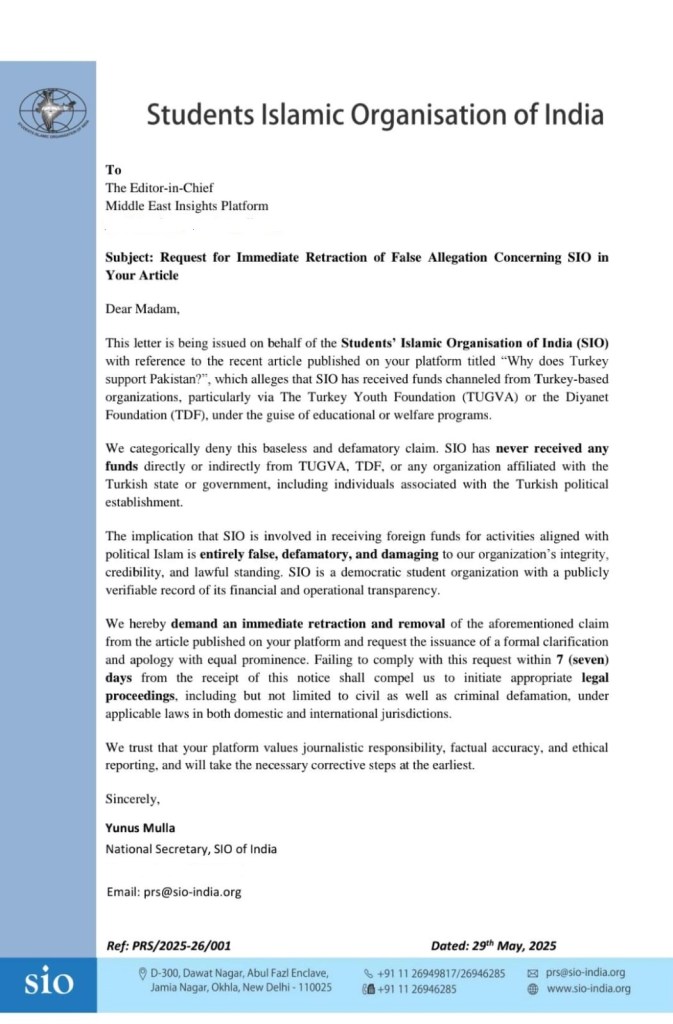
We have received formal communication from Mr. Yunus Mulla, National Secretary of the Students Islamic Organisation of India (SIO), in response to an article published on our platform exploring the dynamics of foreign influence in South Asia. The article referenced publicly available reports, including those from HinduPost, on the alleged links between Turkey-based organizations and some Indian entities, including SIO.
Link of the Source Article: https://hindupost.in/terrorism/designated-turkish-terrorist-organisation-and-sponsor-of-pfi-tries-scare-tactics-on-organiser-magazine/#
We wish to clarify that the article was published in good faith, as part of a wider academic and journalistic inquiry.
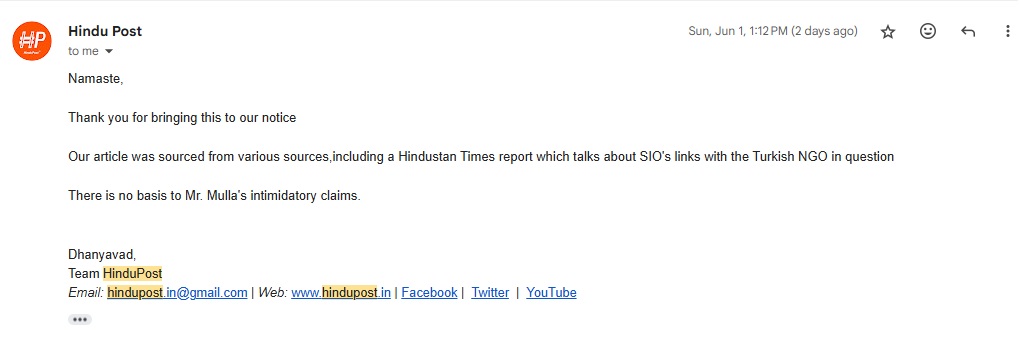
Response from Hindu Post
As with all our content, the piece aimed to stimulate informed debate and further research.
We categorically reject such tactics.
We believe that academic platforms and public dialogue spaces should never be coerced into silence, especially through intimidation. Our responsibility is to uphold the integrity of our contributors, our editorial standards, and the right to critically examine all actors—state or non-state, political or ideological—through rigorous analysis and journalistic scrutiny.
To be clear, the Hindu Post has since clarified that their report was based on multiple credible sources, including a Hindustan Times article. They have also confirmed that there was no merit to Mr. Mulla’s claims of defamation and dismissed his attempts as baseless and intimidatory.
We have not received any follow-up communication from SIO or Jamaat that either addresses the concerns raised in our article or offers any factual correction.
In the absence of meaningful engagement, and in the face of attempts to threaten or discredit us, we reaffirm our editorial independence.
At Middle East Insights, we will continue to publish evidence-based, ethically grounded content that encourages open debate without fear or favour. The causes of justice, democracy, and human dignity deserve better than intimidation—and we stand firm in that belief.
—
Editorial Board
Middle East Insights Platform
We respect the right of any organization to respond as emailed to them, by June 6, 2025, and we remain open to reviewing evidence-based clarifications. As no response has been received by June 8, 2025, we would take actions against the blackmail and threatening behaviour.
As the letter openly states that SIO is a democratic student organization with a publicly verifiable record of its financial and operational transparency, there should be no issue in refuting the claim, if considered defamatory. Nevertheless, they did not respond.
Should SIO wish to submit verifiable documentation to correct or expand upon the article’s claims, we are committed to publishing a follow-up or clarification accordingly.
We remain firmly committed to editorial independence, responsible journalism, and the principles of transparency and academic freedom.
However, it should be noted that sending threatening communication without substantiated counter-evidence could be construed as harassment and an attempt to pressure independent editorial review.



Leave a comment