China’s relationship with Pakistan, often described as an “all-weather strategic partnership,” is a cornerstone of its South Asian geopolitical strategy.
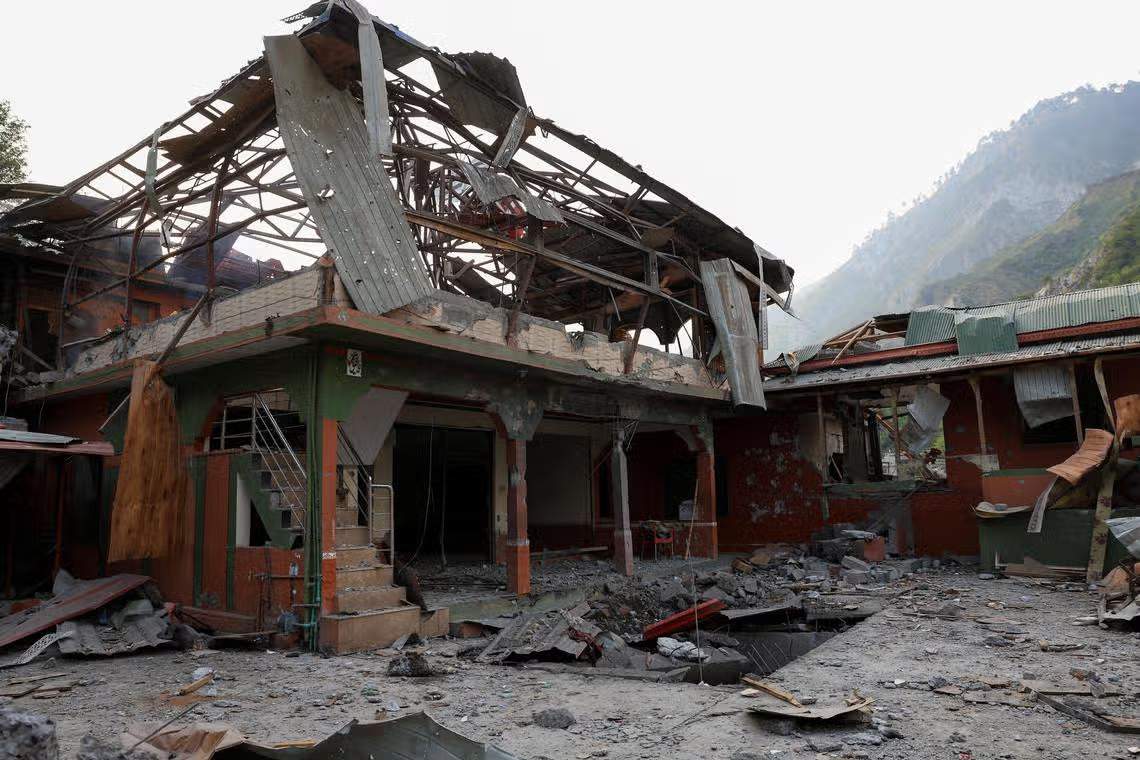
This partnership has been particularly evident in the context of Pakistan’s tensions with India, especially following India’s “Operation Sindoor” on May 7, 2025, which targeted alleged terrorist infrastructure in Pakistan and Pakistan-occupied Kashmir.

Why China Supports Pakistan
China’s support for Pakistan is driven by a combination of strategic, economic, and geopolitical interests, many of which are rooted in countering India and securing regional influence.
- Counterbalancing India: China views India as a long-term strategic rival, particularly due to their disputed 3,800-km Himalayan border and India’s growing alignment with the United States. Supporting Pakistan, India’s primary regional adversary, serves as a means to keep India preoccupied and limit its regional dominance. Historically, this strategy solidified after the 1962 Sino-Indian War, with Pakistan aligning with China on issues like Taiwan, Xinjiang, and Tibet.
- China-Pakistan Economic Corridor (CPEC): The CPEC, a $62 billion flagship project of China’s Belt and Road Initiative, is a critical economic driver for China’s support. It provides China access to the Arabian Sea via Pakistan’s Gwadar Port, bypassing the Malacca Strait and enhancing energy security. Any instability in Pakistan, such as a full-scale war with India, threatens this investment, incentivizing China to bolster Pakistan’s stability.
- Geopolitical Leverage: Pakistan serves as a conduit for China’s influence in the Muslim world and a strategic ally against Western influence. By supporting Pakistan, China gains a loyal partner in international forums and a proxy to counterbalance U.S.-India ties, especially as India has deepened military cooperation with the U.S., France, and Israel.
- Security in Xinjiang: Pakistan’s proximity to China’s Xinjiang region, where China faces concerns over Uyghur separatism, makes its stability vital. Pakistan’s cooperation in curbing militancy that could spill into Xinjiang is a key factor in China’s support.
- Historical Ties: Since 1951, China and Pakistan have built a robust relationship, with Pakistan recognizing the People’s Republic of China early and facilitating the 1972 Nixon visit. This history, coupled with shared hostility toward India, has cemented their alliance.
Extent of China’s Participation in an India-Pakistan War
While China’s support for Pakistan is substantial, its participation in an India-Pakistan war is likely to remain indirect and limited to avoid broader escalation, particularly given its own strategic priorities and economic considerations.
- Avoidance of Direct Military Involvement: China is unlikely to engage directly in an India-Pakistan war unless its own territory or critical interests (e.g., CPEC assets) are threatened. Analysts suggest China prioritizes stability near its western border and CPEC zones, preferring diplomatic, technological, or intelligence support over military intervention. For instance, during the 1965 Indo-Pak War, China issued ultimatums to India but avoided direct involvement due to Soviet and U.S. pressures.
- Intelligence and Cyber Support: China may enhance Pakistan’s capabilities through intelligence sharing, satellite surveillance, and cyberattacks against India. China could supply surveillance gear and cyber capabilities to escalate tensions indirectly. Additionally, Chinese fishing vessels, suspected of intelligence-gathering, were spotted near Indian naval drills in May 2025, indicating covert support.
- Diplomatic Backing: China has consistently urged restraint in the current conflict while subtly supporting Pakistan. On April 27, 2025, Foreign Minister Wang Yi expressed support for Pakistan’s security concerns, and Beijing backed calls for an independent probe into the Pahalgam attack. However, China’s public stance emphasizes de-escalation to avoid alienating India, a significant market in a “Trumpian world of high tariffs.”
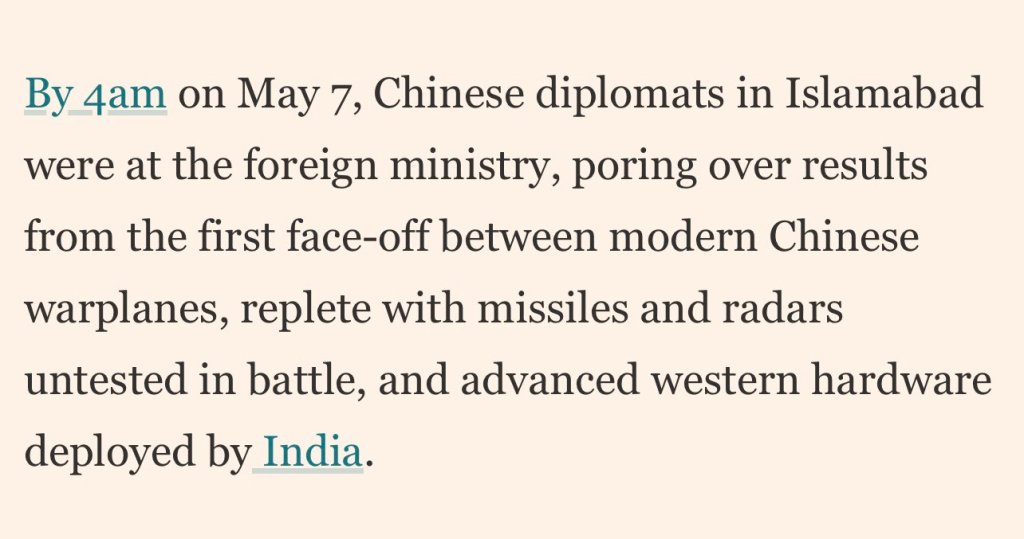
- Limited Escalation for Weapons Testing: Some experts speculate China may tolerate controlled escalation to test its advanced weaponry, such as the J-10C fighter jet, in real combat against Western hardware like India’s Rafale jets. This aligns with China’s interest in assessing its military technology, given it hasn’t fought a major war in decades.
- Nuclear Posture: China is unlikely to encourage Pakistan’s use of nuclear weapons, as this would risk catastrophic regional consequences and damage China’s global image. Pakistan’s Defense Minister confirmed no National Command Authority meeting was scheduled post-Operation Sindoor, suggesting restraint in nuclear escalation, possibly influenced by China.

China’s Role After Operation Sindoor
Following India’s Operation Sindoor, which targeted nine terror sites in Pakistan and Pakistan-occupied Kashmir, China’s role has been cautiously supportive of Pakistan while maintaining a neutral public stance to avoid antagonizing India.
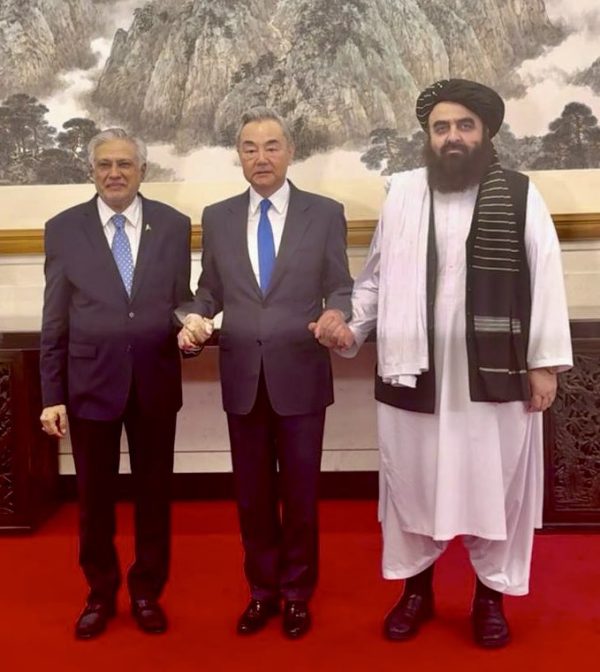
- Diplomatic Engagement: China intensified diplomatic contacts with Pakistan post-Operation Sindoor. Chinese Ambassador Jiang Zaidong met with Pakistan’s Prime Minister Shehbaz Sharif, President Asif Ali Zardari, and Deputy PM/Foreign Minister Ishaq Dar to discuss the escalation. China condemned terrorism but expressed “regret” over India’s strikes, urging both sides to prioritize peace.
- Neutral Stance with Strategic Tilt: Congress leader Shashi Tharoor noted that China “did not take much of a pro-Pakistan stand” at the UN Security Council, suggesting a pragmatic approach. China’s restraint may stem from economic interests in India and the risk of a war disrupting CPEC. However, China’s Foreign Ministry’s claim of being “not familiar” with Pakistan’s use of Chinese jets indicates a desire to distance itself from direct involvement.
- Monitoring and Intelligence: China is likely analyzing the performance of its weapons, particularly the J-10C jets Pakistan claimed used to down Indian aircraft. This conflict offers a rare opportunity to gather combat data, which could inform China’s military modernization.
- Economic Stabilization: China may provide financial support to Pakistan, which sought loans citing “heavy losses” post-Operation Sindoor. This aligns with China’s history of compensating Pakistan’s war losses, as seen in 1965 with a $60 million aid package.
Arms Supplied to Pakistan
China is Pakistan’s primary arms supplier, accounting for 81% of its weapons imports from 2020–2024, according to the Stockholm International Peace Research Institute. These arms enhance Pakistan’s military capabilities and serve as a testing ground for Chinese technology. Key supplies include:
- Fighter Jets:
- J-10C: A 4.5-generation fighter jet produced by AVIC Chengdu Aircraft, used by Pakistan to allegedly down Indian Rafale jets during Operation Sindoor. Its advanced weapon systems make it a cornerstone of Pakistan’s air force.
- JF-17 Thunder: Jointly developed with Pakistan, this multirole fighter is tailored for Pakistan’s needs and widely deployed.
- Training Aircraft:
- K-8 Karakorum: An advanced trainer for the Pakistan Air Force.
- Hongdu L-15: A customized training aircraft.
- Unmanned Systems:
- Combat Drones: China has supplied unmanned aerial and combat aerial vehicles, enhancing Pakistan’s reconnaissance and strike capabilities along the Line of Control (LoC).
- Air Defense and Radars:
- JY and HGR Series Radars: Deployed along the LoC for medium and low-altitude target detection, providing intelligence support.
- Air Defense Systems: Integrated systems to counter aerial threats, used to neutralize Indian drones and missiles post-Operation Sindoor.
- Artillery:
- SH-15 155mm Truck-Mounted Howitzer: Deployed at various LoC locations, enhancing Pakistan’s artillery capabilities.
- Tanks:
- Al-Khalid Tank: Based on China’s Type 90/MBT-2000, with licensed production and modifications for Pakistan.
- Communication and Surveillance:
- Encrypted Communication Towers and Underground Fiber Cables: Installed along the LoC to secure military communications.
- Surveillance Gear: Includes drones and satellite technology for intelligence gathering.
- Nuclear Support:
- China has historically provided blueprints for Pakistan’s nuclear program, though direct involvement in nuclear deployment during the current conflict is unconfirmed.
While China’s support for Pakistan is robust, it is not unconditional. Beijing’s cautious response post-Operation Sindoor reflects a balancing act: supporting its “ironclad brother” while avoiding a war that could disrupt CPEC, alienate India, or provoke Western backlash.
China’s economic interests in India, particularly in a tariff-heavy global environment, temper its pro-Pakistan stance.
Additionally, China’s focus on testing its weapons suggests a strategic interest in leveraging the conflict without escalating it.
Conclusion
China’s support for Pakistan is driven by a strategic need to counter India, secure CPEC, and expand regional influence.
While China provides extensive arms, intelligence, and diplomatic backing, its participation in an India-Pakistan war is likely to remain indirect, focusing on non-military support to avoid broader escalation.
Post-Operation Sindoor, China has maintained a neutral public stance while strengthening ties with Pakistan diplomatically and economically.
The arms supplied, from J-10C jets to SH-15 howitzers, underscore China’s role as Pakistan’s primary military backer, with implications for regional power dynamics and global arms competition.
As the India-Pakistan conflict evolves, China’s actions will continue to reflect a delicate balance between supporting its ally and preserving its broader strategic interests.

#ChinaPakistanAlliance #IndiaPakistanConflict #OperationSindoor #CPEC #Geopolitics #ArmsSupply #SouthAsiaTensions #J10C #MilitaryStrategy #SinoIndianRivalry



Leave a comment