
On May 10, 2025, U.S. President Donald Trump announced a “full and immediate ceasefire” between India and Pakistan, mediated by the United States, following intense clashes sparked by India’s Operation Sindoor on May 7, 2025.

The ceasefire, confirmed by Pakistan’s Foreign Minister Ishaq Dar and India’s Foreign Secretary Vikram Misri, marked a significant de-escalation in a conflict that saw drone and missile exchanges, civilian casualties, and fears of nuclear escalation.
Trump’s Intervention: Timeline and Mechanisms
Timeline of Intervention
- April 22–May 6, 2025: Following the Pahalgam attack, Trump and Rubio expressed support for India, condemning terrorism but urging de-escalation. Rubio spoke with India’s External Affairs Minister S. Jaishankar and Pakistan’s Prime Minister Shehbaz Sharif, emphasizing the need for Pakistan to act against terrorism and for both nations to maintain open communication.
- May 7, 2025: India launched Operation Sindoor, prompting Trump to call the escalating tensions “a shame” and express hope for a quick resolution. National Security Advisor Ajit Doval briefed Rubio on the strikes, indicating early U.S. engagement.
- May 8–9, 2025: As clashes intensified, with Pakistan launching retaliatory drone and missile attacks, Trump offered his “good offices” for mediation, while Vance signaled a non-interventionist stance, calling the conflict “none of our business” but supporting diplomatic de-escalation. Rubio engaged with Saudi and Iranian counterparts, broadening the diplomatic net.
- May 10, 2025: After a “long night of talks,” Trump announced the ceasefire on Truth Social at approximately 17:43 IST, stating, “India and Pakistan have agreed to a FULL AND IMMEDIATE CEASEFIRE.” Rubio confirmed 48 hours of intensive talks involving himself, Vance, Prime Ministers Narendra Modi and Shehbaz Sharif, Jaishankar, Doval, Pakistan’s Army Chief General Asim Munir, and National Security Advisor Asim Malik. Pakistan’s Foreign Minister Ishaq Dar and India’s Vikram Misri confirmed the agreement, effective immediately, with talks planned at a neutral site.

Mechanisms of Intervention
- High-Level Diplomacy: Rubio and Vance conducted direct calls with senior officials, leveraging personal rapport (e.g., Trump’s relationship with Modi) and U.S. influence as a global power. The involvement of Pakistan’s military leadership (General Munir) was critical, given the army’s significant role in Pakistan’s decision-making.
- Neutral Mediation: The U.S. positioned itself as a neutral broker, avoiding explicit blame on either side post-Operation Sindoor, unlike its stronger pro-India stance after the Pahalgam attack. This neutrality facilitated trust, with both nations agreeing to talks at a neutral location.
- International Coordination: Rubio’s discussions with Saudi Arabia and Iran, key regional players with influence over Pakistan, helped align broader diplomatic pressure. The G7’s call for dialogue on May 10 reinforced U.S. efforts.
- Public Announcement: Trump’s use of Truth Social to announce the ceasefire amplified its global impact, framing the U.S. as a decisive peacemaker and preempting misinformation.
Gains for Trump, JD Vance, and Marco Rubio
Donald Trump
- Political Gains:
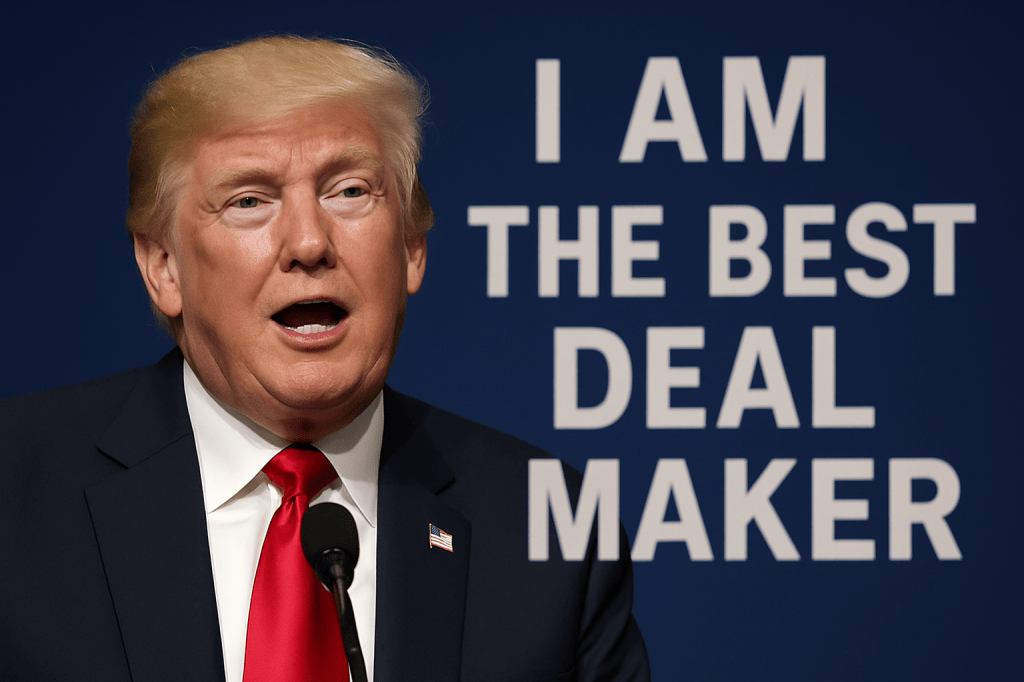
- Global Leadership Image: The ceasefire enhances Trump’s image as a dealmaker, countering critics who noted his initial reluctance to lead an emergency effort.
- Domestic Support: Appealing to Indian-American and Pakistani-American communities (approximately 4.8 million and 0.5 million U.S. residents, respectively) strengthens Trump’s 2024 voter base, especially in swing states like Texas and New Jersey.
- Distraction from Domestic Issues: The foreign policy win diverts attention from domestic controversies, such as tariff policies or immigration debates, reinforcing his “America First” narrative with a low-cost diplomatic victory.
- Personal Gains:
- Legacy Building: The ceasefire adds to Trump’s legacy as a peacemaker, akin to his 2019 shuttle diplomacy between India and Pakistan, enhancing his global statesman persona.
- Modi Relationship: Trump’s personal rapport with Modi, a fellow nationalist, is strengthened, potentially yielding future trade or defense deals.
JD Vance
- Political Gains:
- Foreign Policy Credibility: Vance’s involvement in high-stakes talks elevates his profile as a capable deputy, countering his earlier non-interventionist stance that drew criticism.
- MAGA Base Appeal: His diplomatic role aligns with the “America First” ethos, showing engagement without military overreach, appealing to isolationist voters.
- Vance’s prior visit to India and comments on learning Indian cooking from his wife’s mother resonate with Indian-American communities, enhancing his cultural relatability.
Marco Rubio
- Political Gains:
- Diplomatic Stature: Rubio’s central role in negotiations solidifies his reputation as a competent Secretary of State, positioning him as a potential 2028 presidential contender.
- Bipartisan Appeal: His engagement with both India and Pakistan, alongside Saudi and Iranian counterparts, showcases pragmatic diplomacy, appealing to moderates and foreign policy hawks.
Gains for the United States
Economic Gains
- Aviation and Trade Stabilization:
- The ceasefire ended the closure of Pakistan’s airports (Karachi, Lahore, Islamabad, Sialkot) and India’s suspension of 25 ATS routes, which cost $362.4–$555.6 million from May 7–10. Resumption of air traffic restored $500 million in daily air cargo for India and $100–$200 million for Pakistan, benefiting U.S. carriers like United Airlines and exporters reliant on South Asian markets.
- Stabilized trade routes, particularly through Pakistan’s Gwadar Port, ensure continued U.S. access to Central Asian markets, countering China’s Belt and Road Initiative (BRI).
- Defense Industry Boost:
- India’s reliance on U.S.-aligned weapons (e.g., Rafale jets, Apache helicopters) and Pakistan’s use of Chinese arms highlight U.S. defense market opportunities. The ceasefire preserves India’s $20 billion annual defense budget, part of which funds U.S. contracts (e.g., $3 billion for Apache and Chinook helicopters).
- Investment Confidence:
- The de-escalation reduces risk premiums for U.S. investors in India’s $4 trillion economy, projected to be the third largest by 2027. Stability encourages FDI flows, with U.S. firms like Apple and Tesla expanding in India.
Political Gains
- Regional Influence:
- The U.S. reasserts its diplomatic clout in South Asia, countering China’s influence via the China-Pakistan Economic Corridor (CPEC). The ceasefire reinforces U.S. relevance in a region where India is a key Quad partner against China.
- Neutral Broker Status:
- By mediating without alienating either nation, the U.S. strengthens ties with India (a strategic partner) and Pakistan (a historical ally), balancing its post-Afghanistan withdrawal dynamics.
- Global Leadership:
- The intervention counters perceptions of U.S. foreign policy retrenchment under Trump, showcasing effective diplomacy amid competing priorities (e.g., Ukraine, Gaza).
Sociological Gains
- Diaspora Relations:
- The ceasefire resonates with Indian-American and Pakistani-American communities, fostering goodwill. Events like the India Day Parade in New York and Pakistani-American festivals in Houston gain positive momentum, enhancing U.S. cultural ties.
Message to China
The ceasefire sends a multifaceted message to China, Pakistan’s primary ally and India’s strategic rival:
- U.S. Diplomatic Dominance: By brokering the ceasefire, the U.S. undercuts China’s regional influence, particularly its $62 billion CPEC investment. China’s restrained response post-Operation Sindoor (e.g., urging restraint without strong pro-Pakistan action) highlights its limited leverage compared to U.S. mediation.
- Countering BRI: The U.S. signals its intent to challenge China’s BRI by stabilizing South Asia, ensuring CPEC’s Gwadar Port remains operational but under U.S.-influenced regional dynamics. This aligns with Rubio’s hawkish stance on China.
- Nuclear Stability: The U.S. demonstrates its ability to manage nuclear flashpoints, indirectly warning China against escalatory actions in its own disputes (e.g., Taiwan, South China Sea). The ceasefire averts a crisis that could have emboldened China to test U.S. resolve elsewhere.
- Trade War Context: Amid U.S.-China trade talks in Geneva (May 10, 2025), the ceasefire positions Trump as a strong negotiator, potentially pressuring China to concede on tariffs (currently at 145%).
Sustainability of the Ceasefire
Factors Supporting Sustainability
- Mutual Exhaustion: The clashes (66 civilian deaths, $362.4–$555.6 million in economic losses) strained both nations, incentivizing peace. Pakistan’s retraction of a nuclear meeting claim and India’s commitment to “non-escalation” suggest restraint.
- U.S. and International Pressure: The G7’s call for dialogue and Rubio’s coordination with Saudi Arabia and Iran create a multilateral framework for compliance. Planned talks at a neutral site further institutionalize de-escalation.
- Domestic Priorities: India’s focus on economic growth (projected 7% GDP growth in 2025) and Pakistan’s IMF bailout ($7 billion) prioritize stability over prolonged conflict.
Risks to Sustainability
- Terrorism Triggers: India’s declaration that future terror attacks will be treated as “acts of war” raises the risk of rapid escalation if another attack occurs. Pakistan’s history of clandestine support for terrorist groups remains a flashpoint.
- Misinformation and Domestic Politics: Pakistan’s disinformation campaign (e.g., false claims of downing Indian jets) and India’s domestic pressure for strong responses could undermine trust. Social media amplification, with 8,000 accounts blocked in India, complicates narratives.
- China’s Role: China’s arms supply (81% of Pakistan’s imports) and strategic interest in CPEC could encourage Pakistan to resume hostilities if it perceives U.S. disengagement.
- Historical Precedent: Previous ceasefires (e.g., 2003) have been fragile, often collapsing due to terror attacks or border skirmishes. The lack of a permanent resolution to Kashmir remains a core issue.
Assessment
The ceasefire is likely to hold in the short term (3–6 months) due to economic pressures, U.S. mediation, and mutual fatigue.
However, without addressing root causes (Kashmir, terrorism), long-term sustainability is uncertain.
The planned neutral-site talks are a positive step, but their success depends on sustained international oversight and domestic political will.
Previous India-Pakistan Ceasefires
- 1949 Ceasefire (Post-First Kashmir War):
- Context: Followed the 1947–48 war after India and Pakistan gained independence. Mediated by the UN, it established the Line of Control (LoC).
- Outcome: Lasted until the 1965 war. Fragile due to unresolved Kashmir status.
- Relevance: Demonstrates the challenge of sustaining ceasefires without addressing territorial disputes.
- 1971 Ceasefire (Post-Indo-Pak War):
- Context: Ended the war leading to Bangladesh’s creation. The Simla Agreement (1972) formalized peace and bilateral dispute resolution.
- Outcome: Relatively stable until the 1980s, but Kashmir tensions persisted.
- Relevance: Shows bilateral agreements can work but require mutual commitment.
- 1999 Kargil Conflict Ceasefire:
- Context: Pakistan’s incursion into Kargil led to conflict. U.S. President Bill Clinton’s intervention pressured Pakistan to withdraw, averting nuclear risks.
- Outcome: Temporary de-escalation, but skirmishes resumed in the 2000s. Strengthened U.S.-India ties.
- Relevance: Highlights U.S. mediation’s effectiveness but also the limits of short-term fixes.
- 2003 Ceasefire Agreement:
- Context: Followed years of LoC clashes and the 2001 Indian Parliament attack. Brokered bilaterally, it aimed to reduce border violence.
- Outcome: Held until 2008, disrupted by the Mumbai attacks. Revived in 2021 but frequently violated.
- Relevance: Indicates ceasefires can last with political will but are vulnerable to terrorism.
- 2021 Ceasefire Reaffirmation:
- Context: Both nations’ DGMOs agreed to recommit to the 2003 ceasefire after frequent violations.
- Outcome: Reduced LoC incidents until 2024, but the Pahalgam attack reignited tensions.
- Relevance: Shows the potential for military-level agreements but fragility without broader peace processes.
Let’s Look Back at the Conflict
- Casualties: 66 civilians (31 Pakistan, 15–16 India), one Indian soldier (Lance Naik Dinesh Kumar), four Pakistani soldiers killed; 59 injured in India, five in Pakistan.
- Economic Losses: $362.4–$555.6 million (Pakistan: $104.4–$160.6M; India: $258–$395M) due to airport closures, ATS route suspensions, and trade disruptions.
- Military Actions: India targeted nine terror sites and four Pakistani airbases; Pakistan attacked 15–26 Indian sites with 300–400 drones.
- U.S. Engagement: Rubio and Vance held over 10 calls with Indian and Pakistani leaders from May 8–10, culminating in the ceasefire.
- Nuclear Context: Pakistan’s initial claim of a National Command Authority meeting (later retracted) spiked nuclear fears, underscoring U.S. intervention’s urgency.
Trump’s mediation, executed through Rubio and Vance, achieved a critical ceasefire on May 10, 2025, averting a potential nuclear crisis.
The intervention burnishes Trump’s dealmaker image, elevates Vance and Rubio’s profiles, and secures U.S. economic, political, and sociological gains.
It sends a strong message to China about U.S. diplomatic prowess, though China’s regional influence remains a challenge.



Leave a comment