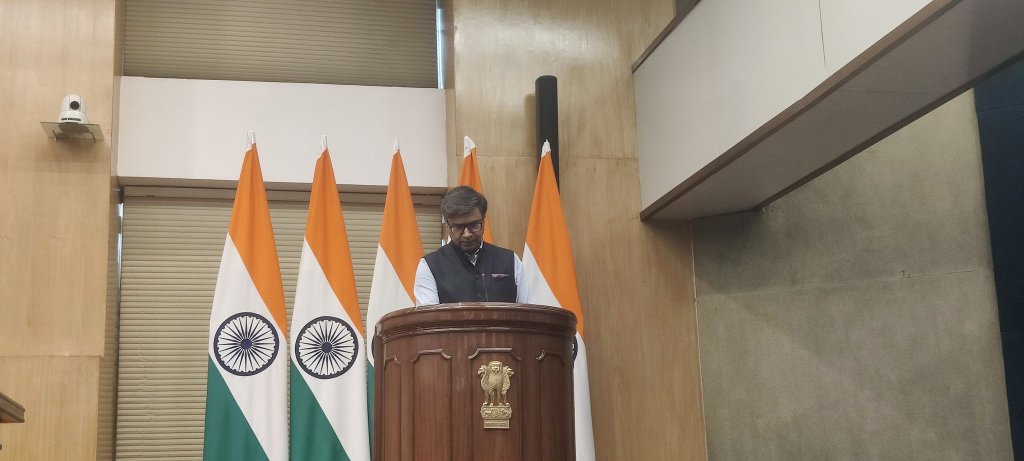
Vikram Misri, a 1989-batch Indian Foreign Service (IFS) officer, assumed the role of India’s 35th Foreign Secretary on July 15, 2024, at a time of heightened geopolitical challenges, including the escalating India-Pakistan conflict following the April 22, 2025, Pahalgam terrorist attack.
Misri’s tenure has been marked by his strategic communication, diplomatic finesse, and deep understanding of regional dynamics, particularly during Operation Sindoor and the subsequent ceasefire collapse on May 10, 2025
Why he matters – Key strengths
Misri’s extensive diplomatic experience and nuanced approach have made him exceptionally suited to lead India’s foreign policy during the India-Pakistan conflict.
His career spans critical postings in Pakistan, China, the US, and Myanmar, equipping him with a global perspective and regional expertise.
Key Strengths:
- Experience in High-Stakes Diplomacy: Misri’s tenure as India’s Ambassador to China (2019–2021) during the Galwan Valley clashes demonstrated his ability to manage crises with a major power. His negotiations with Chinese officials, including Liu Jianchao, helped stabilize bilateral tensions, a skill he applied in briefing international stakeholders post-Operation Sindoor.
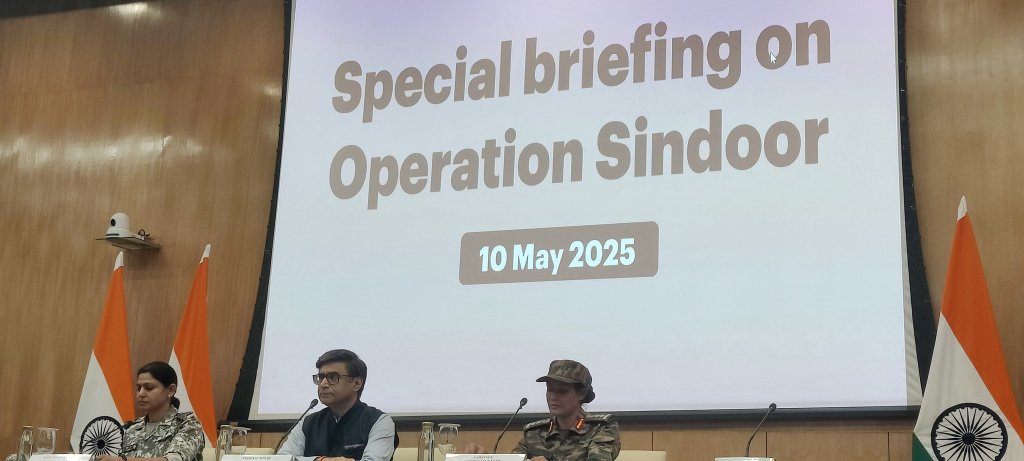
- Effective Communication: Misri’s media briefings on Operation Sindoor, alongside Colonel Sofia Qureshi and Wing Commander Vyomika Singh, were precise and authoritative, framing India’s strikes as “measured, non-escalatory, and proportionate” to counter Pakistan’s narrative of aggression. His rebuttal of Pakistan’s claims, such as alleged Indian jet downings, was sharp yet restrained, reinforcing India’s credibility.
- Engagement with Global Powers: Misri’s briefings to five countries post-Sindoor and his coordination with India’s IMF executive director to present India’s position at international forums showcase his ability to align India’s actions with global expectations of restraint. His downplaying of US mediation in the ceasefire, emphasizing direct DGMO talks, preserved India’s diplomatic autonomy.
Misri’s diplomatic acumen lies in his ability to balance assertiveness with restraint, ensuring India’s counter-terrorism actions are seen as justified while avoiding isolation.
His prior postings in Islamabad and Washington DC provide him with insights into Pakistan’s strategies and US mediation dynamics, enabling him to navigate the ceasefire talks and their collapse effectively.
His fluency in English, Hindi, Kashmiri, and working knowledge of French further enhance his ability to engage diverse audiences, making him a diplomatic asset during this crisis.
Strategic Perspective: Countering Terrorism and Regional Stability
Misri’s strategic foresight, honed as Deputy National Security Advisor (2022–2024), positions him as a critical leader in addressing the India-Pakistan conflict, particularly in countering Pakistan-backed terrorism and managing nuclear risks.
Key Strengths:
- Counter-Terrorism Expertise: Misri’s briefings emphasized Pakistan’s failure to dismantle terror infrastructure post-Pahalgam, linking the Resistance Front (TRF) to Lashkar-e-Taiba (LeT). His reference to India’s prior submissions to the UN’s 1267 Sanctions Committee on TRF and LeT underscored a strategic approach to exposing Pakistan’s complicity globally.
- Strategic Restraint: Misri’s insistence that Operation Sindoor targeted only terrorist infrastructure, not civilian or military sites, reflects a calculated strategy to avoid crossing Pakistan’s nuclear thresholds. His warning that Pakistan would be “solely responsible” for consequences of retaliatory strikes, such as targeting Indian infrastructure, deterred escalation while maintaining India’s moral high ground.
- Regional Insight: Misri’s experience in Myanmar and Sri Lanka, combined with his Pakistan desk role, gives him a deep understanding of South Asian security dynamics. His handling of the Indus Waters Treaty issue, dismissing Pakistan’s claims of India targeting the Neelum-Jhelum dam, prevented the conflict from spilling into resource disputes.
Political Perspective: Aligning Domestic and International Narratives
Politically, Misri’s role as Foreign Secretary has been pivotal in managing domestic expectations and international perceptions, particularly under Prime Minister Narendra Modi’s government.
- Domestic Credibility: As a Kashmiri Pandit, Misri’s personal connection to Jammu and Kashmir resonates with domestic audiences, particularly in countering narratives of Pakistan-sponsored terrorism.
- Alignment with Leadership: Having served as private secretary to three Prime Ministers—Inder Kumar Gujral, Manmohan Singh, and Narendra Modi—Misri understands the political imperatives of India’s leadership. His briefings align with Modi’s hardline stance on terrorism while projecting restraint to appease global calls for de-escalation, balancing domestic nationalism with international diplomacy.
- Media Management: Misri’s media engagements, described as “choosing words carefully” and “landing like bullets” on X, countered Pakistan’s disinformation, such as claims of civilian casualties or Indian jet downings. His condemnation of Pakistan’s targeting of schools and religious sites, like Christ School in Poonch, reinforced India’s narrative of Pakistan’s “new low.”
Historical Perspective: Leveraging Institutional Knowledge
Misri’s long career in the IFS and his exposure to India’s foreign policy challenges provide him with a historical perspective that informs his handling of the India-Pakistan conflict, a rivalry rooted in the 1947 Partition.
- Experience with Pakistan: Misri’s early role on the Pakistan desk in the Ministry of External Affairs and his posting in Islamabad equipped him with insights into Pakistan’s diplomatic and military strategies. This knowledge was critical in anticipating Pakistan’s responses post-Sindoor, such as drone attacks and disinformation campaigns.
- Lessons from Past Crises: Misri’s involvement in the Galwan crisis and his awareness of previous India-Pakistan escalations, like the 2019 Balakot strikes, inform his approach to managing tit-for-tat dynamics. His emphasis on Operation Sindoor as a pre-emptive strike to prevent further attacks reflects lessons from past failures to act decisively.
- Institutional Continuity: Having worked with External Affairs Ministers I.K. Gujral and Pranab Mukherjee, Misri brings institutional memory to his role. His understanding of India’s historical positions on Kashmir and terrorism enables him to frame the current conflict within a consistent foreign policy narrative.
Socio-Cultural Perspective: Resonance and Public Trust
Misri’s Kashmiri Pandit identity and his ability to connect with public sentiment have amplified his effectiveness as Foreign Secretary, particularly in a conflict centered on Jammu and Kashmir.
- Cultural Resonance: Misri’s roots in Srinagar, where he attended Burn Hall and DAV schools, make him a powerful voice against Pakistan’s targeting of Kashmir’s stability.
- Countering Communal Narratives: Misri’s briefings emphasized the Pahalgam attack’s intent to provoke communal discord, noting its targeting of tourists to disrupt Kashmir’s tourism-driven economy. His condemnation of Pakistan’s shelling of religious sites, including gurdwaras and churches, resonated with India’s diverse populace, fostering unity against external aggression.
- Public Engagement: Misri’s transparent briefings, praised for their clarity and precision, have built public confidence in the government’s response.
- His collaboration with female military officers in briefings further projects a modern, inclusive image of India’s leadership.
Performance Highlights:
- Countering Disinformation: Misri’s dismissal of Pakistan’s “deranged fantasy” claims, such as India attacking its own cities, and his exposure of Pakistan’s history of lies since 1947 have been pivotal in shaping global perceptions.
- Diplomatic Restraint: His refusal to confirm or deny NSA-level contacts with Pakistan, despite speculation about Doval-Malik talks, maintained strategic ambiguity, preserving India’s leverage.
- Public Confidence: Misri’s briefings, lauded for their transparency and precision, have countered domestic fears and international skepticism, reinforcing India’s position as a responsible power
In a nutshell, Vikram Misri’s tenure as Foreign Secretary during the India-Pakistan conflict of 2025 demonstrates why he is the best choice for the role. Diplomatically, his global experience and precise communication have upheld India’s credibility.
Strategically, his counter-terrorism focus and restraint have mitigated escalation risks. Politically, his alignment with Modi’s vision and domestic resonance as a Kashmiri Pandit have strengthened public support.
Historically, his institutional knowledge ensures policy continuity, while socio-culturally, his identity and transparency foster national unity. Misri’s ability to navigate complex geopolitics, counter disinformation, and project India’s resolve makes him an indispensable leader in this crisis.
#VikramMisri #IndiaPakistanConflict #ForeignSecretary #OperationSindoor #PahalgamAttack
#IndianDiplomacy #CounterTerrorism #KashmirConflict #IndiaForeignPolicy #Ceasefire2025
#SouthAsiaSecurity #KashmiriPandit #ModiGovernment #StrategicDiplomacy #RegionalStability



Leave a comment