
By Dr. Shubhda Chaudhary, May 14, 2025
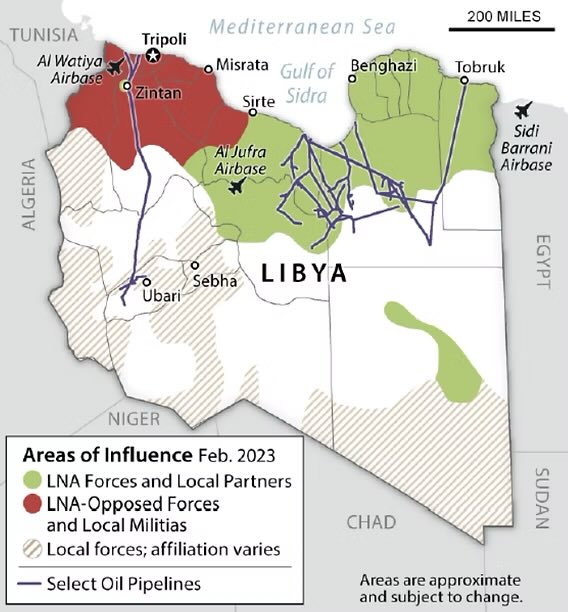
On May 12, 2025, Tripoli, the capital of Libya, was rocked by deadly clashes following the killing of Abdelghani al-Kikli, a powerful militia leader known as Gheniwa, who commanded the Stability Support Authority (SSA).
The hours-long violence, centered in the Abu Salim neighbourhood, left at least six dead, as confirmed by Libya’s Emergency Medicine and Support Centre.
Al-Kikli was reportedly killed at a meeting at the 444 Brigade’s base, a militia loyal to Prime Minister Abdul Hamid Dbeibah’s UN-recognised Government of National Unity (GNU). The clashes, involving heavy weapons, underscore Libya’s persistent instability since the 2011 overthrow of Muammar Gaddafi.
For India, a nation with significant diaspora and economic interests in Libya, these events pose immediate challenges to the safety of its citizens and broader strategic concerns.


Safety of Indian Nationals
India has historically had around 18,000 workers in Libya, primarily in construction, healthcare, and education, contributing to its remittance economy.
The 2011 civil war prompted large-scale evacuations, and the recent violence in Tripoli renews these concerns. The clashes, which erupted on Monday night and continued into Tuesday morning, involved intense gunfire and explosions, prompting the GNU’s interior ministry to urge residents to stay indoors and the suspension of flights at Mitiga International Airport.
The Tripoli-based Education Ministry also suspended classes, and the University of Tripoli halted all activities, reflecting the severity of the unrest.
For Indian nationals, the volatile security situation, compounded by the presence of foreign mercenaries like the Wagner Group and ongoing militia rivalries, heightens risks.
Al-Kikli’s SSA, accused by Amnesty International of war crimes, including torture and extrajudicial killings, had significant influence in Tripoli, and his death may trigger further power struggles. India’s embassy, relocated to Tunisia since 2011, faces logistical challenges in providing consular support or coordinating evacuations, leaving Indian workers vulnerable amidst the chaos
Economic and Trade Implications
Libya’s oil and gas sector, accounting for 60% of its GDP and 94% of exports, is critical to global energy markets. India, reliant on imported oil, is sensitive to disruptions in Libyan production, which have historically driven up global prices during conflict periods.
The recent clashes, with tanks deployed and civilian aircraft evacuated from Mitiga Airport, raise concerns about potential interruptions to oil exports.
Such disruptions could increase costs for India, straining its energy security at a time of global economic uncertainty.
Bilateral trade between India and Libya, which reached $1.35 billion in 2012-13, has been constrained by ongoing instability.
Indian firms in construction and pharmaceuticals face heightened risks due to militia control and weak governance. Al-Kikli’s SSA wielded influence over key sectors, including banking and telecom, and his death may destabilise these institutions, further complicating India’s economic engagement. The World Bank highlights Libya’s underdeveloped private sector as a potential opportunity, but the current violence, described as a “territorial reshuffle” by analysts, limits India’s ability to pursue these prospects.

Foreign Policy and Regional Stability
India’s foreign policy towards Libya emphasizes non-interference while safeguarding its interests.
In 2011, India abstained from UN Security Council Resolutions 1970 and 1973, criticizing NATO’s intervention, and has since advocated for multilateral solutions.
The killing of al-Kikli, a key figure accused of human rights abuses, and the subsequent GNU-led operation to restore control in Abu Salim, reflect Libya’s fragile balance of power.
The United Nations Support Mission in Libya (UNSMIL) expressed alarm over the use of heavy weaponry in civilian areas, warning that such actions may constitute war crimes.
The regional spillovers of Libya’s conflict, including arms smuggling and migration (with over 725,000 migrants in Libya in 2024), indirectly affect India’s counterterrorism efforts and engagement in Africa.
The power vacuum following al-Kikli’s death, coupled with foreign actors like Turkey, Qatar, and the UAE backing rival factions, complicates India’s neutral stance. The GNU’s moves to dissolve the Directorate for Combatting Illegal Migration and appoint a new head for the Internal Security Agency signal attempts to curb militia influence, but ongoing rivalries may prolong instability.
Humanitarian and Diplomatic Efforts
India has provided humanitarian aid to Libya, including $2 million and 1,000 Jaipur Foot prosthetics post-2011, alongside training programs under the Indian Technical and Economic Cooperation Programme.
However, the absence of a unified Libyan government, with elections stalled since 2014, limits deeper engagement. India supports UN-led peace efforts, but the recent violence underscores the challenges of achieving stability amidst militia dominance and foreign interference.
Challenges and Opportunities
The Tripoli clashes, triggered by al-Kikli’s killing, highlight the immediate risks to Indian nationals and economic interests.
Prime Minister Dbeibah’s assertion of control, praised as a “decisive step” against irregular armed factions, may temporarily stabilize Tripoli, but analysts warn of potential further clashes as rival groups vie for influence.
For India, ensuring the safety of its diaspora and maintaining economic ties require proactive diplomacy. A stable Libya could offer opportunities for India’s energy and infrastructure sectors, but the current volatility demands caution.
Conclusion
The killing of Abdelghani al-Kikli and the ensuing violence in Tripoli on May 12, 2025, reveal Libya’s enduring instability, with direct implications for India.
The safety of Indian workers, energy security, and diplomatic relations are at risk as Libya grapples with militia rivalries and political division.
While India continues to support peace processes and humanitarian efforts, the path to stability remains fraught. New Delhi must navigate these challenges carefully to protect its interests in a region marked by uncertainty.



Leave a comment