
By Dr. Shubhda Chaudhary, MEI News, New Delhi
15 May 2025
Turkey’s control over the Tigris and Euphrates rivers has long fuelled tensions with downstream neighbours Iraq and Syria, with critics arguing that Ankara’s unilateral actions—exemplified by the construction of the Atatürk Dam—undermine its credibility in discussing equitable water treaties.
Meanwhile, President Recep Tayyip Erdoğan’s recent comments on the Indus Waters Treaty (IWT) between India and Pakistan, following India’s suspension of the treaty on 23 April 2025, have drawn scrutiny.
As India takes steps to limit ties with Turkey over broader geopolitical disagreements, Erdoğan’s intervention in the IWT is seen as both provocative and lacking legitimacy.
This analysis explores Turkey’s water policies, India’s response, and why Erdoğan’s involvement in the India-Pakistan water dispute is problematic.
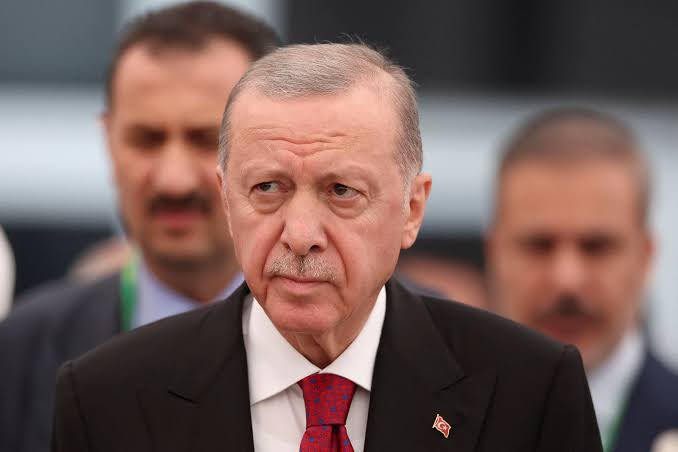
Turkey’s Hydropolitics and the Atatürk Dam
The Tigris and Euphrates rivers, originating in Turkey’s Taurus Mountains, are lifelines for Iraq and Syria, providing nearly 100% of Iraq’s freshwater and 85% of Syria’s renewable water.
Turkey’s Southeastern Anatolia Project (GAP), particularly the Atatürk Dam completed in 1994, has significantly altered downstream flows.
In 1987, Turkey agreed to release 500 cubic meters per second of Euphrates water to Syria and Iraq, but reports indicate actual flows often fall to 200 cubic meters, exacerbating water scarcity. During the dam’s construction, Iraq protested the reduced flows, which threatened agriculture and the southern marshes, a UNESCO-protected site. Turkey’s response was dismissive, with officials suggesting Iraq’s oil wealth could be exchanged for Turkey’s water, framing water as a commodity rather than a shared resource.
This stance, echoed by former President Süleyman Demirel at the dam’s 1992 dedication, where he claimed Syria and Iraq had no more right to Turkey’s rivers than Ankara had to their oil, has been widely criticized. The 1997 UN Convention on the Law of the Non-Navigational Uses of International Watercourses, which Turkey has not ratified, emphasizes equitable utilization, a principle critics argue Turkey violates by prioritizing domestic needs.
Iraq’s Water Resources Ministry has reported that GAP projects, including the Ilisu Dam on the Tigris, have reduced Tigris flows by 47%, depriving Mosul of half its summer water needs.
Turkey defends its actions, citing energy and food security needs.
In 2023, Turkey’s Special Envoy for Water Affairs, Veysel Eroğlu, met Iraqi President Abdullatif Jamal Rashid to discuss joint projects, and a 2024 framework agreement with Iraq promised cooperation on dams and irrigation. However, Iraq remains skeptical, demanding firm commitments to minimum water releases. The lack of Syrian involvement and Turkey’s history of dismissing lower riparian rights—evident in its rejection of Iraqi protests during the Atatürk Dam’s filling—undermines trust in these initiatives.
Humanitarian and Regional Impact
Turkey’s water policies have had severe downstream consequences.
In Iraq, water shortages have depopulated villages and sparked protests, such as those in Baghdad’s Nisour Square in 2023. In Syria, reduced Euphrates flows have crippled agriculture, with Lake Assad losing 4 billion cubic meters, rendering water stations inoperative.
Turkey’s control of the Alouk water station in Ras Al-Ain since 2019 has been accused of weaponizing water against Kurdish-led regions, though Ankara denies targeting civilians, citing security concerns related to the PKK, a group designated as terrorist by Turkey, the EU, and the US. International lawyers argue such actions may violate humanitarian law.
Erdoğan’s recent push for cooperation, including the 2024 agreement, is seen as a pragmatic move to normalize ties with Iraq, but critics argue it sidesteps Syria and fails to address historical grievances. Turkey’s non-ratification of global water conventions and its commodity-based view of water continue to erode its credibility in advocating for equitable transboundary water management.
India’s Measures Against Turkey
India’s response to Turkey has been shaped by broader geopolitical tensions, particularly Ankara’s support for Pakistan on Kashmir and its defense ties with Islamabad.
In 2023, India’s Ministry of External Affairs advised against academic and research collaborations with Turkish institutions, citing Turkey’s “anti-India” rhetoric.
Universities like Jawaharlal Nehru University and the University of Delhi have scaled back exchange programs, while the Indian Council of Cultural Relations has redirected funding away from Turkey.

India’s Ministry of Defence has also excluded Turkish firms from certain contracts, citing concerns over Turkey’s supply of drones and naval equipment to Pakistan. These measures, while not directly tied to Turkey’s water policies, reflect a strategic distancing from Ankara amid its alignment with Pakistan.
Erdoğan’s Intervention in the Indus Waters Treaty
Erdoğan’s comments on the IWT, made during a call with Pakistan’s Prime Minister Shehbaz Sharif on 8 May 2025, have raised eyebrows.
Expressing solidarity with Pakistan after India’s suspension of the treaty following a deadly attack in Kashmir, Erdoğan called for a resolution to the “water issue,” hoping the ceasefire environment would facilitate dialogue.
India’s suspension of the IWT, which allocates 80% of the Indus basin’s water to Pakistan, was a response to alleged Pakistani support for terrorism, a charge Islamabad denies.
Erdoğan’s intervention is problematic for several reasons.
First, Turkey is not a riparian state in the Indus basin, which involves India, Pakistan, China, and Afghanistan. Turkey’s own record of dismissing lower riparian rights in the Tigris-Euphrates basin undermines its moral authority to comment on the IWT. Former Indian diplomat Yash Sinha has noted that Turkey refuses to sign water-sharing agreements with Syria and Iraq, contrasting sharply with India’s adherence to the IWT for over six decades despite tensions with Pakistan.
Critics argue that Erdoğan’s stance is hypocritical, given Turkey’s unilateral dam projects and its rejection of Iraqi and Syrian water rights.
Second, Erdoğan’s comments align with Turkey’s broader geopolitical strategy to expand influence in the Islamic world, particularly through support for Pakistan. Few analysts have criticized Erdoğan’s intervention, with some Indian users calling it an attempt to meddle in South Asian affairs, pointing to Turkey’s own territorial disputes, such as its occupation of northern Cyprus. By framing the IWT suspension as a regional crisis, Erdoğan risks escalating tensions, especially as Pakistan has threatened to treat water diversions as an “act of war.”
Third, the IWT is a bilateral agreement mediated by the World Bank, with a robust dispute resolution mechanism. India and Pakistan have historically resolved disputes through the Permanent Indus Commission or neutral experts, as seen in the Baglihar dam case. Erdoğan’s involvement introduces an external actor into a sensitive bilateral issue, potentially complicating mediation efforts.
A Path Forward?
Turkey’s dismissal of lower riparian rights, exemplified by its handling of the Atatürk Dam and rejection of Iraqi protests, weakens its standing in global water diplomacy.
Erdoğan’s intervention in the IWT further erodes his credibility, given Turkey’s refusal to ratify international water conventions and its commodity-based view of water resources.
For India and Pakistan, the IWT’s suspension highlights the need for renewed dialogue, potentially through World Bank mediation, to address water security amid climate change and geopolitical tensions.
India’s measures to limit ties with Turkey reflect a strategic response to Ankara’s alignment with Pakistan and its provocative rhetoric.
As water scarcity intensifies in the Middle East and South Asia, equitable resource sharing remains critical. Turkey’s history of unilateral water policies and Erdoğan’s unsolicited involvement in the IWT signify the challenges of achieving cooperative transboundary water management in politically charged regions.



Leave a comment