17 May 2025
In recent years, a growing number of Indian YouTubers have traveled to China, producing vlogs that showcase Chinese culture, infrastructure, and governance. These videos, often garnering millions of views, have sparked debate about their motives, funding sources, and implications for India’s national security.
Reports of Chinese sponsorship for some YouTubers, coupled with today’s arrest of a Haryana-based YouTuber for allegedly spying for Pakistan, have intensified concerns that social media influencers may be exploited in geopolitical rivalries. This analysis, grounded in international relations theory, explores the scale of this phenomenon, the role of foreign funding, and why it alarms Indian authorities, while critically assessing the risks and assumptions.
The Trend: Indian YouTubers Visiting China
Since China eased its COVID-19 restrictions in 2023, over a dozen Indian YouTubers have visited the country, according to media reports. A few nfluencers have documented their travels across cities like Beijing, Shanghai, and sensitive regions such as Xinjiang and Tibet.
Their content, ranging from street food tours to infrastructure showcases, often highlights China’s development while addressing controversial topics like Uyghur genocide allegations. A 2023 News9 report noted that at least 12 prominent YouTubers visited China between May and July that year, driven by curiosity and a desire to offer Indian audiences a glimpse behind the “Great Chinese Firewall.”
The exact number of YouTubers visiting China is difficult to verify, as many operate independently and do not disclose their travel itineraries.
However, the Australian Strategic Policy Institute (ASPI) has documented a global trend of foreign influencers, including Indians, being invited to China to promote state narratives. Since 2020, 156 Chinese state-controlled accounts have amplified content from 14 influencer accounts, including Indian vloggers, on platforms like YouTube and X. This suggests a coordinated effort to leverage soft power, a concept rooted in constructivist international relations theory, where states shape perceptions through cultural influence rather than coercion.
Chinese Funding: Scale and Implications
Indian security officials have flagged that some YouTubers receive financial sponsorship from Chinese entities, often covering travel expenses and granting access to restricted areas like Xinjiang and Tibet.
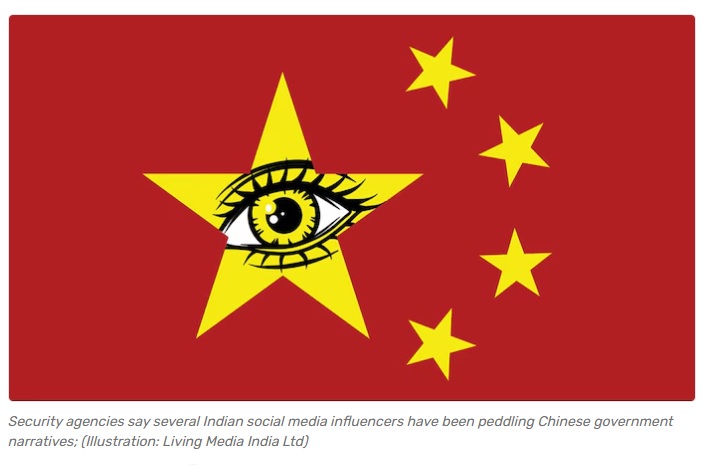
A 2024 India Today report revealed that over a dozen influencers, including YouTubers, were identified as peddling pro-China narratives, with expenses allegedly funded by the Chinese Communist Party (CCP) or affiliated organizations. For instance, one vlogger’s videos on Uyghur communities and Tibetan infrastructure were cited as countering Western criticisms, projecting a positive image of Chinese governance.
The extent of funding is opaque, but the ASPI report highlighted a 2021 campaign, “A Date With China,” where China paid $30,000 to a media company to promote poverty alleviation narratives through influencers.

Indian officials suspect similar arrangements, noting that sponsored YouTubers often use sensational titles like “shocking” or “surprising” to attract views, reinforcing stereotypes about India and China. From a realist perspective, China’s funding aligns with its strategic goal of countering India’s growing influence in the Indo-Pacific and softening domestic perceptions amid border tensions along the Line of Actual Control (LAC).
However, not all YouTubers are funded. Some, like Pratik Jain, have emphasized their independence, praising India’s freedoms while documenting China. The assumption that all vloggers are CCP proxies overlooks their agency and diverse motivations, from genuine cultural curiosity to commercial incentives like ad revenue. Critics argue that India’s youthful audience, with limited exposure to China, may be swayed by polished content, but evidence of widespread public opinion shift remains anecdotal.
Security Concerns: Propaganda and Espionage
Indian authorities view the trend as a national security threat, fearing that YouTubers could propagate misinformation or serve as unwitting tools in China’s influence operations. A South Block official warned that influencers with “substantial followings” could shape narratives with “implications for national security,” particularly if they spread biased perspectives on sensitive issues like Aksai Chin or Tibet. The Ministry of Home Affairs has shared a list of suspect influencers with the government, urging action.
These concerns are amplified by geopolitical rivalries. From a neorealist lens, India and China are locked in a security dilemma, where each perceives the other’s actions as threatening. China’s sponsorship of influencers may be a low-cost way to undermine India’s strategic narrative, especially after the 2020 Galwan Valley clash. The Pahalgam terror attack in April 2025, which killed 26 tourists, further heightened tensions, with India banning 16 Pakistani YouTube channels for spreading misinformation. Today’s development—a Haryana-based YouTuber, Jyoti Malhotra, arrested by the NIA for allegedly spying for Pakistan—underscores the broader risks of influencers in cross-border espionage.
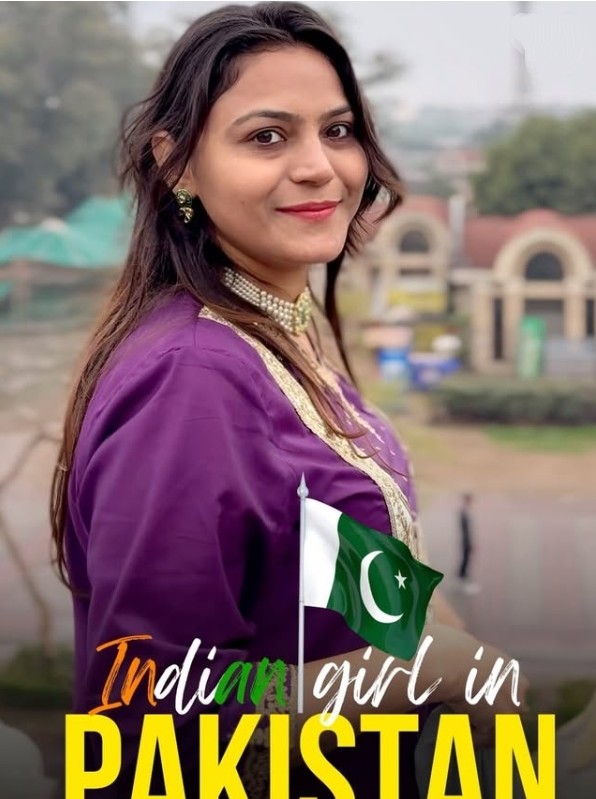
Malhotra, who ran the channel Travel With Jo, was among six individuals arrested for sharing sensitive military information with Pakistani Intelligence Operatives (PIOs). She reportedly developed ties with a Pakistani official, Ehsan-ur-Rahim (Danish), during a 2023 trip and shared data via encrypted platforms like WhatsApp and Telegram. Charged under the Official Secrets Act, her case highlights how social media influencers, with access to large audiences, can be exploited for espionage or propaganda. The NIA is investigating whether similar networks exist with other foreign powers, including China.
Today’s Development: The Pakistan Spy Case
The arrest of Jyoti Malhotra on 17 May 2025 has sent shockwaves through India’s influencer community. Malhotra, a 33-year-old travel vlogger, allegedly met Pakistani intelligence officials during two trips to Pakistan, sharing details about Indian military installations and promoting a pro-Pakistan narrative on her channel. Her interactions with Danish, a former Pakistan High Commission staffer expelled on 13 May 2025, included a romantic relationship and a trip to Bali, raising questions about social engineering tactics used by foreign operatives.
The NIA alleges that Malhotra and her co-accused— including a student, a security guard, and a widow—were manipulated through monetary incentives and emotional coercion. This case, part of a larger espionage network dismantled in Haryana and Punjab, reflects Pakistan’s efforts to infiltrate India’s digital ecosystem, exploiting influencers’ reach to gather intelligence and shape perceptions. The timing, post-Pahalgam attack and Operation Sindoor, suggests heightened geopolitical tensions driving such activities.
Critical Analysis: Risks and Assumptions
The concerns about Indian YouTubers in China and the Pakistan spy case highlight a digital security dilemma, where states leverage social media to advance strategic interests.
Realist scholars might argue that China and Pakistan exploit influencers to weaken India’s national cohesion, particularly in a multipolar world where information warfare is a key battleground. Liberal institutionalists, however, might counter that diplomatic engagement and transparency—such as regulating influencer funding—could mitigate risks without stifling free expression.
Several assumptions require scrutiny:
- Widespread Influence: The fear that YouTubers significantly sway public opinion may be overstated. India’s diverse media landscape and nationalist sentiment limit the impact of pro-China or pro-Pakistan narratives. Comments under vlogs often reflect skepticism, with some accusing creators of being “CCP bots.”
- Deliberate Espionage: While Malhotra’s case confirms espionage, assuming all sponsored YouTubers are spies lacks evidence. Many may be motivated by financial gain or cultural exchange, not malicious intent. The CCP’s sponsorship model often prioritizes propaganda over intelligence gathering.
- Overreaction Risk: Heavy-handed measures, like banning channels or arresting influencers, could undermine press freedom.
Conclusion: Balancing Security and Freedom
The rise of Indian YouTubers visiting China and the arrest of Jyoti Malhotra for spying for Pakistan reveal the complex interplay of digital influence, geopolitics, and national security. While Chinese funding and Pakistani espionage pose legitimate threats, India must avoid conflating cultural exchange with subversion.
Constructivist theories suggest that fostering critical media literacy and transparent funding disclosures could counter foreign narratives without alienating creators. Realist imperatives demand robust cybersecurity and counterintelligence, but liberal principles urge restraint to preserve India’s democratic ethos.
As geopolitical rivalries intensify, India’s digital influencers are both assets and vulnerabilities.
The challenge lies in harnessing their potential to bridge cultures while safeguarding against exploitation in a multipolar world. The NIA’s ongoing investigation and the government’s response will shape the future of India’s influencer ecosystem, balancing security with the freedoms that define its global rise.



Leave a comment