
New Delhi, 17 May 2025
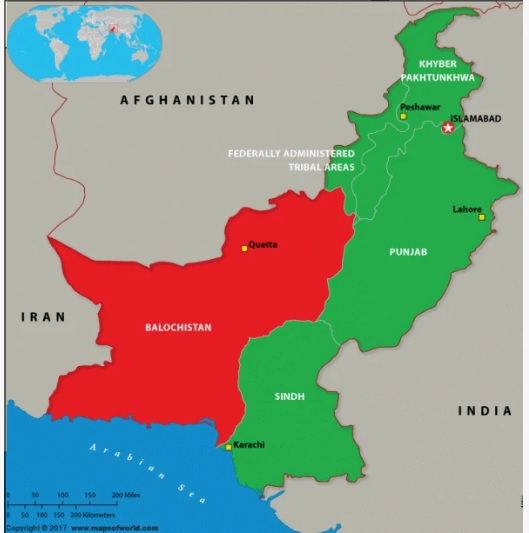
Balochistan, Pakistan’s largest province by area, has long been a flashpoint for separatist movements since its contested accession to Pakistan in 1948.
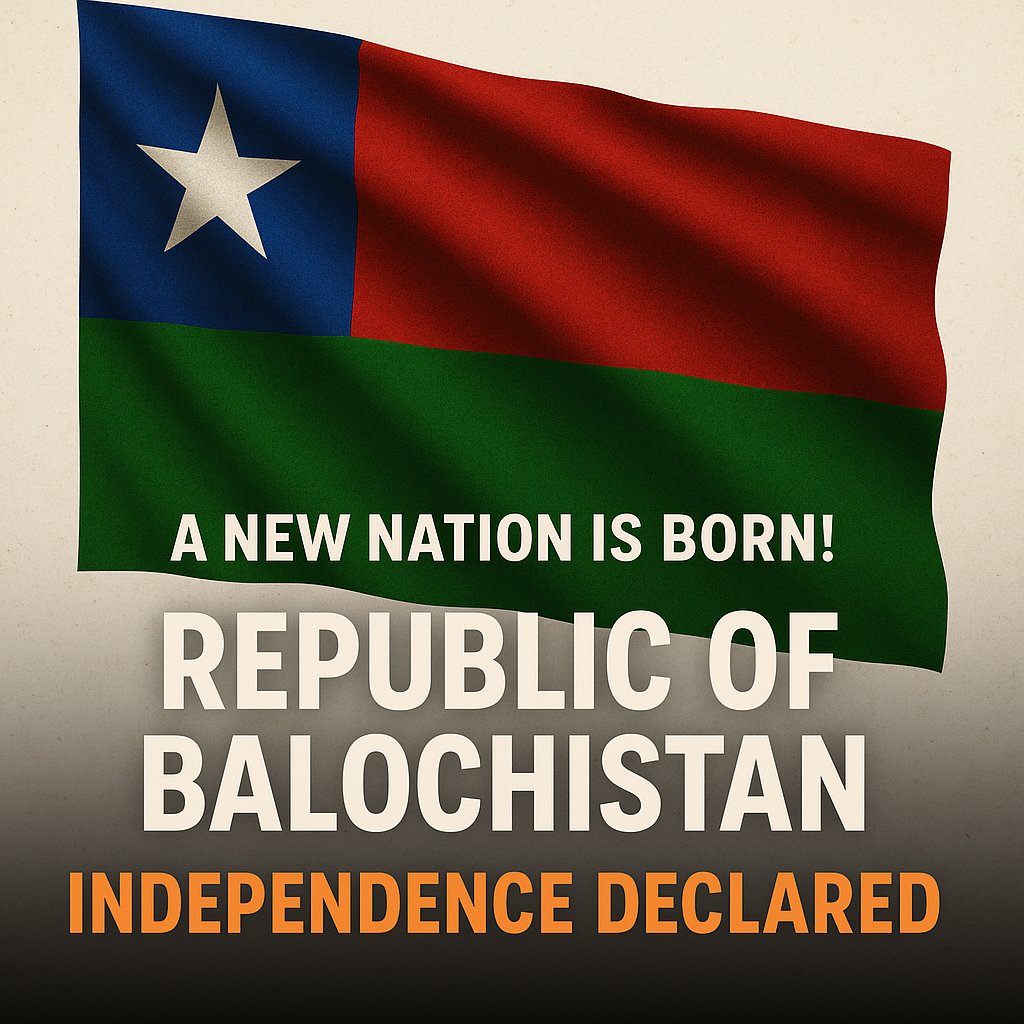
On 9 May 2025, Baloch nationalist leader Mir Yar Baloch declared the “Democratic Republic of Balochistan,” urging India to recognize its sovereignty and establish diplomatic ties.
This call, set against heightened India-Pakistan tensions following India’s Operation Sindoor, has sparked debate about the strategic implications of an independent Balochistan.
Could such a development serve India’s interests?
This analysis examines the historical context, geopolitical dynamics, and data to explore why an independent Balochistan might benefit India, while weighing the risks.
Historical Context: A Contested Accession
Balochistan’s integration into Pakistan was fraught with tension.
The princely state of Kalat, covering much of modern Balochistan, declared independence on 11 August 1947, days before Pakistan’s creation. The Khan of Kalat, Ahmad Yar Khan, sought sovereignty, backed by tribal leaders. However, after months of negotiations and alleged coercion, he signed the Instrument of Accession on 27 March 1948. This triggered immediate resistance, with Prince Abdul Karim launching a rebellion in 1948, setting the stage for decades of unrest.
Subsequent insurgencies in the 1950s, 1960s, 1970s, and from 2003 onwards have been fueled by grievances over political exclusion, resource exploitation, and human rights violations.
The Baloch Liberation Army (BLA), formed in the early 2000s, has targeted Pakistani security forces and infrastructure, including projects tied to the China-Pakistan Economic Corridor (CPEC). Baloch nationalists argue that Pakistan’s centralized control has marginalized the province, which, despite its resource wealth, remains underdeveloped.
Strategic Benefits for India
An independent Balochistan could align with India’s geopolitical objectives, offering strategic advantages in its rivalry with Pakistan and competition with China.
1. Weakening Pakistan’s Territorial and Military Influence
Balochistan accounts for 44% of Pakistan’s landmass but only 6% of its population (14.9 million, per Pakistan’s 2023 census).
Its vast territory and 770-km coastline provide Pakistan with strategic depth and access to the Arabian Sea. An independent Balochistan would significantly reduce Pakistan’s geographic and military influence, limiting its capacity to support militancy in Jammu and Kashmir—a persistent irritant in India-Pakistan relations.
India signaled a shift in its approach in 2016, when Prime Minister Narendra Modi raised Balochistan’s human rights issues in his Independence Day speech, countering Pakistan’s Kashmir narrative. Supporting Baloch independence could amplify this leverage, though it risks escalating bilateral tensions.
India’s hosting of Baloch activists, such as Balaach Pardili of the Balochistan Liberation Organisation since 2009, suggests limited engagement with the cause.
2. Disrupting China’s CPEC Ambitions
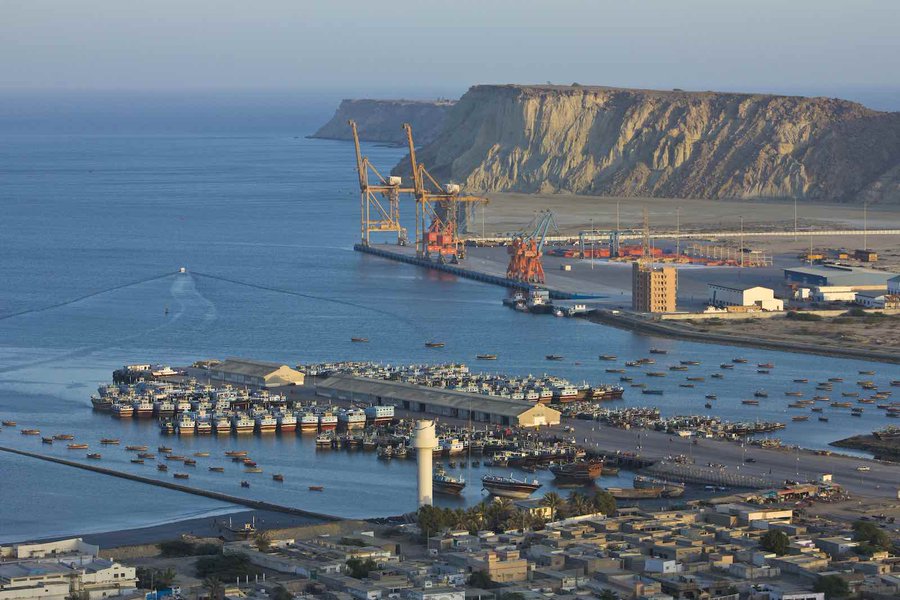
Balochistan is central to CPEC, a $62 billion initiative connecting China’s Xinjiang region to Gwadar Port on the Arabian Sea.
Gwadar, operated by Chinese firms, enhances Beijing’s maritime reach, bypassing the Malacca Strait.
Baloch insurgents, including the BLA, have repeatedly attacked CPEC projects, citing local displacement and environmental damage. In 2024, BLA attacks targeted Chinese nationals and infrastructure, straining Pakistan-China ties.
An independent Balochistan, potentially aligned with India, could disrupt CPEC, weakening China’s strategic presence in South Asia.
India has invested $500 million in Iran’s Chabahar Port, 170 km from Gwadar, to access Afghanistan and Central Asia. In 2023, Chabahar handled 2.2 million tonnes of cargo, with plans to expand capacity to 20 million tonnes by 2030. A cooperative Balochistan could integrate with India’s Chabahar corridor, isolating Pakistan and countering China’s regional ambitions.
3. Access to Resources and Energy Security
Balochistan holds significant reserves of natural gas, copper, gold, and coal.
The Sui gas field, discovered in 1952, supplies 25% of Pakistan’s natural gas, while the Saindak and Reko Diq mines produce copper and gold.
Yet, the province contributes only 4.5% to Pakistan’s GDP, and 70% of its population lives below the poverty line (UNDP, 2018-19). Baloch nationalists argue that these resources enrich Islamabad and foreign investors, not locals.
India, which imported 85% of its crude oil and 55% of its natural gas in 2023, could benefit from access to Balochistan’s resources. A friendly Baloch government might prioritize trade with India, bolstering its energy security and leveraging Balochistan’s strategic location for maritime routes.
4. Humanitarian and Diplomatic Alignment
Balochistan has faced severe human rights abuses, including enforced disappearances and extrajudicial killings.
The Voice of Baloch Missing Persons reports over 7,000 cases since 2002, while Pakistan’s Commission of Inquiry on Enforced Disappearances acknowledges 2,752. Supporting Baloch self-determination aligns with India’s democratic values and human rights advocacy, potentially enhancing its global image as a defender of oppressed communities.
However, India’s support remains cautious.
While it has granted asylum to some Baloch leaders, it has not officially endorsed independence, likely to avoid antagonizing Pakistan and Iran, where 2 million ethnic Baloch reside.
Risks and Challenges
Backing Baloch independence carries significant risks.
First, it could undermine international norms of territorial integrity, weakening India’s stance on Kashmir and its own separatist movements in the Northeast.
Second, Pakistan accuses India of funding the BLA—a charge India denies—and overt support could escalate into conflict, especially after Operation Sindoor’s fallout.
Third, Balochistan’s fragmented leadership, split among the BLA, Baloch Republican Party, and others, raises questions about the viability of a unified state.
Iran, wary of its own Baloch insurgency in Sistan-Baluchestan, opposes Baloch independence, which could strain India-Iran ties critical for Chabahar. Additionally, the BLA’s designation as a terrorist organization by the US, UK, and EU limits international support, complicating India’s diplomatic calculus.
Regional and Global Implications
An independent Balochistan could reshape South Asia’s security landscape.
It might inspire separatist movements elsewhere, destabilizing Pakistan and India alike.
However, a secular Baloch state could act as a buffer against extremist groups along the Pakistan-Afghanistan border, aligning with India’s counter-terrorism goals. Globally, the US and its allies, wary of China’s influence, might quietly welcome a check on CPEC, though public support is unlikely given the BLA’s terrorist label.
Conclusion
An independent Balochistan could offer India strategic advantages—weakening Pakistan, disrupting CPEC, securing resources, and aligning with humanitarian values.
However, the risks of regional instability, diplomatic backlash, and internal challenges in Balochistan demand caution.
As Mir Yar Baloch’s declaration reverberates, India faces a delicate balancing act: leveraging Baloch aspirations without igniting a broader conflict. The coming months will test New Delhi’s ability to navigate this complex geopolitical terrain.



Leave a comment