
By [MEI Analysis Team], 18 May 2025
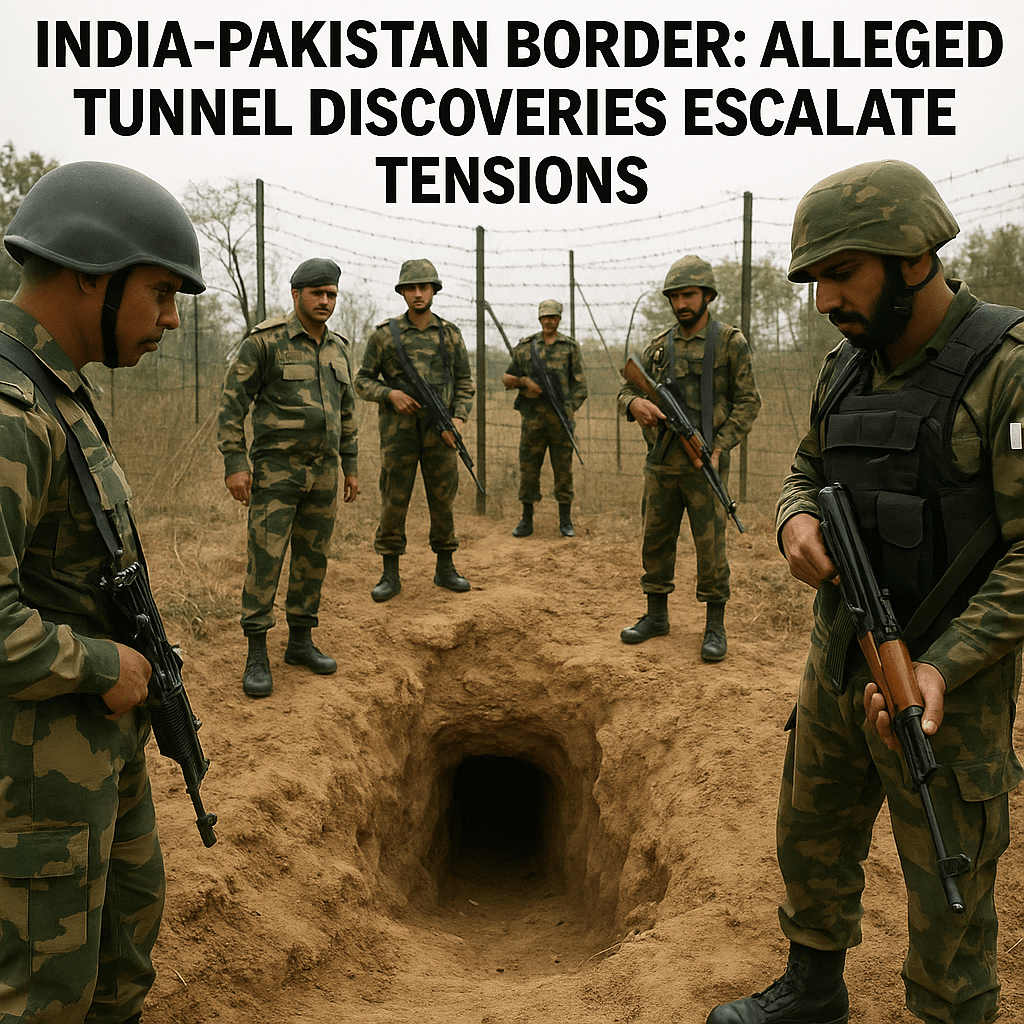
Reports have surfaced claiming that India has uncovered 22 tunnels extending from Pakistan into Indian territory along the volatile Line of Control (LoC) and international border.
These unverified allegations, circulating on social media platforms like X since 16 May 2025, suggest the tunnels were designed to facilitate terrorist infiltration, prompting India to undertake unspecified “good action.” While no official confirmation has been issued by Indian authorities or Pakistan, the claims border security issue reignites longstanding tensions between the two nuclear-armed neighbors. This analysis explores the context, available data, implications, and policy recommendations to address the challenge.
Location and Context
The India-Pakistan border, spanning 3,323 km, includes the 740-km LoC in Jammu and Kashmir and the international border in Punjab, Rajasthan, and Gujarat. The LoC, heavily fortified with fences and surveillance, is a hotspot for cross-border incidents. X posts claim the tunnels were found in regions like Jammu, though specific locations remain unconfirmed.
Historically, tunnels have been a persistent threat.
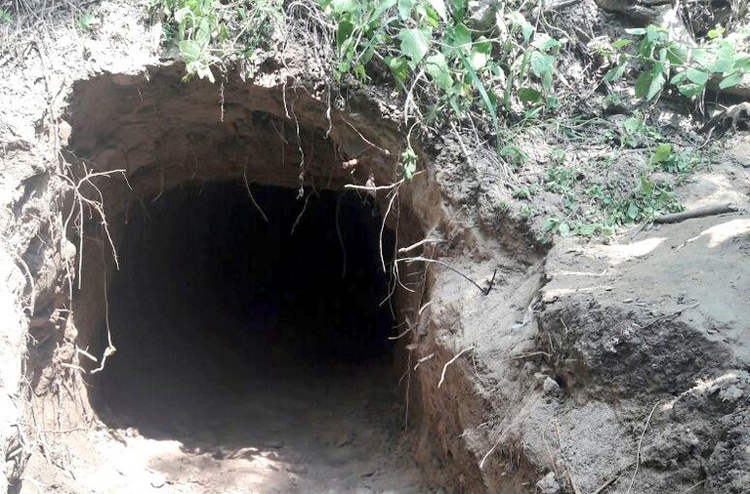
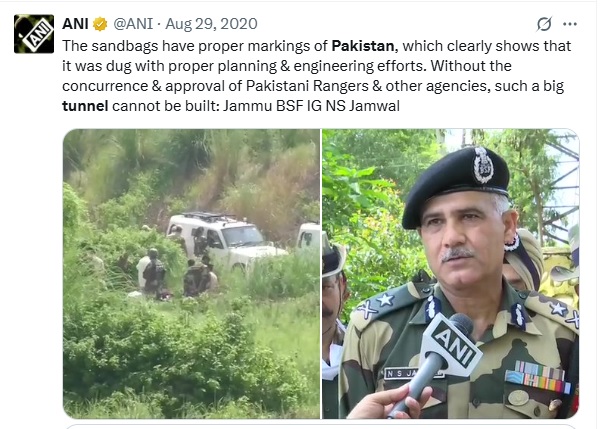
Between 2001 and 2016, India detected at least eight cross-border tunnels, primarily in Jammu’s Samba and Kathua districts, often linked to militant infiltration or smuggling. A notable example is a 150-meter tunnel found in Samba in August 2020, equipped with ventilation and lighting, indicating sophisticated engineering.
The alleged discovery comes amid fragile diplomatic relations.
A ceasefire agreed on 10 May 2025, following skirmishes sparked by a 22 April terrorist attack in Pahalgam, Kashmir, which killed 26 tourists, is now at risk. India accused Pakistan-based groups like Lashkar-e-Taiba, escalating tensions. The tunnel claims, if true, could derail confidence-building measures, with social media amplifying narratives of Pakistan’s alleged terrorist infrastructure.
Data and Facts
As of 18 May 2025, no official statements from India’s Ministry of Defence,
Border Security Force (BSF), or Pakistan’s Inter-Services Public Relations (ISPR) confirm the 22 tunnels.
Disclaimer: This video shows aproximately 150 m Tunnel used by Terorists to Infiltrate India from Pak ,traced by BSF and JKP in Samba sector just about 70 m from Border Fence, posted on Nov 22, 2020.
The claims stem from X posts, some alleging the recovery of arms, RDX, and even “poisonous snakes” in the tunnels, raising concerns about misinformation. Recent fact-checking efforts debunked exaggerated claims during the May 2025 clashes, such as a 2024 jet crash misattributed to 2025.
However, tunnels are a documented issue.
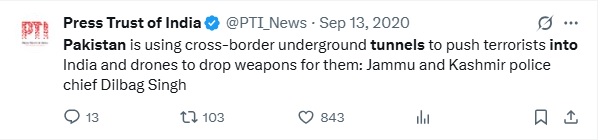
The BSF has uncovered at least 14 tunnels from 2012 to 2022, often 20-30 meters long, in Jammu and Punjab, used for narcotics, arms, or militant movement. Pakistan has denied involvement, but BSF reports note Chinese-made drones dropping contraband along the Punjab border, suggesting external support. The alleged scale of 22 tunnels would mark a significant escalation, potentially requiring military-grade engineering and coordination.
Since January 2023, the BSF has deployed drone-mounted ground-penetrating radars to detect tunnels, enhancing surveillance. Electronic surveillance systems, tested in Kathua in April 2025, aim to cover the entire Pakistan border by 2029. Yet, challenges persist in riverine and marshy terrains where fencing is incomplete.
Implications
The tunnel allegations, even if unverified, deepen mistrust.
India’s Operation Sindoor missile strikes on 7 May 2025, targeting alleged militant sites in Pakistan, followed the Pahalgam attack, prompting Pakistan to report civilian casualties. Both nations suspended the Indus Waters Treaty and Simla Agreement, signaling a diplomatic nadir.
The tunnel narrative fuels India’s claims of Pakistan-sponsored terrorism, while Pakistan denies involvement, urging international probes.
Social media amplifies polarization, with X posts driving unverified claims that risk inciting public sentiment and undermining ceasefire efforts.
Kashmiri communities along the LoC face heightened displacement risks, as seen in 2016 when 27,000 were displaced due to cross-border firing. Economically, border closures and trade bans disrupt livelihoods, while water-sharing disputes threaten Pakistan’s agriculture.
Policy Recommendations
- Strengthen Verification Mechanisms: India and Pakistan should establish a joint border monitoring committee, under UN or neutral third-party oversight, to investigate tunnel claims and reduce misinformation. Regular dialogue can rebuild trust.
- Enhance Technological Defenses: Accelerate deployment of ground-penetrating radars and AI-based surveillance along the LoC and international border. India should prioritize fencing gaps in Punjab and Rajasthan, integrating anti-drone systems to counter smuggling.
- Counter Misinformation: India and Pakistan should collaborate with social media platforms to flag unverified tunnel-related posts, promoting fact-checking to curb propaganda. Public awareness campaigns can reduce polarization.
- Protect Border Communities: Establish early warning systems and shelters for Kashmiri residents along the LoC to mitigate displacement during escalations. Humanitarian aid should be prepositioned.
Conclusion
The alleged discovery of 22 tunnels along the India-Pakistan border remains unconfirmed, yet it reveals the fragility of bilateral relations.
While India bolsters border security with technology, Pakistan must address allegations of militant support transparently.
Both nations face a shared threat from misinformation, which fuels tensions and risks escalation. By prioritizing verification, diplomacy, and community resilience, India and Pakistan can prevent the tunnel narrative from derailing the May 2025 ceasefire and work toward lasting stability in Kashmir and beyond.




Leave a comment