
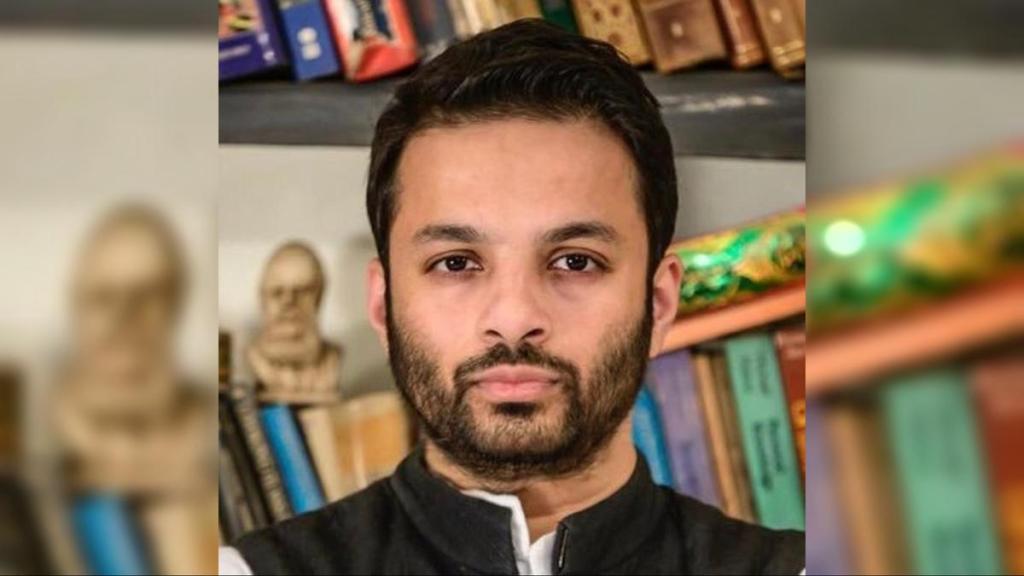
Ali Khan Mahmudabad, a historian, political scientist, and poet, was arrested by Haryana Police in Delhi on May 18, 2025, following two First Information Reports (FIRs) filed at Rai Police Station in Sonipat.
The FIRs were based on complaints by Yogesh Jatheri, a BJP Yuva Morcha leader and village sarpanch, and Renu Bhatia, chairperson of the Haryana State Commission for Women. The charges, under the Bharatiya Nyaya Sanhita (BNS), include Section 152 (endangering sovereignty, unity, and integrity of India), Section 196 (promoting enmity between groups), Section 197 (prejudicial to national integration), and Section 299 (culpable homicide), among others.
The controversy stems from a May 8, 2025, Facebook post in which Mahmudabad commented on Operation Sindoor, India’s military strikes on terror camps in Pakistan and Pakistan-occupied Kashmir (PoK) on May 7, 2025, in response to the April 22 Pahalgam terror attack that killed 26 civilians.
In his post, Mahmudabad praised the Indian armed forces’ strategic restraint and the symbolic role of women officers—Colonel Sofiya Qureshi and Wing Commander Vyomika Singh—in the media briefing. However, he criticized the “optics” of their involvement as potentially hypocritical if not matched by protections for Indian citizens, particularly Muslims, facing mob lynchings and arbitrary demolitions. He also urged right-wing commentators praising Colonel Qureshi to advocate equally for victims of communal violence.


The Haryana State Commission for Women took suo motu cognizance of the post, alleging it disparaged women officers and promoted communal disharmony.
Mahmudabad was summoned on May 12, and after he clarified that his remarks were misunderstood, he was arrested.
The Supreme Court agreed to hear his plea against the arrest on May 20 or 21, 2025, with senior advocate Kapil Sibal arguing that Mahmudabad’s statements were patriotic.
Side 1: Freedom of Expression and Protection of Minorities
Argument
Supporters of Mahmudabad argue that his arrest represents a direct attack on freedom of expression and academic freedom, constitutional rights enshrined in Article 19(1)(a) and protected under Article 21 of the Indian Constitution. They contend that his post was a nuanced critique of jingoism and a call for consistent advocacy for marginalized communities, particularly Muslims, who face systemic violence such as mob lynchings and property demolitions.
- Academic Freedom: The Faculty Association of Ashoka University condemned the arrest as “calculated harassment” on “groundless and untenable charges,” highlighting Mahmudabad’s role as a respected educator and advocate for communal harmony. Over 1,200 academics signed a letter before his arrest, denouncing the Haryana Women’s Commission’s summons as a “deliberate misreading” of his posts and an attempt at censorship. They argued that his comments praised the armed forces and criticized war-mongering, not the military’s actions.
- Protection of Minorities: Mahmudabad’s post emphasized the need to protect Indian Muslims from communal violence, pointing out the irony of right-wing support for a Muslim woman officer while ignoring broader injustices against Muslims. Supporters, including AIMIM chief Asaduddin Owaisi and CPI(M) member Subhashini Ali, argue that his arrest reflects selective targeting based on his Muslim identity and opinions. Congress spokesperson Pawan Khera stated, “His only mistake is his name,” suggesting bias in enforcement.
- Legal Overreach: Critics, including Delhi University professor Apoorvanand, have called the arrest “illegal,” citing procedural violations such as the lack of a transit remand for his arrest in Delhi. They reference the Supreme Court’s Pravir Purkayastha judgment, which emphasizes due process in arrests. The use of Section 152 of the BNS, likened to the colonial-era sedition law, is seen as an overreach to criminalize dissent.
- Waqf Act Context: Mahmudabad’s scholarship, including his commentary on the Waqf Act, has focused on Muslim identity and communal harmony in India. His critics allege that his remarks on the Waqf Act, which governs Muslim charitable properties, may have incited communal tensions by questioning government policies. However, supporters argue that his critiques are academic exercises aimed at protecting minority rights, not inciting discord. They view his arrest as part of a broader pattern of silencing voices advocating for minority protections, especially amid debates over the Waqf Act’s administration.
Repercussions
The arrest has significant implications for academic freedom and free speech in India.
The Faculty Association and civil society argue that criminalizing such speech risks stifling critical discourse in a democracy. The Supreme Court’s March 2025 judgment by Justices Oka and Bhuyan emphasized that “free expression of thoughts and views” is integral to a dignified life under Article 21, urging courts to “zealously protect” this right. Mahmudabad’s case could set a precedent for how far authorities can go in policing social media posts under national security pretexts.
The arrest also highlights the vulnerability of minority academics, particularly Muslims, in India’s polarized political climate. By framing Mahmudabad’s post as endangering national unity, authorities may deter others from discussing sensitive issues like communal violence or minority rights, chilling public discourse.
Side 2: Lineage, Family Wealth, and Funding Sources
Argument
Critics of Mahmudabad, including BJP supporters and commentators like Akhilesh Mishra of BlueKraft Digital Foundation, question the motives behind his scholarship and public statements, pointing to his lineage, family wealth, and potential funding sources. They argue that these factors cast doubt on the impartiality of his academic work and his comments on Operation Sindoor and the Waqf Act.
- Royal Lineage and Historical Ties: Mahmudabad hails from the royal family of Mahmudabad in Uttar Pradesh. His grandfather, Mohammad Amir Ahmad Khan, was a major financier of the Muslim League before India’s independence, and his properties were seized under the Enemy Properties Act due to his ties to Pakistan. His father, Mohammad Amir Mohammad Khan (Raja Sahab Mahmudabad), fought a 40-year legal battle to reclaim these properties, worth thousands of crores, including landmarks like Butler Palace and Hazratganj market in Lucknow. This historical connection to the Muslim League and Pakistan raises questions about Mahmudabad’s loyalty, especially in the context of his Operation Sindoor remarks.
- Family Wealth: The Mahmudabad family’s vast wealth, including properties in Lucknow, Sitapur, and Nainital, is seen by critics as potentially influencing his scholarship. Some argue that his privileged background may disconnect him from the realities of ordinary Indians, framing his critiques as elitist or out of touch. The reclaimed properties, now under Ali Khan’s control, are cited as evidence of his stake in maintaining a particular narrative about Muslim identity and rights, including his defense of the Waqf Act.
- Funding Sources and Scholarship: Mahmudabad’s academic work, including his book Poetry of Belonging (2020), focuses on Muslim political identity in colonial India. Critics question whether his scholarship, funded partly through Ashoka University and potentially other sources, serves external agendas. However, no concrete evidence of illicit funding has been provided.
- Waqf Act and Communal Tensions: Mahmudabad’s remarks on the Waqf Act have drawn scrutiny for allegedly stoking communal tensions. Critics argue that his advocacy for the Act, which governs properties dedicated for Muslim religious or charitable purposes, may embolden divisive narratives, especially in light of recent government efforts to reform its administration. They contend that his Operation Sindoor post, by linking military actions to domestic communal issues, risks fueling anti-national sentiments at a sensitive time. Akhilesh Mishra accused him of “insidious propaganda” that inserts a “Hindu-Muslim rift” during a national security crisis.
Repercussions
The focus on Mahmudabad’s lineage and wealth raises concerns about the politicization of personal background in academic discourse. By tying his scholarship to his family’s historical ties to the Muslim League, critics risk conflating academic critique with disloyalty, a tactic that could undermine scholarly integrity. The lack of evidence linking his funding to external agendas weakens this argument, but it amplifies public suspicion in a polarized climate.
His arrest may embolden authorities to target other academics with similar backgrounds, particularly those from minority communities, under vague charges like “endangering sovereignty.” This could further erode trust in institutions like Ashoka University, already criticized for its liberal funding sources.
Analysis
The debate over Mahmudabad’s arrest encapsulates broader tensions in India’s socio-political landscape.
On one hand, the freedom of expression argument highlights a democratic crisis where dissent, especially from minorities, is increasingly criminalized. The use of stringent BNS sections, particularly Section 152, signals a low tolerance for critiques that touch on national security or communal issues. Supporters’ reliance on constitutional protections and judicial precedents signifies the need for robust safeguards for academic freedom.
On the other hand, the scrutiny of Mahmudabad’s lineage and wealth reflects a populist narrative that questions the legitimacy of elite academics, particularly those with minority identities. While his family’s historical ties to the Muslim League and substantial wealth provide fodder for critics, they do not substantiate claims of anti-national activity. The Waqf Act controversy, while relevant, appears tangential to the Operation Sindoor post, suggesting that critics may be leveraging his broader scholarship to amplify accusations.
The Supreme Court’s hearing on May 20 or 21, 2025, will be pivotal. A ruling in Mahmudabad’s favor could reinforce protections for free speech, while an adverse decision might embolden further crackdowns on academic dissent. The case also highlights the delicate balance between national security and individual rights, a tension exacerbated by India’s current geopolitical and communal climate.
Conclusion
Ali Khan Mahmudabad’s arrest is a flashpoint for debates on freedom of expression, minority rights, and the role of personal background in shaping public perception of scholarship.
Supporters see him as a victim of state overreach, targeted for his identity and advocacy for marginalized communities.
Critics view his remarks and background as potentially divisive, questioning his motives in a time of national sensitivity. As the Supreme Court prepares to hear his plea, the outcome will likely have lasting implications for academic freedom and the boundaries of permissible speech in India.



Leave a comment