MEI News Analysis Team
20 May 2025

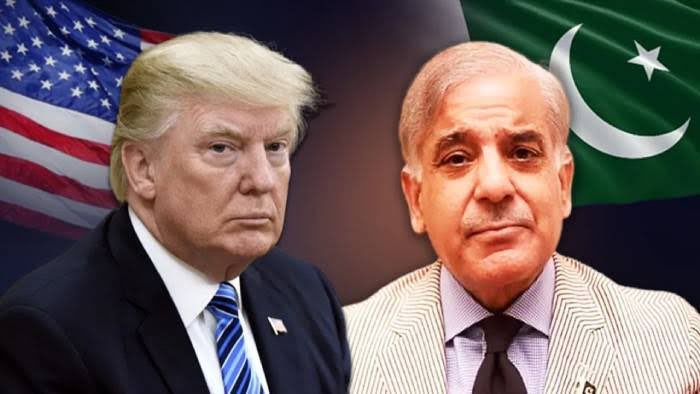
Pakistan’s recent agreement with World Liberty Financial (WLF), a cryptocurrency venture majority-owned by Donald Trump’s family, has thrust the South Asian nation into the global spotlight. Signed with the newly formed Pakistan Crypto Council (PCC), the deal aims to position Islamabad as South Asia’s crypto hub, leveraging the expertise of Binance founder Changpeng Zhao.
But the timing—days after a deadly terror attack in India’s Pahalgam—and the involvement of Donald Trump’s family have raised eyebrows, particularly in New Delhi.
What does this mean for Pakistan, the US, and the volatile India-Pakistan relationship?
What is Bitcoin and Why Does Cryptocurrency Matter?
Bitcoin, the first and most prominent cryptocurrency, is a decentralised digital currency operating on a blockchain—a secure, transparent ledger that records transactions without intermediaries like banks. Introduced in 2009 by an anonymous figure known as Satoshi Nakamoto, Bitcoin enables peer-to-peer transactions globally, offering lower fees and resistance to censorship. Its value, volatile yet soaring at times, has made it a speculative asset and a store of value, with a market cap exceeding $1 trillion in 2025.
Cryptocurrency matters because it represents a paradigm shift in finance.

For the United States, it’s a frontier for innovation, with cities like Miami and New York vying to become global crypto hubs. The US leads in blockchain patents and hosts major exchanges like Coinbase, but regulatory uncertainty persists. For Pakistan, cryptocurrency offers a chance to leapfrog traditional financial systems. With 25 million crypto users and $300 billion in annual transactions in 2024, Pakistan ranks ninth globally in crypto adoption, per Chainalysis. A young population (60% under 30) and high remittance inflows make cryptocurrency a tool for financial inclusion and economic growth.
What is World Liberty Financial?
World Liberty Financial (WLF) is a US-based decentralised finance (DeFi) platform launched in 2024, focusing on blockchain innovation, stablecoin development, and asset tokenisation.
It’s 60% owned by DT Marks DEFI LLC, an entity tied to Donald Trump’s family, including sons Eric and Donald Jr. (Web3 Ambassadors), Barron (DeFi Visionary), and Jared Kushner. Donald Trump himself serves as “Chief Crypto Advocate.” The firm raised $300 million in 2024 by selling $WLFI tokens and launched a stablecoin, USD1, in March 2025, used in major transactions like a $2 billion investment in Binance by Abu Dhabi’s MGX.
WLF’s investors, including Chinese billionaire Justin Sun ($75 million) and Dubai’s DWF Labs ($25 million), have drawn scrutiny for their legal histories, raising ethical concerns about conflicts of interest given Trump’s political role. The firm’s deal with Pakistan marks its most significant international venture, amplifying questions about the intersection of business and geopolitics.
The Role of Donald Trump’s Family
Donald Trump’s family holds a commanding 60% stake in WLF through DT Marks DEFI LLC, entitling them to 75% of certain revenue streams from coin sales. Their involvement extends beyond ownership: Eric and Donald Jr. promote WLF globally, while Barron shapes its DeFi strategy. The family’s ties to controversial investors like Sun, who faced a paused SEC investigation, and Binance’s Changpeng Zhao, who served a four-month sentence for crypto fraud, have fueled speculation about opaque financial motives.
The timing of the Pakistan deal, signed days before the Pahalgam attack on April 22, 2025, which killed 26 tourists, has intensified scrutiny.
Indian officials suspect the deal could serve as a backchannel for political or military coordination, especially given Trump’s renewed interest in mediating India-Pakistan tensions. The White House and Trump family have remained Districts, with WLF insisting the deal is “apolitical.”
The Role of the Pakistan Crypto Council
The Pakistan Crypto Council (PCC), formed in early 2025, is a government-affiliated body tasked with transforming Islamabad into South Asia’s crypto hub. Led by CEO Bilal Bin Saqib, who also advises WLF, the PCC aims to integrate blockchain into Pakistan’s financial systems. Its rapid appointment of Changpeng Zhao as an adviser reflects its ambition to gain global credibility, leveraging Binance’s status as the world’s largest crypto exchange.
The PCC’s agreement with WLF includes regulatory sandboxes for testing blockchain products, asset tokenisation, stablecoin development, and DeFi pilot projects. These initiatives aim to modernise Pakistan’s financial infrastructure, competing with established hubs like the UAE. The presence of Pakistan’s Prime Minister Shehbaz Sharif, Army Chief General Asim Munir, and other officials at the signing reveals the deal’s strategic importance.
What Will Pakistan Gain?
Pakistan stands to gain significantly from the WLF partnership:
- Economic Modernisation: Blockchain integration could streamline remittances, a $30 billion industry in Pakistan, reducing costs and enhancing transparency.
- Global Competitiveness: The PCC’s vision to make Islamabad a crypto hub could attract foreign investment, challenging India’s dominance in South Asia’s crypto market.
- Financial Inclusion: With 60% of its population under 30, cryptocurrency adoption could empower unbanked communities, fostering digital entrepreneurship.
- Regulatory Framework: The PCC’s collaboration with WLF and Zhao will shape crypto-friendly policies, balancing innovation with anti-money laundering measures.
However, Pakistan’s crypto ambitions face risks, including regulatory challenges and potential backlash from conservative factions wary of Western influence.
Why the Pak-US Crypto Collaboration Concerns India
The Pak-US crypto collaboration has alarmed India for several reasons:
- National Security: The deal’s timing, days before the Pahalgam attack attributed to Pakistani nationals, raises fears of financial data vulnerabilities. Indian officials worry that cost-effective exchanges in Pakistan could divert trading activity, potentially exposing sensitive data.
- Geopolitical Implications: Donald Trump’s family ties to WLF and Trump’s mediation offer in India-Pakistan talks suggest a possible conflict of interest. Indian analysts view the deal as an “opaque financial alliance with political overtones,” especially given General Munir’s involvement.
- Regional Rivalry: Pakistan’s bid to become South Asia’s crypto hub directly challenges India, which leads in crypto adoption but imposes a 30% tax on crypto trades, reducing exchange volumes. Pakistan’s more open approach could shift regional financial influence.
- Terrorism Financing Risks: India fears that lax regulations in Pakistan could enable cryptocurrency misuse for terrorism financing, a concern heightened by the Pahalgam attack and Operation Sindoor, India’s retaliatory strikes.
Analysis: A High-Stakes Gamble
The Pak-US crypto collaboration signifies the growing intersection of cryptocurrency, geopolitics, and business.
For Pakistan, the deal offers a chance to modernise its economy and assert regional influence, but it risks escalating tensions with India.
For the United States, WLF’s venture highlights the challenges of separating private business from public office, especially with Donald Trump’s family at the helm.
India’s concerns are not unfounded.
The involvement of Pakistan’s military and Trump’s family raises questions about transparency and intent, particularly in a region prone to conflict.
While WLF and the PCC insist the deal is purely economic, the geopolitical context—amplified by recent violence—suggests broader implications. As Pakistan pushes to become a crypto hub, the balance between innovation and security will be critical.
The silence from the White House and Donald Trump’s family leaves room for speculation, while India watches closely, wary of a shifting financial and strategic landscape.
In the volatile world of cryptocurrency and South Asian politics, this deal could reshape regional dynamics—or deepen existing divides.



Leave a comment