
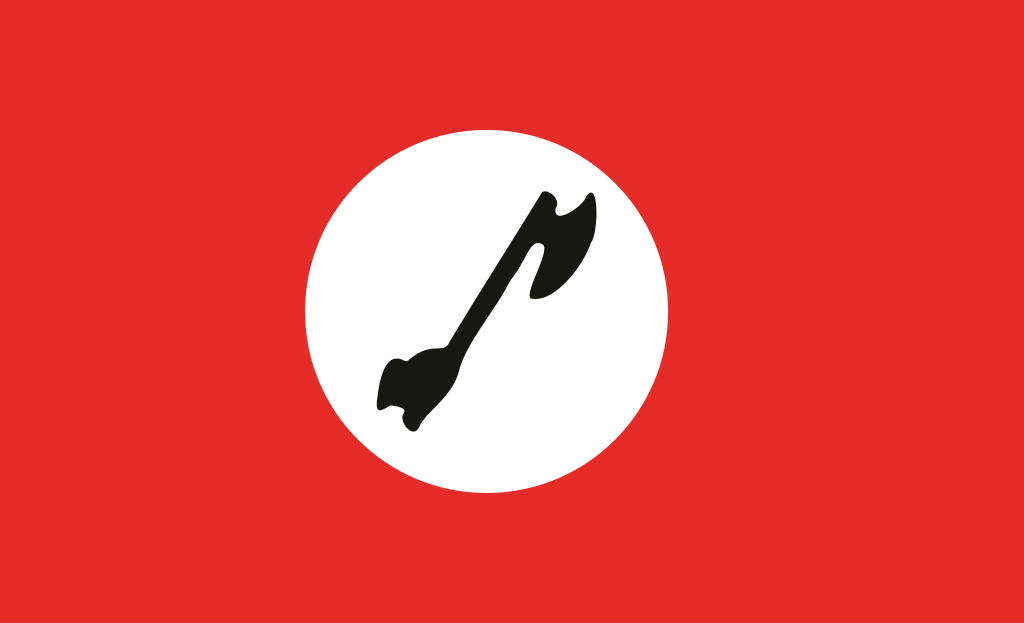
The Sindhudesh movement is a separatist campaign advocating for an independent homeland for the Sindhi people in Pakistan’s Sindh province.
Rooted in ethnic and cultural identity, it seeks to establish Sindhudesh (literally “Sindhi Country”) as a sovereign state, citing grievances over cultural suppression, economic marginalization, and human rights abuses by the Pakistani state.
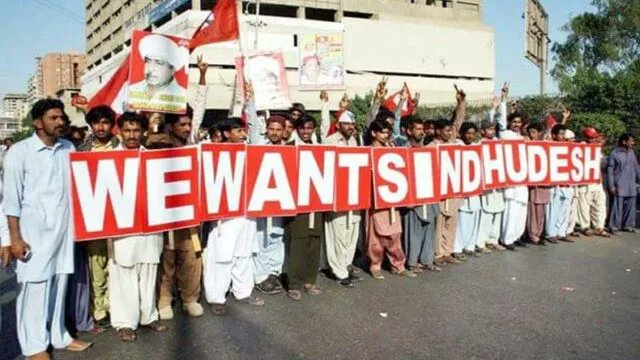
The movement has gained attention through recent protests, such as a highway sit-in on 17 May 2025, organized by the Jeay Sindh Freedom Movement (JSFM), demanding the release of jailed Sindhi nationalists and an end to alleged human rights violations.
Who is Involved?
The Sindhudesh movement is driven by Sindhi nationalists, primarily through groups like the Jeay Sindh Tehreek (JST), founded in 1972 by G. M. Syed, a pivotal figure in Sindhi nationalism, and the Jeay Sindh Qaumi Mahaz (JSQM), led by figures like Bashir Khan Qureshi until his death in 2012.
The Jeay Sindh Students’ Federation serves as the student wing, mobilizing younger activists. More militant factions, such as the Sindhudesh Liberation Army (SDLA) and Sindhudesh Revolutionary Army (SRA), have been linked to sporadic attacks, though the movement emphasizes urban political mobilization over armed insurgency, unlike the Balochistan separatist movement.
Exiled leaders like Shafi Muhammad Burfat, chairman of JSMM, operate from abroad, often under political asylum, amplifying the movement’s voice internationally. Sindhi diaspora in India and elsewhere also support the cause, motivated by historical ties to Sindh pre-Partition.
Historical Context
The Sindhudesh movement emerged post-Partition in 1947, when Sindh became part of Pakistan, and many Hindu Sindhis migrated to India, disrupting the region’s economic and social fabric.
The movement gained traction in the 1950s, inspired by the Bengali language movement, and crystallized in 1972 when G. M. Syed founded JST, advocating for Sindhi independence after Bangladesh’s secession in 1971.
Syed’s vision, outlined in works like Sindhu Desh — A Nation in Chains, rejected Pakistan’s centralized policies, particularly the imposition of Urdu and the One Unit policy, which marginalized Sindhi culture and language. Despite periodic rallies and protests, such as a 2012 Karachi rally with low turnout, the movement has struggled to gain mainstream support, with the Pakistan Peoples Party (PPP) dominating Sindh’s politics. In 2020, Pakistan banned several separatist groups, including JSQM-Aresar, SRA, and SDLA, labeling them as terrorist outfits.
Recent protests, like those in April and May 2025, highlight ongoing tensions, with Sindhi activists alleging enforced disappearances, arrests, and resource exploitation, particularly around the Karunjhar mountains, a sacred and ecological site.
These actions have drawn parallels to Balochistan’s unrest, though the Sindhudesh movement remains largely non-violent and urban-focused.
Repercussions for Pakistan
The Sindhudesh movement poses a challenge to Pakistan’s national cohesion, though its limited support base—evidenced by the PPP’s electoral dominance—suggests it is not an immediate threat to state stability. However, protests and sit-ins, like the May 2025 JSFM action, disrupt infrastructure and draw international scrutiny to human rights abuses, straining Pakistan’s image.
The government’s response—arrests, bans, and alleged abductions—risks further alienating Sindhis, potentially escalating tensions. Economically, unrest in Sindh, a key agricultural and industrial hub, could disrupt Pakistan’s economy, especially if resource nationalism over sites like Karunjhar intensifies. The movement’s international advocacy, amplified by exiled leaders and the Sindhi diaspora, also pressures Pakistan diplomatically, with comparisons to Bangladesh’s independence fueling separatist narratives.
Implications for India
India must approach the Sindhudesh movement with caution, given the volatile India-Pakistan relations, particularly after the 2025 conflict over Kashmir.
The movement’s claims to Kutch in India and historical ties to Sindhi Hindus in India could complicate bilateral dynamics. India should monitor the movement to assess its potential to destabilize Pakistan, as a weakened neighbor could both benefit and challenge India’s security interests.
However, India must avoid actions that could be perceived as meddling, as Pakistan has accused India of supporting separatist movements like Balochistan’s, a charge India denies.
Engaging with the Sindhi diaspora in India could provide cultural and humanitarian insights, but overt support risks escalating tensions, especially post-Operation Sindoor, where India’s strikes on Pakistan heightened mistrust. A balanced approach—monitoring without interference—serves India’s interests while avoiding accusations of fueling separatism.
Looking Ahead
The Sindhudesh movement, while not as potent as Balochistan’s insurgency, reflects deep-seated ethnic grievances in Pakistan. Its focus on cultural identity, human rights, and resource rights resonates with global separatist trends, but its limited traction suggests Pakistan’s mainstream politics still hold sway.
For India, the movement is a geopolitical factor to watch, not stoke, as South Asia navigates a fragile peace post-2025 ceasefire.
Continued protests and international advocacy may keep Sindhudesh in the spotlight, but its success depends on broader Sindhi support, which remains elusive.



Leave a comment