
In a historic move, Pakistan’s government has promoted General Syed Asim Munir, the Chief of Army Staff (COAS), to the rank of Field Marshal, making him only the second officer in the country’s history to hold this prestigious five-star rank after General Ayub Khan in 1959.
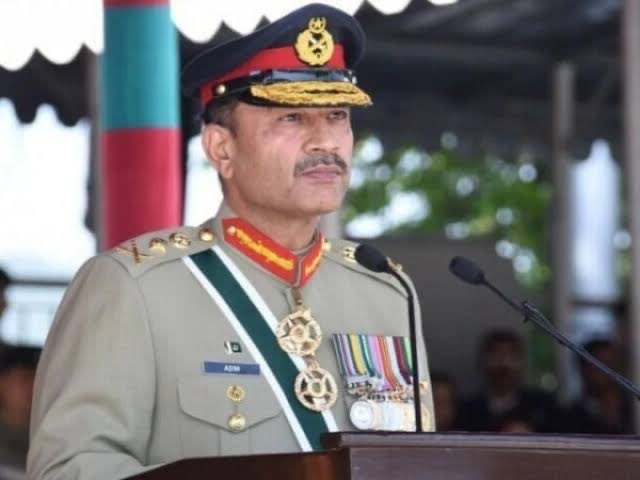
The decision, announced on 20 May 2025 following a cabinet meeting chaired by Prime Minister Shehbaz Sharif, comes in the wake of heightened tensions with India and domestic challenges within Pakistan. This analysis explores who General Munir is, his ideological leanings, the implications of his new powers, the motivations behind the promotion, its significance for India, how it enhances his leverage, and potential policy responses for New Delhi.
Who is Asim Munir?
Born in 1968 in Rawalpindi, Pakistan, into a Punjabi Muslim family that migrated from Jalandhar, Punjab, India, after the 1947 partition, General Syed Asim Munir Ahmed Shah has had a distinguished yet turbulent career in Pakistan’s military.
His father was a principal and imam, and Munir received early religious education at Markazi Madrasah Dar-ul-Tajweed in Rawalpindi. He pursued higher education, earning an MPhil in Public Policy and Strategic Security Management from the National Defence University in Islamabad. Commissioned in 1986 into the 23rd Battalion of the Frontier Force Regiment, he served in Saudi Arabia and at the Siachen Glacier, earning the Sword of Honour for his performance as a cadet at the Officers Training School in Mangla.
Munir’s career saw rapid advancement, including commanding the XXX Corps in Gujranwala (2019–2021) and serving as Quartermaster General at General Headquarters (GHQ) before his appointment as COAS in November 2022, just days before his scheduled retirement. Notably, he is the only Pakistani army chief to have led both premier intelligence agencies: Military Intelligence (2016) and the Inter-Services Intelligence (ISI) (2018–2019).
His tenure as ISI chief was brief, lasting eight months—the shortest in Pakistan’s history—after a fallout with then-Prime Minister Imran Khan, reportedly over exposing corruption involving Khan’s wife, Bushra Bibi, though Khan denied these allegations. Despite this setback, Munir’s appointment as COAS by Prime Minister Shehbaz Sharif in 2022 marked his emergence as Pakistan’s most powerful figure, consolidating military influence over a weakened civilian government.
Ideology: A Hardline Stance
General Munir’s worldview is shaped by a deep commitment to the “two-nation theory,” the ideological foundation of Pakistan’s creation in 1947, which posits that Hindus and Muslims constitute fundamentally separate nations.
His rhetoric, particularly since becoming COAS, has been overtly anti-India, framing the conflict with New Delhi as not only territorial but also religious.
In a speech on 16 April 2025 at an Overseas Pakistanis Convention, Munir emphasized the “stark differences between Hindus and Muslims,” describing Kashmir as Pakistan’s “jugular vein” and vowing unwavering support for Kashmiri “struggles” against Indian “occupation”
Six days later, the Pahalgam terror attack in Indian-administered Kashmir, which killed 26 people, was linked by Indian officials to Munir’s inflammatory remarks, though Pakistan denies involvement.
Analysts describe Munir as a hardliner, drawing inspiration from former military ruler General Zia-ul-Haq, who championed the “bleed India with a thousand cuts” doctrine.
Unlike his predecessor, General Qamar Javed Bajwa, who pursued cautious diplomacy with India, Munir has adopted a confrontational tone, recasting the army as the guardian of Pakistan’s ideological frontiers.
His invocation of “jihad” in a 2023 speech to a tribal council in Peshawar reveals his blend of religious nationalism and military assertiveness, a stance that resonates domestically but risks escalating regional tensions.
Munir also advocates combating Islamic extremism and ensuring safety for religious minorities, reflecting a complex balance between conservative beliefs—he is the first army chief to have memorized the Qur’an—and a “Pakistan first” policy (Wikipedia).
New Powers as Field Marshal
The rank of Field Marshal, a ceremonial yet symbolically potent five-star title, elevates Munir above the traditional four-star general rank of COAS.
Unlike Ayub Khan, who relinquished the COAS role after his self-promotion to Field Marshal in 1959, Munir continues to hold active command, a historic first for Pakistan. The rank, which does not confer specific operational powers, enhances Munir’s authority in several ways:
- Symbolic Authority: The title grants Munir lifetime prestige, including unique privileges such as a special baton, five-star vehicle insignia, and the right to wear his uniform post-retirement. This bolsters his public image as Pakistan’s preeminent leader.
- Institutional Dominance: As Field Marshal, Munir’s influence over Pakistan’s military and civilian institutions is cemented, particularly following the Supreme Court’s May 2025 ruling allowing civilian trials in military courts, a move critics argue strengthens his ability to suppress dissent.
- Extended Tenure: Legislation passed in November 2024 extended the COAS tenure from three to five years, ensuring Munir’s leadership until 2027. The Field Marshal rank further insulates him from political challenges, granting what some observers describe as “narrative insulation” and “institutional override.”
While the rank itself does not grant new operational powers, it amplifies Munir’s ability to shape Pakistan’s foreign and security policies, particularly on India and Kashmir, with minimal civilian oversight.
Why the Promotion?
The Pakistani government, led by Prime Minister Shehbaz Sharif, justified Munir’s promotion as recognition for his “exemplary leadership” during Operation Bunyan-un-Mursoos, Pakistan’s response to India’s Operation Sindoor, which targeted terrorist infrastructure following the Pahalgam attack.
The cabinet’s unanimous approval and President Asif Ali Zardari’s endorsement reflect the military’s dominance over civilian governance. Analysts suggest multiple motivations:
- Domestic Consolidation: Facing economic turmoil, insurgencies in Balochistan and Khyber Pakhtunkhwa, and public discontent over Imran Khan’s imprisonment, Munir has leveraged anti-India sentiment to rally national unity. The promotion reinforces his image as a defender of Pakistan’s sovereignty.
- Response to India: The timing, post-ceasefire on 10 May 2025, suggests an attempt to project strength after India’s precision strikes on Pakistani terror sites, which India claims destroyed nine terror launch pads and damaged 11 airbases. Pakistan’s narrative of “victory” in the conflict, despite these claims, aims to bolster Munir’s credibility.
- Internal Military Dynamics: Some speculate the promotion addresses tensions within the military, particularly after reports of discord with the Pakistan Air Force during the recent conflict. The Field Marshal title may signal unified command under Munir’s leadership.
Implications for India
General Munir’s elevation has significant ramifications for India, particularly in the context of the 2025 India-Pakistan conflict.
His hardline ideology and perceived role in the Pahalgam attack, which India attributes to Pakistan-backed groups like Lashkar-e-Taiba, heighten the risk of further escalation. Key implications include:
- Escalatory Rhetoric: Munir’s invocation of the two-nation theory and warnings of a “swift, resolute response” to Indian actions signal a rejection of diplomacy, complicating efforts to de-escalate tensions along the Line of Control (LoC)
- Military Posturing: As Field Marshal, Munir’s enhanced authority may embolden Pakistan to pursue aggressive tactics, such as drone incursions or support for militant groups, as seen in past attacks like Pulwama (2019), where Munir was ISI chief.
- Domestic Leverage: Munir’s strengthened grip over Pakistan’s institutions, including the judiciary and civilian government, reduces the likelihood of internal checks on his anti-India policies, potentially prolonging the Kashmir dispute.
India faces a delicate challenge: responding to provocations without triggering a broader conflict between two nuclear-armed neighbors.
The suspension of the Indus Water Treaty and downgrading of diplomatic ties post-Pahalgam indicate New Delhi’s hardening stance, but Munir’s promotion suggests Pakistan is unlikely to back down.
How the Promotion Gives More Leverage
The promotion to Field Marshal provides General Munir with several advantages over his previous position as COAS:
- Symbolic Authority: The five-star rank enhances his prestige and public image, reinforcing his role as the supreme military leader, which can rally national support.
- Institutional Dominance: It solidifies his control over the military and civilian institutions, particularly with the Supreme Court’s ruling on military courts, allowing him to shape policies with less opposition.
- Autonomy in Decision-Making: The rank may grant him greater freedom in formulating and implementing strategies, particularly in matters of national security and foreign policy, with minimal civilian oversight.
- National Rallying Point: The promotion serves as a symbol of unity and strength, potentially rallying national support behind his leadership, especially in times of crisis.
Policy Recommendations for India
To navigate this volatile situation, India should adopt a multi-pronged strategy balancing deterrence, diplomacy, and domestic preparedness:
- Strengthen Deterrence: Continue precision strikes, like Operation Sindoor, to target terrorist infrastructure while avoiding escalation into full-scale conflict. Enhancing air defense systems and intelligence-sharing with allies, such as the US and France, can counter Pakistan’s drone and missile capabilities.
- Diplomatic Pressure: Leverage international forums to highlight Pakistan’s role in terrorism, as evidenced by the Pahalgam attack. Engaging with the US, which recently imposed sanctions on Pakistani entities, and rallying support from the Financial Action Task Force (FATF) could further isolate Pakistan economically.
- Backchannel Engagement: Despite Munir’s hardline stance, India should explore discreet channels to engage Pakistan’s civilian leadership, emphasizing economic incentives for de-escalation, given Pakistan’s reliance on IMF bailouts.
- Counter-Narrative: Publicly challenge Munir’s divisive rhetoric by promoting India’s secular identity and highlighting Pakistan’s internal challenges, such as economic crises and insurgencies, to weaken his nationalist appeal.
- Domestic Resilience: Strengthen security in Jammu and Kashmir to prevent further attacks, while investing in community engagement to counter radicalization narratives amplified by Munir’s ideology.
Conclusion
General Asim Munir’s promotion to Field Marshal marks a pivotal moment in Pakistan’s military and political landscape, reinforcing his status as the country’s most powerful figure.
His hardline ideology, rooted in the two-nation theory and religious nationalism, signals a confrontational approach toward India, particularly on Kashmir. While the promotion enhances his symbolic and institutional authority, it also underscores Pakistan’s internal vulnerabilities.
For India, the challenge lies in countering Munir’s provocations while avoiding a broader conflict. A balanced approach of deterrence, diplomacy, and resilience will be critical to managing this tense chapter in India-Pakistan relations.



Leave a comment