
30 May 2025
A new ceasefire proposal for Gaza, brokered by U.S. Special Envoy Steve Witkoff and backed by President Donald Trump, has emerged as a potential turning point in the protracted conflict between Israel and Hamas.
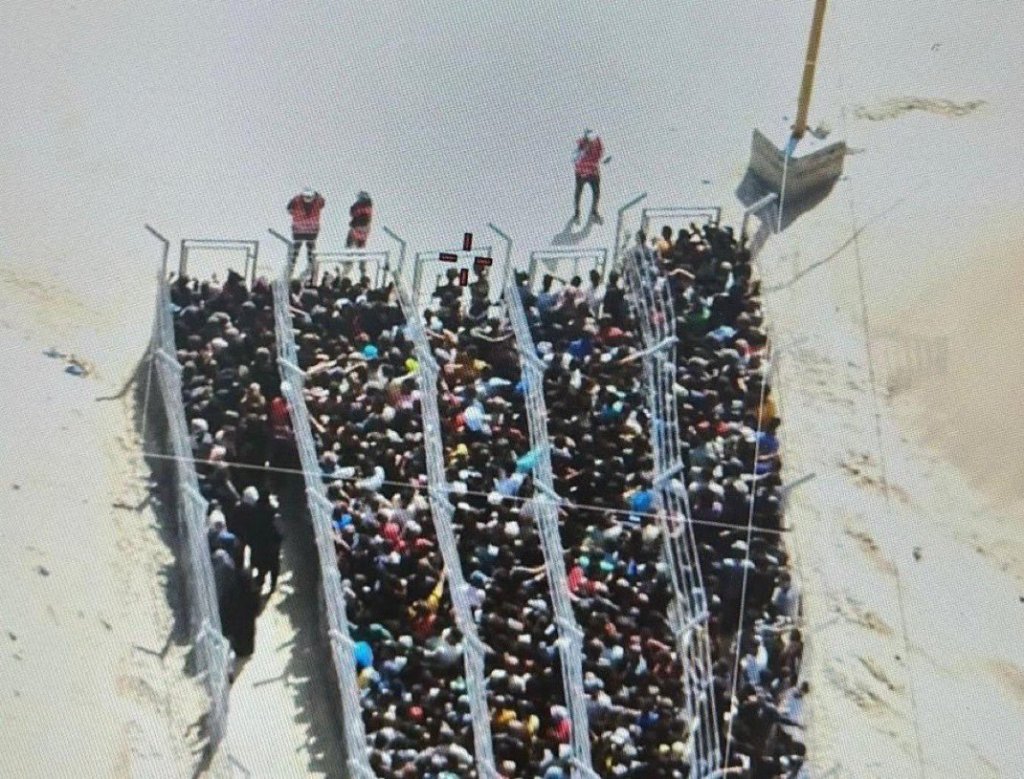
The framework, obtained by Al-Arabiya outlines a 60-day truce, the release of hostages and prisoners, and a pathway to negotiations for a permanent resolution.
Yet, as both sides weigh the terms, deep skepticism and historical mistrust threaten to undermine its prospects.
Is this a genuine step toward peace, or merely a tactical pause in a war that has already claimed countless lives?
The Proposal: A Detailed Framework
The Witkoff proposal, as it has come to be known, is a multi-faceted plan aimed at halting the violence that has ravaged Gaza since the escalation of hostilities on 7 October 2023. Its key provisions include
- A 60-day ceasefire, with President Trump personally guaranteeing Israel’s adherence to the terms. This marks a significant U.S. involvement, reflecting Trump’s renewed diplomatic engagement in the region following his return to office.
- Hostage and prisoner exchanges: Hamas would release 28 Israeli hostages—10 alive and 18 deceased—in two stages on Days 1 and 7. In return, Israel would release 125 Palestinian prisoners serving life sentences, 1,111 detainees arrested since October 2023, and the bodies of 180 Palestinians held by Israel.
- Humanitarian aid: Immediate aid flows into Gaza would be facilitated upon Hamas’s acceptance, overseen by the United Nations and the Red Crescent. This comes as a critical lifeline, with the Red Cross reporting that 1,600 Palestine Red Crescent Society staff and volunteers have been working under immense risk to support over 100,000 people in Gaza amidst a dire humanitarian crisis.
- Military de-escalation: Israel would halt all offensive operations in Gaza, pausing air activities for 10 hours daily (12 hours on exchange days). The Israel Defense Forces (IDF) would redeploy from northern Gaza and the Netzarim corridor on Day 1, and from southern Gaza on Day 7, with final boundaries to be set during negotiations.
- Path to a permanent ceasefire: Negotiations, supervised by the U.S., Egypt, and Qatar, would begin on Day 1, addressing the release of remaining hostages, IDF withdrawal, Gaza’s post-war governance, and long-term security arrangements. If successful within 60 days, the truce could transition into a permanent resolution; if not, it may be extended by mutual consent.
A Region on Edge: The Context
The proposal arrives against a backdrop of immense suffering.
Since October 2023, the Gaza conflict has seen unprecedented levels of destruction, with the United Nations condemning Israel’s humanitarian aid blockade as a violation of previous ceasefire terms.
On 9 March 2025, Israeli Energy Minister Eli Cohen ordered a halt to electricity supplies to Gaza, exacerbating an already catastrophic situation. Hamas, for its part, has been under pressure to secure the release of Palestinian prisoners while maintaining its demand for a permanent end to hostilities.
The U.S., Egypt, and Qatar have been key mediators, but their efforts have often faltered.
A previous ceasefire, which ran from 19 January to 18 March 2025, saw eight rounds of hostage-prisoner exchanges but collapsed when Israel resumed its offensive, citing stalled negotiations. Hamas’s refusal to accept a U.S. ceasefire extension proposal on 1 March led to Israel blocking aid the following day, a move that drew international condemnation.

Voices of Doubt: Will It Hold?
While the proposal offers a glimmer of hope, reactions on the ground and online reveal deep skepticism. On X, users have voiced concerns that the 60-day truce is merely a temporary measure to ease international pressure on Israel. “This isn’t a peace deal, it’s a temporary truce dressed up to delay pressure, calm headlines, and get hostages back while leaving the core injustice intact: the occupation and siege of Gaza,” wrote
Hamas, too, has expressed reservations.
A Palestinian official close to the group told Reuters that Hamas had agreed to a framework it attributed to Witkoff, but the Jerusalem Post reported that this framework differed from the one Israel had approved. Witkoff himself rejected claims that Hamas had accepted the deal, and an Israeli official echoed this sentiment, stating that the talks remain “deadlocked.” Israeli Prime Minister Benjamin Netanyahu has previously called Hamas’s counteroffers “ludicrous,” though he has kept the door open for negotiations.
The Stakes: A Humanitarian Imperative
The humanitarian crisis in Gaza reveals the urgency of the moment.
The Red Cross has highlighted the tireless efforts of the Palestine Red Crescent Society, which has distributed 1.6 million emergency relief items despite immense risks to its staff. The blockade of aid, including food, water, and electricity, has pushed Gaza to the brink, with families unable to reunite and lives hanging in the balance.
For many, the success of the Witkoff proposal hinges on whether it can address the root causes of the conflict.
Analysis: A Fragile Opportunity
The Witkoff proposal represents a rare moment of diplomatic convergence, with the U.S., Egypt, and Qatar aligning to push for de-escalation.
President Trump’s personal involvement adds a layer of political weight, signaling Washington’s intent to play a more assertive role in the region. Yet, the plan’s reliance on mutual goodwill—a scarce commodity in this conflict—raises questions about its viability.
Israel’s commitment to the ceasefire will be closely scrutinized, especially given its history of resuming military operations when negotiations falter. Hamas, meanwhile, faces pressure to secure guarantees for a permanent ceasefire, a demand that has been a sticking point in past talks. The mediators’ ability to enforce compliance and sustain momentum toward a lasting resolution will be critical.
For the people of Gaza, the stakes could not be higher.
A successful ceasefire could pave the way for much-needed humanitarian relief and a chance to rebuild. But if history is any guide, the road to peace remains fraught with peril.



Leave a comment