
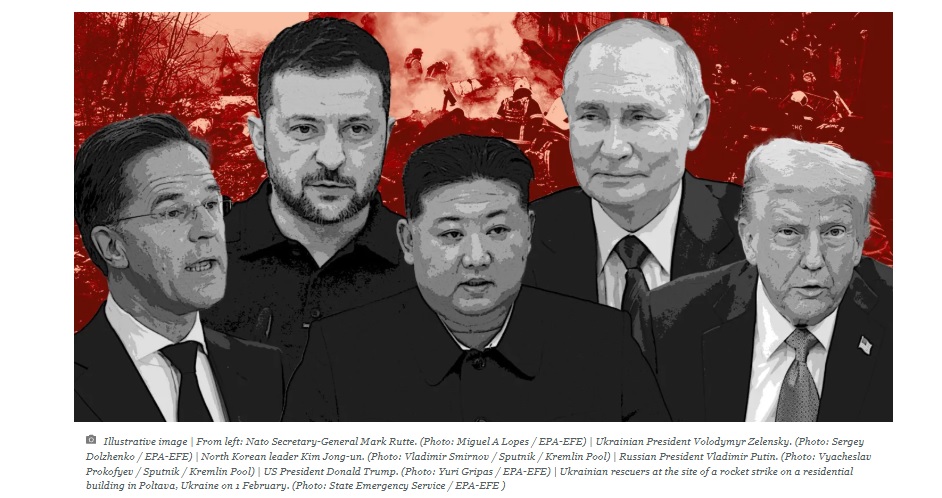
The Russia-Ukraine conflict, escalating significantly with Russia’s full-scale invasion on February 24, 2022, following the 2014 annexation of Crimea and hostilities in Donbas, has evolved into one of the most consequential geopolitical crises of the 21st century.
By June 2025, the war remains a brutal stalemate, characterized by intense conventional warfare, advanced technological deployments, and significant international involvement.
Russia has pursued territorial gains in eastern Ukraine (Luhansk, Donetsk, Zaporizhia, and Kherson oblasts) and aims to establish a “buffer zone” along its border, while Ukraine has mounted a resilient defense, bolstered by Western aid and domestic innovation.
The conflict has reshaped global alliances, accelerated an arms race, and highlighted the complexities of international diplomacy, with India navigating a delicate balance between its historical ties with Russia and growing Western partnerships.
How Zelenskyy Came to Power
Background and Rise
Volodymyr Zelenskyy, born January 25, 1978, in Kryvyi Rih, Ukraine, rose from a comedian and actor to Ukraine’s president. His career began in entertainment, starring in the hit TV show Servant of the People, where he played a teacher unexpectedly elected president. This role propelled him to national fame, resonating with Ukrainians frustrated by corruption and oligarchic rule.
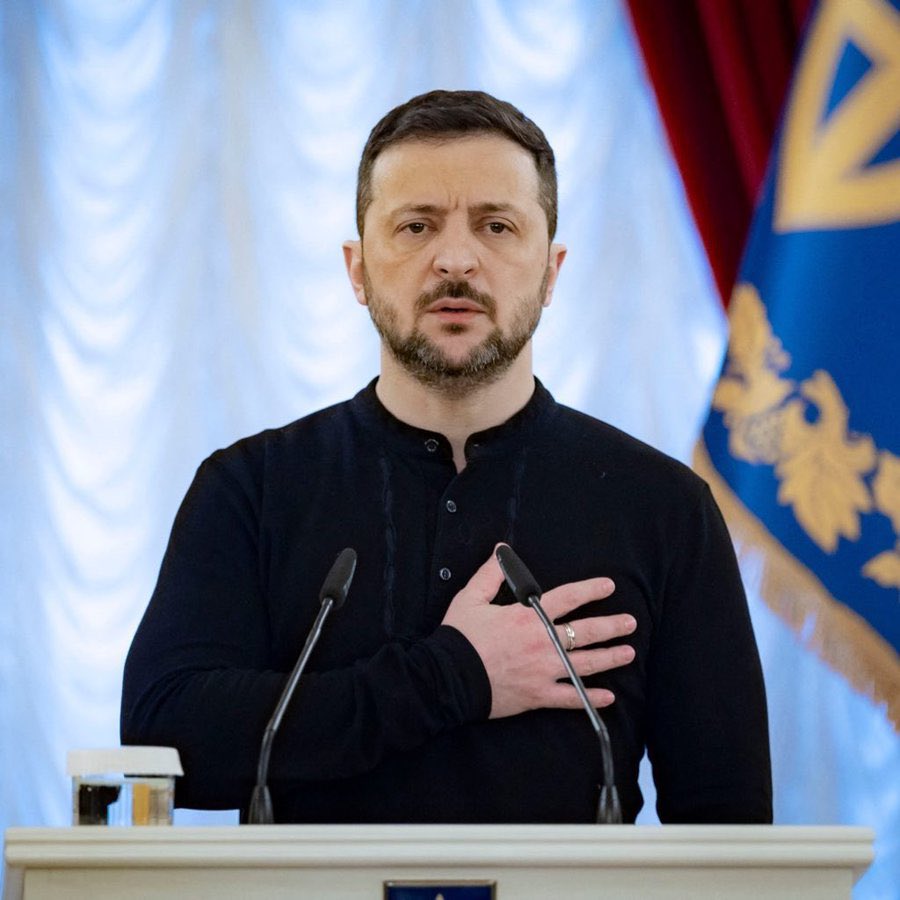
- 2019 Presidential Election: Zelenskyy capitalized on public discontent with the political establishment, particularly after President Petro Poroshenko’s tenure (2014–2019), marked by economic struggles and ongoing conflict in Donbas. Running as a political outsider with the Servant of the People party (named after his show), Zelenskyy campaigned on anti-corruption, economic reform, and peace in Donbas. He won a landslide victory in May 2019, securing 73.2% of the vote against Poroshenko’s 24.5%, reflecting widespread demand for change .
- Key Factors: His appeal stemmed from his outsider status, media savvy, and promise to bridge Ukraine’s linguistic and cultural divides (Russian-speaking east vs. Ukrainian-speaking west). His campaign leveraged social media and relatable messaging, avoiding traditional political structures.
Role of Jewish Heritage
Zelenskyy’s Jewish background has been a point of discussion, particularly in the context of Russia’s “denazification” narrative.
- Heritage and Identity: Zelenskyy was born to Jewish parents in a Russian-speaking family in Kryvyi Rih, a heavily industrialized city. His Jewish identity was not a central campaign theme, but he has openly acknowledged it, noting his family’s history of surviving the Holocaust (his grandfather served in the Soviet army during WWII) . In a country with a small Jewish population (about 0.5%), his election marked a historic moment, signaling Ukraine’s growing pluralism.
- Impact on Leadership: Zelenskyy’s heritage has bolstered his international image, particularly in the U.S. and Israel, where Jewish communities have rallied behind him. However, it has had limited domestic political impact, as Ukraine’s electorate prioritized his anti-establishment stance over ethnic identity.
Allegations of Deep State Influence
The term “deep state” refers to a supposed shadowy network of unelected officials, intelligence agencies, or foreign entities influencing governance.
- Western Influence: Critics, particularly in pro-Russian narratives, allege Zelenskyy’s rise was orchestrated by Western powers (U.S., NATO) to install a pro-Western leader. His rapid ascent, supported by media and oligarch Ihor Kolomoisky (who owned the TV channel airing Servant of the People), fueled speculation of external backing. Kolomoisky’s financial support for Zelenskyy’s campaign raised concerns, though no direct evidence links this to a coordinated “deep state” plot .
- U.S. and EU Role: Zelenskyy’s alignment with Western interests post-2019, including NATO aspirations and anti-corruption reforms pushed by the U.S. and EU, has been cited as evidence of foreign influence. For example, U.S. aid conditions tied to anti-corruption measures and the 2019 Trump-Zelenskyy call (linked to Trump’s first impeachment) suggest Western leverage over Ukraine’s policies .
- Counterarguments: Zelenskyy’s grassroots support and landslide victory reflect genuine public demand, not manipulation. His anti-oligarch laws, targeting figures like Kolomoisky, indicate efforts to reduce domestic elite influence, though critics argue these are selective .
Legitimacy of Zelenskyy’s Power in 2025
Claims that Zelenskyy’s presidency is “illegitimate” in June 2025 arise from constitutional and political debates.
- Constitutional Context: Ukraine’s constitution limits presidents to one five-year term, ending for Zelenskyy on May 20, 2024. Article 103 states a president serves until a successor is elected, but wartime conditions under martial law (declared February 24, 2022) postponed the 2024 election. Zelenskyy argues that holding elections during war is logistically impossible and risky, citing Russian attacks and displaced populations (over 6 million refugees) .
- Criticism of Legitimacy: Russia and some domestic critics, including opposition figures, claim Zelenskyy’s continued rule post-May 2024 is unconstitutional, labeling him a “usurper.” They argue martial law is being exploited to avoid elections, especially as Zelenskyy’s approval ratings have dropped from 90% in 2022 to around 60% in 2025 due to war fatigue and economic hardship .
- Legal Defense: Ukrainian legal experts and Western allies assert Zelenskyy’s presidency remains legitimate under martial law, as the constitution does not explicitly require elections during wartime. The Constitutional Court has not ruled against his continuation, and parliament extended martial law in May 2025 .
- Political Reality: Zelenskyy retains significant control, supported by Western aid and a unified war effort. However, domestic dissent grows over centralized power, with critics like former President Poroshenko and Kyiv Mayor Vitali Klitschko questioning his consolidation of media and political authority .
Why Russia Invaded Ukraine
Russia’s invasion stems from a mix of strategic, historical, and ideological motivations, rooted in its perception of Ukraine as a critical geopolitical and cultural entity.
1. Geopolitical Strategy and NATO Expansion
- Preventing NATO’s Eastward Expansion: Russia views NATO’s expansion into Eastern Europe as a direct threat to its security. Ukraine’s pro-Western shift after the 2014 Euromaidan protests, which ousted pro-Russian President Viktor Yanukovych, alarmed Moscow. Ukraine’s pursuit of NATO membership, formalized in its 2019 constitution, was seen as crossing a red line. President Vladimir Putin demanded legal guarantees against NATO’s expansion, which were rejected by the West .
- Buffer Zone: Russia sought to create a strategic buffer against NATO by controlling Ukraine or at least neutralizing it as a non-aligned state. Annexing Crimea in 2014 secured Russia’s Black Sea naval presence, while occupying eastern Ukraine aimed to destabilize Kyiv and prevent Western integration .
- Regional Dominance: Maintaining influence over Ukraine reinforces Russia’s status as a regional power, countering the EU and U.S. in its “near abroad.”
2. Historical and Cultural Claims
- Historical Narrative: Putin has claimed Ukraine as an inseparable part of Russian history, citing shared cultural and historical roots in the Kyivan Rus’ and Soviet era. He denies Ukraine’s distinct national identity, framing it as a “brotherly nation” artificially separated by Western interference .
- Denazification Rhetoric: Russia justified the invasion as a mission to “denazify” and “demilitarize” Ukraine, falsely portraying its government as neo-Nazi and a threat to Russian-speaking populations.
3. Economic and Resource Interests
- Energy Leverage: Controlling Ukraine’s Black Sea coast and eastern regions rich in coal, gas, and agricultural resources would enhance Russia’s economic leverage, especially over European energy markets reliant on Russian gas .
- Disrupting Ukraine’s Economy: By seizing industrial heartlands like Donbas, Russia aimed to weaken Ukraine’s economic viability and deter foreign investment.
4. Preemptive Security Concerns
- Western Arms in Ukraine: Russia perceived Ukraine’s growing military cooperation with the West, including U.S. and UK training and weapons supplies pre-2022, as a direct threat. The invasion aimed to preempt Ukraine’s military buildup .
- Crimea’s Security: Retaining Crimea required control over adjacent Ukrainian territories to secure water supplies (e.g., the North Crimean Canal) and prevent Ukrainian counterattacks.
What Happened: Timeline and Current Status
Pre-2022 Context
- 2014: Russia annexed Crimea and backed separatists in Donbas, sparking a low-intensity conflict. Ukraine struggled with limited Western support .
- 2021-2022: Russia amassed troops along Ukraine’s borders. Western warnings and failed diplomacy preceded the invasion .
Full-Scale Invasion (2022-2025)
- February 2022: Russia launched a multi-front invasion, targeting Kyiv, eastern, and southern Ukraine. Ukrainian resistance prevented Kyiv’s capture .
- 2022-2023: The war became a stalemate along a 1,000-km frontline. Russia captured eastern and southern territories but suffered over 420,000 casualties by 2024. Ukraine reclaimed parts of Kharkiv and Kherson with Western aid .
- 2024: Ukraine’s Kursk incursion disrupted Russian logistics. Russia intensified drone and missile strikes, destroying 80% of Ukraine’s thermal generation capacity .
- 2025 Developments:
- March: A U.S.-proposed 30-day ceasefire was accepted by Ukraine but undermined by Russian attacks .
- May 25-26: Russia launched 355 Shahed drones and nine cruise missiles, followed by another major strike. Ukraine responded with drone attacks on Russian facilities like Alabuga and Dmitrievsky .
- June 1: Ukraine struck Russian air bases (Belaya, Olenya, Dyagilevo, Ivanovo), its largest long-range drone attack .
- Current Status: Russia makes marginal gains in the east (Rhode Island-sized in 2024) at high cost. Ukraine’s defenses hold with Western support, but ceasefire talks in Istanbul (June 2025) have stalled .
Implications for Russia
Military and Economic Strain
- Casualties: Over 1 million projected casualties by mid-2025 strain Russia’s military. Reliance on 15,000 North Korean troops (5,000 casualties) and Soviet-era equipment highlights shortages .
- Economic Impact: Sanctions have crippled Russia’s economy, forcing dependence on China for trade and energy markets. North Korea supplies 50% of artillery shells, and Iran provides drones .
- Defense Industry: Russia’s inability to meet domestic needs weakens its arms export reputation, impacting partners like India .
Strategic Shifts
- China Dependency: Russia’s reliance on China for electronics and markets reduces its autonomy, complicating ties with India .
- Nuclear Posturing: Updates to Russia’s nuclear doctrine in 2024 aim to deter Western escalation but risk isolation .
- Global Isolation: Russia’s influence in Europe has waned, with its non-Western alliances (China, North Korea, Iran) limiting its global reach.
Arms and Missiles Employed
Russian Arsenal
| Category | Details |
|---|---|
| Drones | Shahed drones (4,900m altitude, 2025), decoy drones, North Korean KN-23/24 ballistic missiles (148 delivered by January 2025). |
| Missiles | Kh-22 cruise missiles, Iskander ballistic missiles, hypersonic missiles targeting infrastructure. |
| Artillery | 152mm/122mm rounds, 50% North Korean-supplied. |
| Conventional | Soviet-era armored vehicles, fiber-optic FPV drones for precision strikes. |
Ukrainian Arsenal
| Category | Details |
|---|---|
| Drones | 1.5 million aerial drones (2024), targeting 4.5 million (2025), including kamikaze and long-range UAS. Magura V5 sea drones disrupt Black Sea operations. |
| Western Weapons | U.S.: 40 ATACMS (300km), HIMARS, Patriot, Javelins, F-16s (August 2024), NASAMS. UK: Storm Shadow (250km). Germany: M142 HIMARS, MARS II MLRS. Denmark/Netherlands: F-16s. Bulgaria: Soviet-pattern ammo. France: CAESAR howitzers. |
| Domestic | 30% of weapons, including cruise missiles, tanks, and systems. Partnerships with Rheinmetall, Thales. |
Sources: Institute for the Study of War, BBC News.
Implications for the Arms Race
- Drone Warfare: Extensive drone use has driven global investment in drone and counter-drone technologies. Ukraine’s low-cost drones highlight their strategic value .
- Missile Proliferation: Long-range missile use increases demand for air defense systems like Patriot. Russia’s reliance on North Korean/Iranian missiles raises proliferation concerns .
- Defense Industry: Western shortages (155mm shells, Javelins) prompt production increases. Russia’s supply issues expose vulnerabilities .
- Nuclear Risks: Russia’s nuclear threats refocus attention on deterrence and arms control .
Support for Russia
- China: Supplies 80% of drone electronics via shell companies, buys Russian energy, and formalized a strategic partnership in May 2023 .
- North Korea: Provides 3 million artillery rounds, 148 KN-23/24 missiles, 15,000 troops .
- Iran: Delivers drones, ballistic missiles, with personnel in Crimea. Russia bought $1 billion in components via Indian channels .
- Others: Belarus hosts Russian forces; minor support from Central African volunteers .
Support for Ukraine
- United States: $66.9 billion in military aid since 2014, including $31.7 billion via Presidential Drawdown (55 occasions). Supplies HIMARS, ATACMS, F-16s, training, intelligence .
- NATO/Allies: 50+ countries provide 10 MLRS, 178 artillery systems, 100,000 artillery rounds, 250,000 anti-tank munitions, 359 tanks, 8,214 air defense missiles. Key contributors: Germany, UK, Denmark, Netherlands, Bulgaria .
- EU: €3.1 billion in military aid, €1.5 billion via European Peace Facility. Bulgaria supplies Soviet-pattern ammo .
- Non-Lethal: Economic and humanitarian aid from U.S., EU, others .
Policy Recommendations for the Indian Government
India’s non-alignment and ties with Russia require a balanced approach amid Western partnerships and China’s rise. Recommendations include:
- Push for Peace Diplomacy:
- Leverage BRICS, SCO, and G20 platforms to advocate ceasefire talks. Modi’s 2025 meetings with Putin should focus on de-escalation without formal mediation.
- Rationale: India’s neutral stance positions it as a credible peace broker, enhancing its global influence.
- Strengthen Arms Export Controls:
- Prevent Indian munitions (e.g., artillery shells via Italy, Czech Republic) from reaching Ukraine. Expand arms exports to diversify markets.
- Rationale: Avoids straining Russia ties while aligning with India’s defense manufacturing goals.
- Diversify Defense Procurement:
- Accelerate arms imports from U.S., France, Israel, and boost indigenous production (Tejas, Arjun). Reduce reliance on Russian spares.
- Rationale: Russia’s strained defense industry and China alignment threaten India’s autonomy.
- Engage Ukraine Economically:
- Provide humanitarian aid and explore reconstruction trade (infrastructure, IT). Invite Ukrainian tech investments in India.
- Rationale: Balances criticism of Russian oil purchases and diversifies partnerships.
- Counter Chinese Influence:
- Monitor Russia-China ties and advocate multipolarity in the Indo-Pacific via Quad cooperation (U.S., Japan, Australia).
- Rationale: Russia’s China pivot risks regional imbalance, necessitating stronger Western ties.
- Invest in Drone/Missile Defense:
- Develop indigenous drone/counter-drone tech and collaborate with Israel, U.S. on missile defense.
- Rationale: The conflict underscores drones and missiles’ importance for India’s security against China and Pakistan.
Conclusion
Russia’s invasion, driven by geopolitical fears, historical claims, and domestic motives, has led to a protracted conflict with global ramifications. Russia faces military and economic strain, relying on non-Western allies, while Ukraine’s Western-backed resilience highlights the power of coalitions.
The war has accelerated drone and missile advancements, reshaping the arms race. For India, balancing Russia ties with Western partnerships and countering China’s influence is critical.
By pursuing peace diplomacy, diversifying defense, and investing in technology, India can strengthen its strategic autonomy and global role.



Leave a comment