
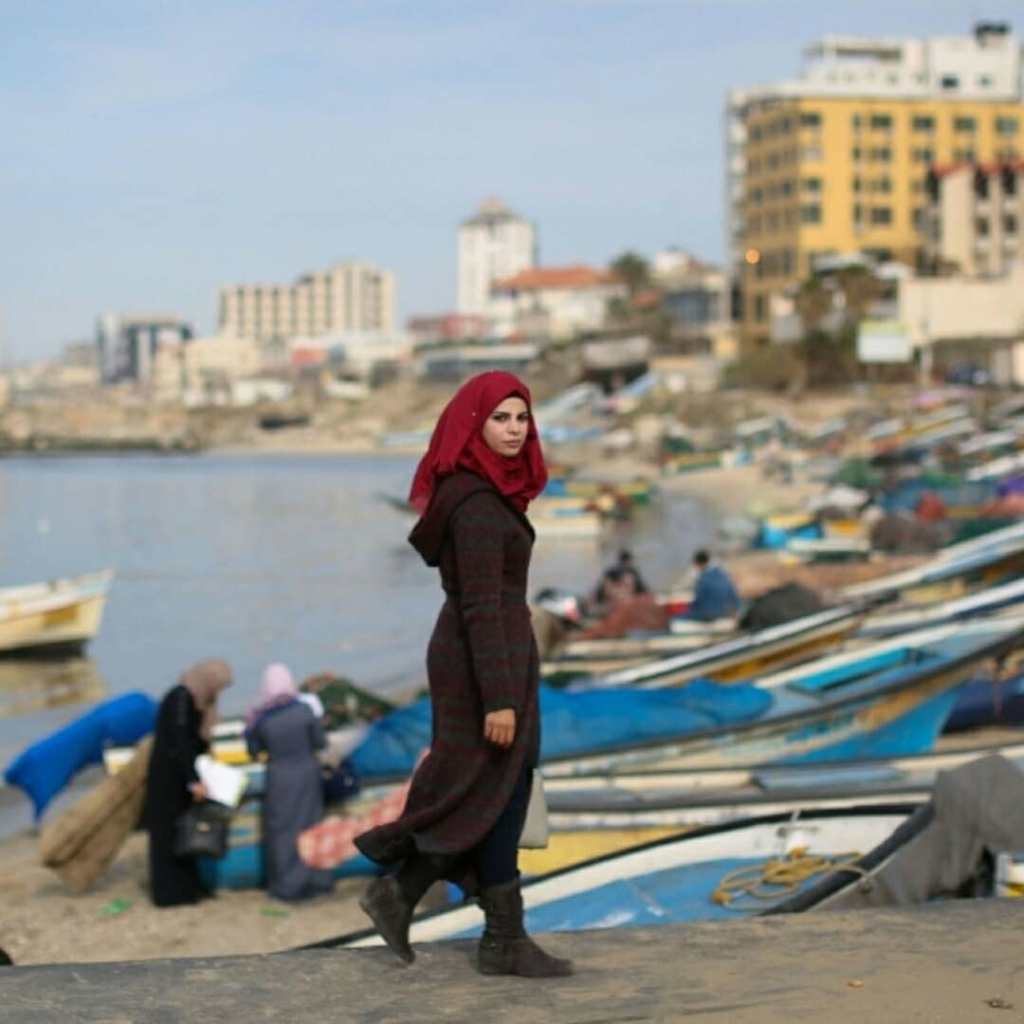
In the heart of the Gaza Strip, where the Mediterranean Sea meets a landscape scarred by conflict and restriction, Madleen Kullab emerged as a trailblazer, becoming Gaza’s first professional fisherwoman.
Born around 1995 in Gaza City, her story is one of courage, defiance, and resilience, defying gender norms, a stifling blockade, and the ravages of war to support her family and inspire a global movement.
Madleen’s journey began in childhood, rooted in a family of fishermen.
At age six, she joined her father, Mahrous Kullab, a veteran fisherman, on the waters, learning to navigate, cast nets, and maintain boats.
The sea became her sanctuary, a bond that deepened her love for fishing.
Tragedy struck at 13, around 2008, when Mahrous was paralyzed by acute myelitis or a form of palsy, leaving him unable to work.
As the eldest child, Madleen stepped into his role, taking the helm of his small, engineless paddle boat to catch sardines and crabs for sale at local markets.
In Gaza’s conservative, male-dominated society, where women rarely ventured into such labor, her determination was revolutionary, setting the stage for a remarkable career.
By 2011, at age 16, Madleen gained recognition as Gaza’s only female fisher.
A grant from The Welfare Association provided a new boat with an engine, expanding her reach—though still curtailed by Israel’s naval blockade, imposed in 2007 after Hamas’s rise to power.
Initially limited to 3 nautical miles, far less than the 20 miles allowed under the Oslo Accords, she faced danger and harassment but persisted.
Fisherman Mohamed Omar Bakir praised her grit, noting, “She doesn’t count as just one man but as five” (Al Jazeera, 2017). In 2013, a £15,000 loan from the Bank of Palestine fueled her ambition, funding a tourist boat for women and families, a savvy move in a society favoring female-led services.
During the three-month tourism season, she earned 800-1,000 shekels monthly (about $250), a third of which paid five male employees, showcasing her entrepreneurial spirit.
Madleen also founded the Madleen Fishing Club, using a Cultures of Resistance Award to rent a space and train women—wives and daughters of fishermen—to fish, empowering them to support their families.
Her path was fraught with obstacles.
Socially, she battled skepticism in a patriarchal culture, wearing a hijab and modest clothing to align with tradition, eventually earning respect as a “sister or daughter” to fellow fishermen.
Politically, Israel’s blockade restricted access to 85% of Gaza’s fishing waters, per UN estimates, with patrol ships firing water cannons, live ammunition, and stealing nets, even within allowed zones.
In 2012, at 18, Hamas authorities seized her boat, citing concerns about women at sea, but Madleen fought back, winning a court challenge with community and human rights support, securing permanent permission to fish—provided no adult males joined her, a rule complicating her work. Economically, overfishing in shallow waters depleted stocks, and catches of 3 kilos or less struggled to sustain her, especially after a 2015 downturn hindered loan repayments.
Madleen’s personal life intertwined with Gaza’s turmoil.
Married to fisherman Khader Bakr, she raised four children—Sandy (6 in 2025), Safinaz (5), Jamal (3), and Waseela (1). The conflict since October 2023 brought devastation.
In November 2023, an Israeli airstrike killed her father near their home in the Shati refugee camp.
Nearly nine months pregnant, Madleen fled with her family across Gaza—Khan Younis, Rafah, Deir el-Balah, Nuseirat—enduring dire conditions.
She gave birth to Waseela in Khan Younis without pain relief, medical care, or beds, returning to a crowded shelter with 40 relatives, lacking mattresses or blankets. The war destroyed her and Khader’s boats and a storage room of gear, severing their livelihood.
Fish, once a staple, became scarce and costly. By January 2025, they returned to a heavily damaged home in Gaza City. Now 30, as of June 2025, Madleen can no longer fish, trapped by lost equipment and ongoing risks in a region where 54,000 have died and 90% face food insecurity, per UN and IPC reports.
Madleen’s resilience reverberates beyond Gaza.
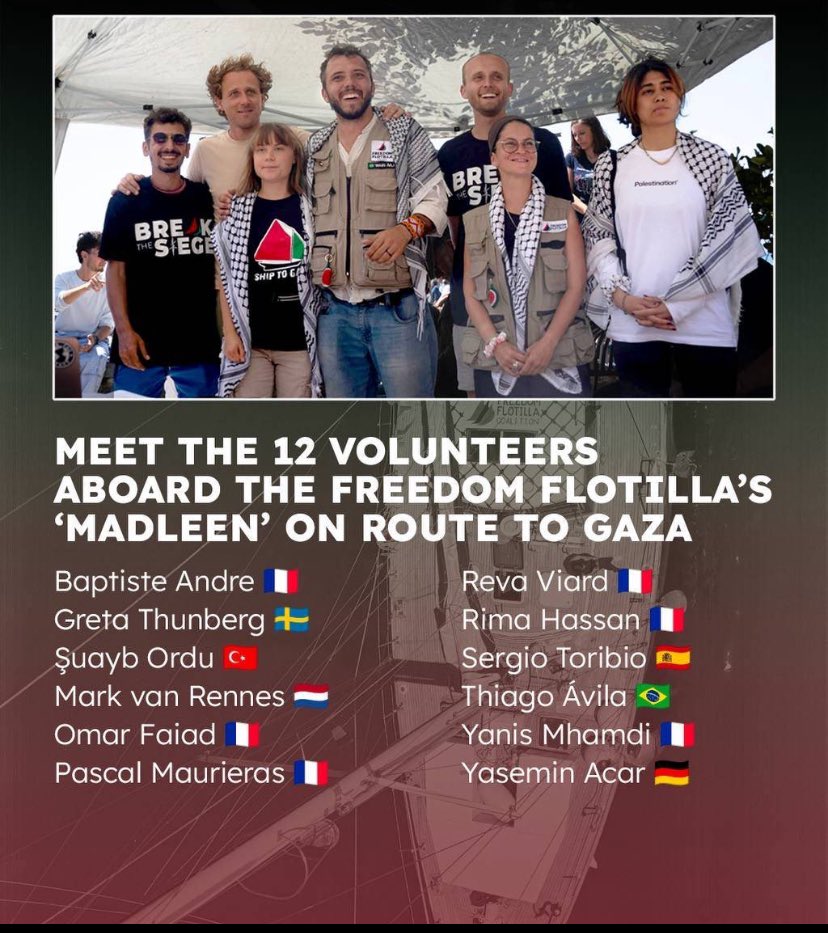
Her story inspired the Freedom Flotilla Coalition to name a vessel the Madleen, launched June 1, 2025, from Catania, Sicily, to break the blockade with aid, carrying 12 activists like Greta Thunberg and Rima Hassan. Madleen called it “the highest form of humanity and self-sacrifice” (Al Jazeera, 2025).
A skilled cook of seasonal fish dishes, especially sardines, she once served loyal clients. She pursued a secretarial diploma and aimed to represent Palestine in a swimming championship in South Africa, thwarted by the blockade. Her hope—to see more women fishers in Gaza—reflects her vision for change.
Madleen Kullab’s journey mirrors Gaza’s broader plight: a 2007 blockade, 40% unemployment, 80% aid dependency, and a sea polluted by 90 million liters of daily sewage (ANERA, 2016).
Her defiance of gender norms, Israeli restrictions, and war’s toll embodies Palestinian endurance. From a girl at sea to a global symbol, she challenges oppression, inspiring solidarity.
Sources like Al Jazeera, Palestine Chronicle, Forbes, and Cultures of Resistance document her legacy—a call to break the silence and support Gaza’s fight for freedom and dignity.



Leave a comment