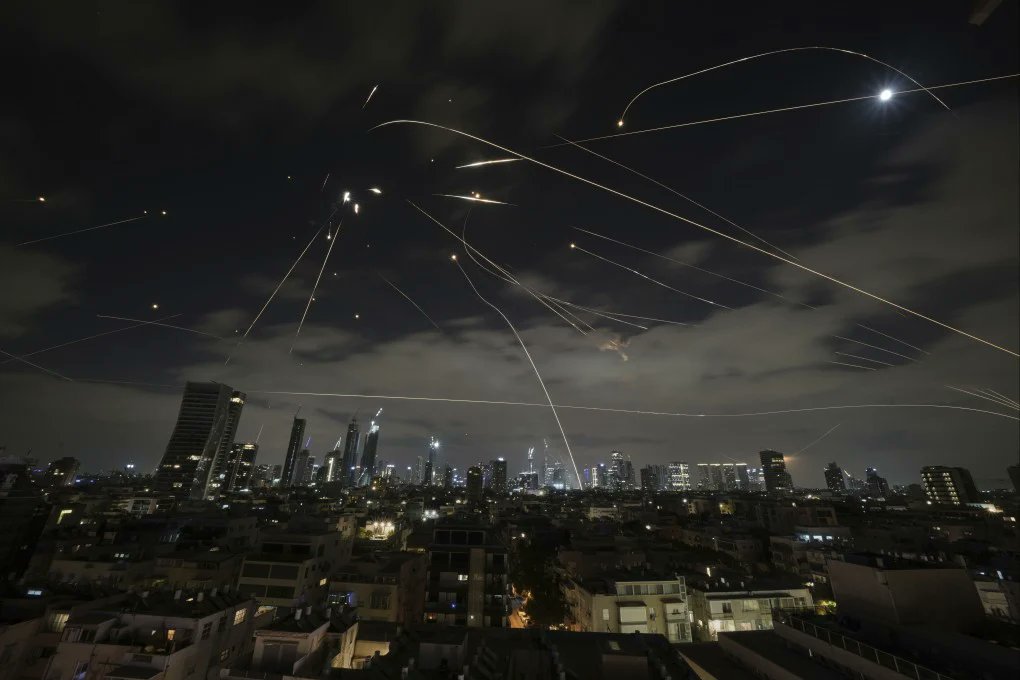
As tensions between Israel and Iran continue to escalate in 2025, a critical question emerges: how long can Israel’s sophisticated missile defense network withstand sustained Iranian bombardment? Recent developments reveal both the remarkable capabilities and concerning vulnerabilities of what many consider the world’s most advanced multilayered defense system.
The Architecture of Defense
Israel’s missile defense operates through four complementary systems, each designed for specific threat ranges and altitudes. The Iron Dome handles short-range rockets and artillery shells, David’s Sling targets medium-range ballistic missiles, while the Arrow 2 and Arrow 3 systems intercept long-range ballistic missiles within and beyond the atmosphere respectively.
The recent addition of U.S.-operated THAAD batteries adds another layer of terminal-phase protection.
This layered approach theoretically provides redundancy and comprehensive coverage.
However, the reality of sustained conflict has exposed critical limitations that could determine the outcome of any prolonged confrontation with Iran.
The Economics of Interception
The financial mathematics of missile defense present a stark asymmetry.
Each Iron Dome interceptor costs approximately $50,000, David’s Sling interceptors run about $1 million each, Arrow interceptors range from $2-3 million, and THAAD interceptors exceed $12 million per unit.
In contrast, Iranian ballistic missiles can be produced for a fraction of these costs, creating an economically unsustainable exchange ratio for defenders.
Recent combat has demonstrated this economic warfare in action.
Single engagements can cost Israel hundreds of millions of dollars in interceptors alone.
When Iran launches saturation attacks with hundreds of missiles simultaneously, the financial strain becomes immediate and severe.
The U.S. has provided over $1.6 billion for Iron Dome development and another $1 billion in recent funding, but even American resources have limits.
Stockpile Depletion and Production Constraints
Perhaps the most concerning aspect of Israel’s defensive posture is the finite nature of interceptor stockpiles.
Current intelligence suggests that sustained missile exchanges with Iran and proxy forces have significantly depleted Israeli interceptor inventories.
The addition of dozens of Houthi missile attacks since October 2023 has further strained these reserves.
Production capacity represents another critical bottleneck.
While exact figures remain classified, public information indicates that Patriot missile production in the U.S. reaches only about 740 units annually in 2025, potentially increasing to 1,100 by 2027. Arrow and THAAD production rates are likely even more constrained given their complexity and cost.
The challenge becomes more acute when considering that multiple interceptors are often fired at single incoming missiles to ensure interception.
This “shoot-shoot-look” doctrine rapidly multiplies consumption rates during intense engagements.
Iran’s Strategic Advantage
Iran appears to understand these limitations and has structured its missile strategy accordingly.
Intelligence estimates suggest Iran possesses approximately 3,000 ballistic missiles, with reports indicating they have already fired about 1,000 in recent conflicts. This leaves a substantial remaining arsenal designed specifically to overwhelm Israeli defenses through saturation attacks.
Iran’s strategy goes beyond simple numbers. The development of hypersonic missiles, deployment of decoys, and sophisticated guidance systems all aim to complicate interception calculations. Recent incidents where missiles have successfully penetrated both THAAD and Arrow defenses highlight the evolving nature of this threat.
The proxy network adds another dimension to Iranian strategy. Houthi attacks from Yemen and potential Hezbollah involvement from Lebanon force Israel to defend multiple fronts simultaneously, accelerating interceptor depletion across all systems.
Technical Limitations and Failure Rates
While Israel reports interception rates of 80-90%, even these impressive figures reveal vulnerabilities in sustained conflict.
A 10-20% penetration rate means that in large-scale attacks, dozens of missiles can reach their targets despite defensive efforts. Recent breaches of both THAAD and Arrow systems by Houthi missiles demonstrate that no system is infallible.
The complexity of these systems also introduces potential points of failure.
Radar networks, command and control systems, and interceptor launch mechanisms all require continuous operation under wartime stress.
Electronic warfare and cyber attacks add additional vulnerability vectors that Iran has demonstrated willingness to exploit.
The American Factor
U.S. support remains crucial to Israel’s defensive capabilities, but American resources are not unlimited. The U.S. operates only seven THAAD systems globally, with an eighth scheduled for delivery in 2025. Deploying systems to Israel reduces American strategic flexibility elsewhere, particularly given tensions with China and ongoing support for Ukraine.
American naval vessels have supplemented Israeli defenses by firing Standard Missile 3 interceptors from the Mediterranean, but this support requires significant naval assets positioned in harm’s way.
The sustainability of such deployments during extended conflict remains questionable.
Strategic Implications
The fundamental challenge facing Israel’s missile defense is that it represents a classic defensive strategy against an offensive problem. While these systems excel at protecting against limited attacks or deterring escalation, they become increasingly vulnerable as attack scales intensify.
Iran’s apparent strategy of prolonged attrition through repeated missile barrages aims to exploit exactly these limitations. By forcing Israel to expend expensive interceptors against relatively cheap offensive missiles, Iran seeks to create an economically and logistically unsustainable situation.
The psychological dimension cannot be ignored either. Even with high interception rates, successful missile strikes generate significant impact on civilian morale and economic activity. The cost of defense extends beyond interceptor prices to include broader economic disruption and population displacement.
Looking Forward
Israel’s missile defense systems represent remarkable technological achievements that have likely prevented thousands of casualties. However, they were designed for a different threat environment than the current reality of sustained, large-scale missile exchanges with a peer adversary.
The sustainability question ultimately depends on several factors: the rate of interceptor resupply from the U.S., Iran’s willingness to expend its missile arsenal, the involvement of proxy forces, and the broader geopolitical response to extended conflict.
Current trajectories suggest that without significant changes in strategy or capabilities, Israel’s defensive systems face genuine sustainability challenges in prolonged high-intensity conflict.
The world is witnessing a real-time test of modern missile defense theories against determined adversaries with substantial offensive capabilities. The outcome will likely reshape defense strategies globally and influence the balance between offensive and defensive capabilities in 21st-century warfare.
As this analysis shows, Israel’s missile defenses are world-class but not limitless. In a prolonged conflict with Iran, stockpile management, economic endurance, and resupply logistics may prove as critical as technological sophistication in determining the ultimate outcome.



Leave a comment