
Introduction
In the volatile landscape of post-civil war Syria, the southern province of Sweida has become a flashpoint for sectarian violence, pitting Sunni Bedouin tribes against the Druze, a religious minority with a distinct identity rooted in an offshoot of Shia Islam. The conflict, erupting on 13 July 2025, has been intensified by the involvement of external Bedouin tribal reinforcements from regions such as Hama, Daraa, and Deir Ezzor, escalating its sectarian nature and threatening Syria’s fragile post-war order.
Background: The Druze and Bedouin in Syria
The Druze, numbering around one million globally, with approximately 500,000 in Syria, are concentrated in Sweida, a rugged, mountainous province near the Israeli-occupied Golan Heights. Their monotheistic faith, an offshoot of Ismaili Shia Islam, incorporates esoteric beliefs and rejects traditional Islamic practices like the pilgrimage to Mecca. This distinct identity has positioned the Druze as a minority wary of both Sunni and Shia dominance, leading to the formation of local militias during Syria’s 14-year civil war to protect their communities from extremist groups like the Islamic State, which targeted them as heretics in a 2018 attack that killed over 200 in Sweida.
The Bedouin, nomadic or semi-nomadic Arab tribes predominantly adhering to Sunni Islam, are a significant yet under-documented population in Syria, estimated at 300,000 to 900,000 based on academic sources.
Bedouin Tribes in Syria: Facts, Figures, and Affiliations
Population and Demographics
Estimating the exact population of Bedouin tribes in Syria is challenging due to inconsistent official statistics and their nomadic or semi-nomadic lifestyle. However, various sources provide a range of estimates:
- Population Estimates: Syria’s Bedouin population ranges from approximately 300,000 to 900,000. These figures are rough, as many Bedouins are not fully documented in national censuses due to their mobility and the lack of centralized registration, particularly in rural and desert areas. The higher estimate likely includes both nomadic and settled Bedouin populations.
- Historical Context: In the early 20th century, Bedouin populations were more numerous relative to Syria’s total population. However, modernization, sedentarization policies, and conflict have reduced the proportion of nomadic Bedouins. Today, they constitute a small fraction of Syria’s estimated 23 million total population.
- Tribal Composition: Syria’s Bedouin population is organized into numerous tribes and clans, with major groups including the Aneza (Anizzah), Shammar, Hadidiyin, and smaller tribes like Al-Ramlah and Al-Jamlan. The Aneza and Shammar are among the largest and most influential, with historical roots in the Arabian Peninsula.
Geographic Distribution
Bedouin tribes in Syria are primarily located in the country’s arid and semi-arid regions, collectively known as the Badiya (Syrian Desert), which covers about 80% of Syria’s land area. Key locations include:
- Core Regions: The Badiya stretches from Homs, Hama, and the Qalamoun region in the west to Palmyra, Raqqa, Hasakah, Deir Ezzor, and the Iraqi border in the east.
- Other Areas: Tribal communities are also established in the Aleppo countryside, the Ghouta agricultural belt around Damascus, the southern Houran region (including Daraa), and the al-Lajat region between Daraa and Sweida.
- Sweida Province: The recent clashes in Sweida highlight the presence of Bedouin communities in the al-Maqwas neighborhood of Sweida city and surrounding villages like al-Mazraa and Tayrah.
- Diaspora: Some Syrian Bedouins have migrated to Jordan, particularly since the 2011 uprising, forming unofficial refugee camps around Mafraq. For example, the Al-Ramlah tribe (1,000–1,200 members) and Al-Jamlan tribe (fewer in number) have settled there, integrating with local Bedouin communities.
Tribal Affiliations and Political Alignments
Bedouin tribes in Syria have historically navigated complex political alignments, often driven by pragmatic needs for survival, resource access, and influence. Their affiliations during the Syrian conflict and post-Assad era reflect this adaptability:
- Historical Affiliations: During the Syrian civil war (2011–2024), Bedouin tribes were split in their loyalties. Some aligned with the Assad regime, such as the Hadidiyin tribe, whose member General Fahd Jassim al-Freij served as Syria’s Minister of Defense. Others, particularly in Daraa, Homs, and Deir Ezzor, supported opposition forces, including the Syrian National Coalition. For instance, Shaykh Ahmed Al Garba of the Shammar tribe was elected president of the Syrian National Coalition in 2013.
- Current Dynamics: Since the fall of Bashar al-Assad in December 2024, Bedouin tribes have increasingly aligned with the Islamist-led interim government under Ahmed al-Sharaa. In the Sweida clashes of July 2025, Bedouin tribes fought alongside government forces against Druze militias, with reinforcements arriving from Hama, Daraa, Idlib, Aleppo, and Deir Ezzor.
- Tribal Mobilization: Significant mobilization of Bedouin tribes in response to the Sweida conflict, with up to 50 tribes or branches declaring readiness to deploy approximately 50,000 fighters against the Druze-led Sweida Military Council. Another source cites 41 tribes potentially mobilizing up to 40,000 fighters. These figures are likely exaggerated and lack independent verification, but they underscore the scale of tribal networks.
- Criminal Activities: Some Bedouin tribes in the al-Lajat region, between Daraa and Sweida, have leveraged their strategic position for drug and arms smuggling, contributing to local tensions.
Socio-Economic and Cultural Characteristics
- Lifestyle: Traditionally, Bedouin tribes in Syria are nomadic or semi-nomadic pastoralists, herding camels, sheep, and goats. They are divided into three groups based on livelihood: camel herders (“true” Bedouin), sheep and goat herders, and herdsmen who combine pastoralism with agriculture. However, severe droughts (e.g., 1958–1961) and conflict have pushed many toward settled life in urban areas or agricultural regions like Ghouta.
- Land Ownership: Historically, Bedouin tribes controlled specific zones (dirahs) for grazing and water access, recognized among themselves but not by modern Syrian governments, which classify these lands as state-owned. This has led to conflicts over resources, particularly with settled communities like the Druze in Sweida.
- Cultural Practices: Bedouin society is tribal and patriarchal, organized into clans and extended families led by sheikhs. Their culture emphasizes hospitality, honor (sharaf), and oral poetry. Most are Sunni Muslims, though their practice of Islam is adapted to nomadic life, with less emphasis on strict rituals like daily prayers due to environmental constraints.
- Economic Activities: In addition to herding, Bedouins historically taxed caravans, transported goods, and engaged in raiding (ghazw). Today, many have transitioned to agriculture, seasonal labor, or urban employment. In Jordan, Syrian Bedouin refugees work on farms, such as tomato and olive farms near Mafraq.
Recent Conflict Statistics (Sweida, July 2025)
The clashes in Sweida provide specific data on the impact of Bedouin-Druze tensions:
- Casualties: The Syrian Observatory for Human Rights (SOHR) reported 638 deaths by 18 July 2025, including 86 civilians killed by government forces and allies, and three Bedouin civilians killed by Druze fighters. Earlier reports cited 166 deaths, including 78 government or Bedouin fighters and 88 civilians, 21 of whom were executed by government forces.
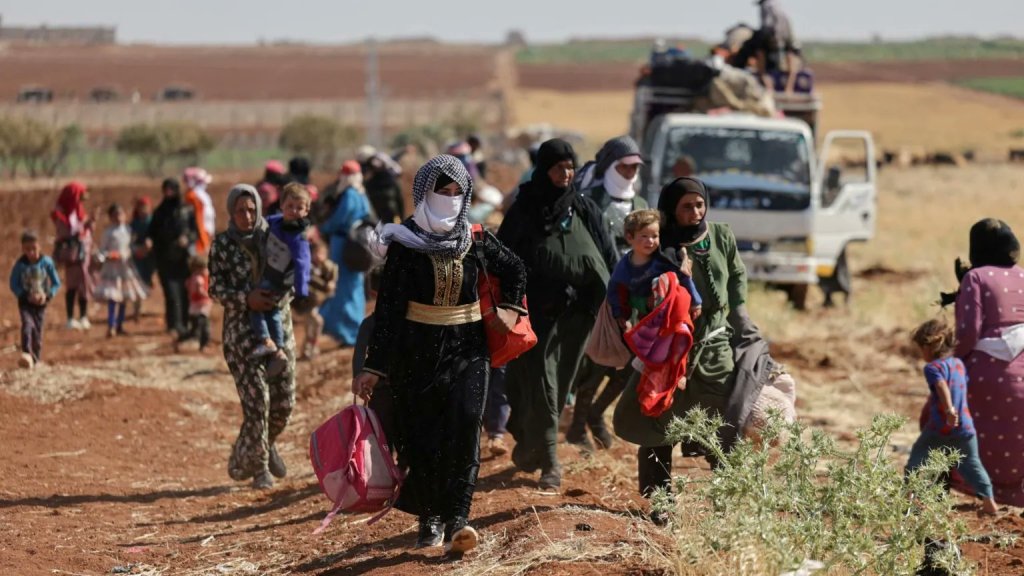
- Displacement: Nearly 80,000 people were displaced, with villages like Tayrah abandoned due to arson and shelling.
- Government Response: Syrian security forces, coordinated by the Interior and Defense Ministries, intervened on 14 July but were accused of bias toward Bedouin tribes, exacerbating Druze grievances.
- External Reinforcements: Bedouin reinforcements from Hama, led by figures like Anas al-Enad, and other regions like Daraa and Deir Ezzor, shifted the conflict’s dynamics, enabling Bedouin control over villages like al-Mazraa.
Historical Context and Sedentarization
Modern Trends: Since the 1958–1961 drought, many Bedouins have settled in urban areas or on marginal lands, particularly in Aleppo, Damascus, and Daraa. This shift has altered tribal structures, with sheikhs transitioning from political to moral authority.
Ottoman and Colonial Era: In the 19th century, Ottoman authorities attempted to settle Bedouin tribes, with limited success. The French mandate (1920–1946) faced resistance from Bedouin tribes involved in the 1925 Syrian revolution. Post-independence, the Baathist government’s land reforms in the 1960s redistributed tribal lands to poorer Bedouin families, weakening traditional sheikhs’ authority.
Historically, Bedouin tribes have been key players in Syria’s socio-political fabric, navigating alliances based on pragmatic needs. During the civil war, tribes like the Hadidiyin aligned with the Assad regime, with figures like General Fahd Jassim al-Freij serving as Minister of Defense, while others, particularly in Daraa and Deir Ezzor, supported opposition forces, such as Shaykh Ahmed Al Garba of the Shammar tribe, who led the Syrian National Coalition in 2013. The fall of Bashar al-Assad in December 2024, replaced by an Islamist-led interim government under Ahmed al-Sharaa, a former al-Qaeda affiliate, has shifted Bedouin affiliations toward the new administration, particularly in the Sweida conflict.
The Spark: A Cycle of Retaliation
The violence began on 11 July 2025, when a Druze vegetable merchant was robbed and assaulted by Bedouin tribesmen at an improvised checkpoint on the Damascus-Sweida highway. Subjected to sectarian insults and left in critical condition, the incident sparked outrage among the Druze. In retaliation, Druze militias detained several Bedouin individuals, triggering tit-for-tat kidnappings and armed clashes in Sweida’s al-Maqwas neighborhood, a Bedouin enclave. By 13 July, the conflict had spread to surrounding villages, with both sides engaging in shelling and arson.
The violence displaced nearly 80,000 people, with villages like Tayrah abandoned as homes and shops were torched. Sweida’s infrastructure, including water, electricity, and communication lines, was severely damaged, and the Sweida National Hospital, overwhelmed with over 400 bodies, resorted to storing corpses in the streets due to limited morgue space.
External Reinforcements
The Sweida clashes were escalated by external Bedouin reinforcements, particularly from Hama, led by figures like Anas al-Enad, who mobilized fighters to Walgha, northwest of Sweida.
Additional support came from Daraa, Idlib, Aleppo, and Deir Ezzor, responding to calls for “general mobilization” to protect Bedouin kin. These reinforcements, facilitated by government forces unable to deploy directly due to a security agreement with Israel, enabled Bedouin fighters to seize villages like al-Mazraa, where homes and shops were burned.
Government Intervention and Perceived Bias
The interim government deployed security forces to Sweida on 14 July to restore order, but their actions were perceived as biased toward the Bedouin. Reports documented government abuses, including the execution of 12 Druze civilians and the humiliating act of shaving a Druze sheikh’s mustache, a grave cultural insult.
Such actions deepened Druze distrust, with accusations that the government was stoking sectarian divisions to consolidate control.
The government’s coordination with Bedouin tribes, including facilitating reinforcements from Hama and other regions, further alienated the Druze, who noted the interim cabinet’s lack of representation, with only one Druze minister among 23.
Israel’s Intervention: A Regional Dimension
Israel’s involvement has added a complex regional layer.
Citing ties with the Druze in Israel and the Golan Heights, Israel launched airstrikes on Syrian military targets in Sweida and Damascus on 15 and 16 July, described as “warning shots” to pressure the government to withdraw from Sweida, a region Israel seeks to keep demilitarized due to its proximity to the Golan Heights.
While Israel framed its actions as protective, many Syrian Druze, including spiritual leader Sheikh Hikmat al-Hijri, rejected foreign intervention, fearing it could inflame tensions.
Conversely, Druze in Israel, some of whom crossed the border to aid their Syrian kin, pushed for greater involvement. Israel’s broader aim appears to be weakening al-Sharaa’s government, viewed as a threat due to its Islamist roots.
Humanitarian and Political Fallout
The humanitarian toll is staggering. Sweida’s infrastructure has collapsed, with water, electricity, and communication lines severed. The Sweida National Hospital is overwhelmed, and the UN’s International Organisation for Migration reported 80,000 displaced, many fleeing to Daraa. Blocked supply routes have hindered aid delivery, exacerbating the crisis.
Politically, the conflict exposes the fragility of al-Sharaa’s government. Its inability to manage sectarian tensions raises doubts about its legitimacy among minorities, including Kurds and Alawites.
The withdrawal of troops from Sweida under Israeli and diplomatic pressure (mediated by the US, Turkey, and Arab states) averted escalation but left a power vacuum filled by Bedouin reinforcements, perpetuating violence. The UN has called for an independent investigation into atrocities, including extrajudicial killings and looting by both sides and government forces.
Conclusion
The Bedouin-Druze clashes in Sweida, intensified by external tribal reinforcements from Hama and beyond, encapsulate Syria’s sectarian and political challenges.
Triggered by a single act of violence, the conflict has spiraled into a humanitarian crisis, with 638 deaths, 80,000 displaced, and widespread destruction.
The Bedouin, estimated at 300,000–900,000 and organized into influential tribes like the Aneza and Shammar, have leveraged their networks to escalate the conflict, aligning with the interim government while deepening Druze distrust.
Israel’s intervention adds a volatile regional dimension, risking further escalation.
As Syria navigates its post-war transition, the Sweida clashes underscore the urgent need for inclusive governance to bridge sectarian divides. Without such efforts, Syria risks renewed conflict, undermining hopes for a stable future.



Leave a comment