
From Konkan Coast to Tel Aviv: The Story of Indian Jews and Citizens in Israel
Prologue: Two Migrations, One Destiny
In the bustling streets of Dimona, a desert town in southern Israel, Hebrew prayers echo from a modest synagogue. But listen carefully, and you might catch fragments of Marathi, the language of Maharashtra. Welcome to one of Israel’s most unique communities—the descendants of Indian Jews who made their way to the Promised Land over seven decades ago.
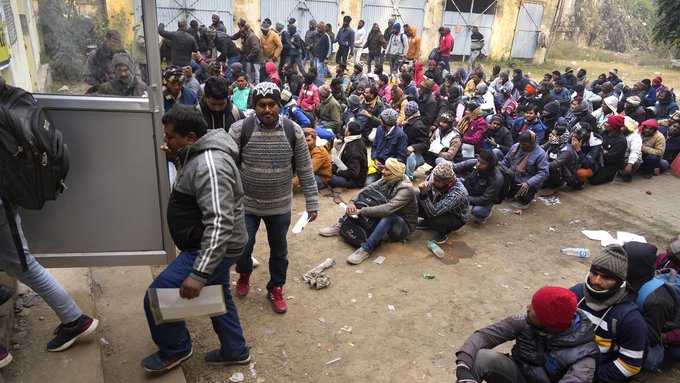
Meanwhile, 300 kilometers north in the agricultural settlements of the Galilee, another story unfolds. Here, young men from Kerala and Punjab work the same fields that once employed Palestinian laborers, their remittances flowing back to villages thousands of miles away in India. These are not the descendants of ancient Jewish communities, but contemporary Indian citizens seeking opportunity in a land that has become increasingly dependent on their labor.
This is the tale of two migrations: one driven by faith and the dream of return, the other by economic necessity and bilateral agreements. Together, they form a complex tapestry of India-Israel relations that spans millennia and continues to evolve today.
Chapter 1: The Ancient Exiles – When Jews First Reached Indian Shores
The story begins not in the hills of Galilee or the temples of Jerusalem, but on the spice-scented coasts of ancient India. It is thought that the first Indian Jews were members of the biblical “Lost Tribes of Israel,” having settled on the Malabar coast after the Assyrian conquest of the Kingdom of Israel in the ninth century B.C.E.
The Four Communities
The four main communities of Jews in India are the Cochinis, the Bene Israel and the Baghdadis. Each group carried distinct traditions, languages, and stories of how they came to call the subcontinent home.
The Cochin Jews trace their lineage to the oldest Jewish settlement in India. The Cochin Jews claim their ancestry to Jerusalem, fleeing the Roman invasion and the destruction of the second temple in 70 A.D. For nearly two millennia, they lived in harmony along the Malabar Coast, particularly in what is now Kerala, developing their own unique traditions that blended Jewish law with local customs.

The Bene Israel, the largest of the Indian Jewish communities, have a more mysterious origin. The Bene Israel Jewish community from West India is a unique population whose history before the 18th century remains largely unknown. Bene Israel members consider themselves as descendants of Jews, yet the identity of Jewish ancestors and their relationship with them remains uncertain. Concentrated along the Konkan coast near Mumbai, they developed a distinct culture that incorporated Marathi language and local traditions while maintaining core Jewish practices.

The Baghdadi Jews were the most recent arrivals, migrating to India during the 18th and 19th centuries from Iraq, Syria, and other parts of the Ottoman Empire. Unlike their Cochin and Bene Israel counterparts, they maintained stronger connections to Middle Eastern Jewish traditions and often served as intermediaries in trade between Europe, the Middle East, and the Far East.
The Tamil Jews or The Bene Ephraim, a small Jewish community in Andhra Pradesh and Tamil Nadu, claim descent from the Tribe of Ephraim, supported by their oral traditions and construction of synagogues since the 1980s, with archaeological evidence like second-century CE copper plates suggesting an ancient Jewish presence near the Krishna River. Their leader, Shmuel Yacobi, initiated a revival of Jewish practices after studying in Jerusalem, leading to the adoption of Hebrew, kosher diets, and Torah observance, despite skepticism from some scholars who attribute their identity to missionary influences rather than historical migration. This community’s existence challenges the mainstream narrative of Indian Jewish history, which typically focuses on the Bene Israel, Cochin, and Baghdadi Jews, highlighting a lesser-known migration route through Persia, Afghanistan, and Tibet over 1,600 years.

Life in the Subcontinent
For centuries, these communities flourished in India. The Bene Israel became farmers, oil pressers, and later, under British rule, many joined the military and civil services. The Cochin Jews dominated the spice trade, while the Baghdadi Jews established trading houses and became prominent in cities like Calcutta and Bombay.
“My grandfather used to tell stories of our village near Alibaug,” recalls Avraham Cohen, a 78-year-old resident of Dimona whose grandparents migrated from Maharashtra in the 1950s. “We were Indians first, Jews second. We spoke Marathi at home, celebrated Gudi Padwa alongside Passover, and our neighbors never saw us as outsiders.”
Chapter 2: The Great Aliyah – Exodus from Paradise
The winds of change began blowing as the 20th century progressed. The decline of European colonial rule, rising nationalism, and most significantly, the establishment of Israel in 1948, presented India’s Jewish communities with choices their ancestors never had to make.
The Pull of Zion
Since the formation of modern state Israel in 1948, the majority of Indian Jews have “made Aliyah” or emigrated to that country. The pull was strong—here was a Jewish state, a homeland promised for millennia, now a reality.
After India gained its independence in 1947 and Israel was established as a nation, most of the Cochin Jews made Aliyah and emigrated from Kerala to Israel in the mid-1950s. The exodus from Kerala was particularly dramatic. In Mattancherry, once home to thriving synagogues and Jewish neighborhoods, only a handful of elderly Jews remained by the 1960s.
“It was like watching our entire world pack up and leave,” remembers Sarah Katz, now 85, who chose to remain in Kochi. “One by one, families sold their homes, their businesses, everything they had built over generations. The promise of Israel was stronger than the comfort of home.”
The Bene Israel Migration
The Bene Israel migration was more gradual but equally transformative. Unlike the concentrated exodus from Kerala, Bene Israel families from Mumbai, Pune, and the Konkan villages made individual decisions over decades. Some left immediately after 1948, others waited until the 1960s and 1970s.
In 1826 a group of dedicated Cochin Jewish teachers left their community in order to live among the Bene Israel in Bombay and Kolaba District and teach them about mainstream Jewish observance. This historical connection meant that when the time came to leave, the Bene Israel were better prepared for life in Israel than many other immigrant communities.
Numbers and Destinations
In 1948, when the State of Israel was founded, waves of Jews from the three major centuries-old Jewish communities in India began to migrate to Israel, gradually forming a population of over 80,000 Jews of Indian origin in Israel today.
The migrants didn’t scatter randomly across Israel. Cochin Jews often settled in moshavim (agricultural cooperatives) in the south, particularly around Dimona and other development towns. The Bene Israel, with their familiarity with urban life, gravitated toward cities like Tel Aviv, Haifa, and later, to development towns like Ashdod and Lod.
Integration Challenges
The transition wasn’t always smooth. Despite their Jewish identity, Indian Jews faced the same challenges as other immigrant communities—language barriers, employment difficulties, and cultural adjustments.
“People would look at my mother and wonder if she was really Jewish,” explains Dr. Ruth Jhirad, a physician in Tel Aviv whose parents migrated from Mumbai in 1962. “She had dark skin, spoke Hebrew with a Marathi accent, and cooked Indian food. But she could recite Jewish prayers that her grandmother had taught her, prayers that had been passed down for generations.”
The Israeli establishment, predominantly Ashkenazi Jewish at the time, sometimes struggled to understand these Jewish communities that looked and acted so differently from European Jews. There were questions about their Jewish authenticity, particularly for the Bene Israel, that took years to resolve.
Chapter 3: Building New Lives – Indian Jews in Contemporary Israel
Today, the descendants of Indian Jews are fully integrated into Israeli society, yet they maintain distinct cultural elements that set them apart from other Jewish communities.
Geographic Distribution
Most Indian Jewish families settled in development towns and mixed cities rather than in the traditional religious centers of Jerusalem or the affluent areas of Tel Aviv. This pattern reflected both government settlement policies and economic realities.
In Dimona, the population of Indian Jewish descent is estimated at around 8,000, making them one of the largest ethnic communities in the city. The town’s main synagogue follows Sephardic traditions adapted to include Indian customs.
Ashdod and Lod became major centers for Bene Israel families, with community centers that still serve Indian Jewish food during festivals and maintain cultural connections to Maharashtra.
Professional Integration
The descendants of Indian Jews have integrated across Israeli society. Many serve in the military—a rite of passage for most Israeli citizens. Others have entered professions ranging from medicine and engineering to agriculture and small business.
“My father came here with nothing but his prayer book and his mother’s recipes,” says Captain David Samuel, a career officer in the Israel Defense Forces whose grandparents migrated from Cochin. “Today, I command soldiers whose families came from Ethiopia, Russia, Morocco, and Yemen. Israel is a country of immigrants, and we Indian Jews are just part of that story.”
Cultural Preservation
Despite decades in Israel, many families maintain connections to their Indian heritage. Community organizations organize cultural events, cook traditional Indian Jewish foods, and some families still speak Marathi or Malayalam at home.
The Confederation of Indian Jews in Israel, established in the 1970s, serves as a cultural and social organization. They organize annual events marking Indian festivals, maintain relationships with remaining Jewish families in India, and even coordinate group trips back to India.
Chapter 4: The New Wave – Contemporary Indian Citizens in Israel
While descendants of Indian Jews continue their lives as Israeli citizens, a new chapter in India-Israel people-to-people relations has emerged in recent years—the arrival of Indian citizens as temporary workers.
The Numbers Game
In 2024, the Indian ministry of foreign affairs said that its embassy was in “constant contact” with 20,000 — 30,000 Indian nationals within Israel. This represents a significant presence, especially considering Israel’s total population of just over 10 million.
There are an estimated 18,000 Indians already in Israel, either studying there or working as caregivers, diamond traders and IT professionals. However, these numbers have been supplemented by a new category of workers following recent bilateral agreements.
The Agricultural Revolution
The most significant development came after October 7, 2023, when the Israel-Hamas conflict led to a dramatic reduction in Palestinian workers in Israeli agriculture and construction. Around 16,000 Indian workers have already replaced Palestinians in Israel’s construction sector in 2024. This represents a historic shift in India-Israel relations, moving beyond diplomatic ties to create robust people-to-people connections through organized labor migration.
The government told Parliament that 6,774 Indian workers, mostly in construction, have gone to Israel under a bilateral framework as of July 1, 2025. The agreement was signed in November 2023 amid the Israel-Hamas conflict.
Who Are These Workers?
Unlike the Jewish immigrants of previous decades, these are temporary migrant workers, primarily young men seeking better economic opportunities.
Geographic Origins: The majority come from India’s traditional labor-exporting states:
- Kerala: Known for its high literacy rates and history of Gulf migration
- Punjab: Agricultural experience and history of international migration
- Uttar Pradesh: Large population seeking overseas employment
- Tamil Nadu: Experience in industrial and agricultural work
- Odisha: Growing participation in international labor migration
Melbin Paul, a 29-year-old from the southern Indian state of Kerala, was assigned to work at a poultry farm close to the Israel-Lebanon border. His story illustrates the profile of many Indian workers: young, educated, from rural backgrounds, with limited opportunities at home but possessed of skills valued in Israel’s labor market.
Sectors of Employment
Agriculture: The primary sector employing Indian workers, particularly in:
- Fruit orchards in the Galilee region
- Vegetable farms in the coastal plain
- Poultry and dairy farms across the country
- Greenhouse operations in the south
Construction: Most of those foreign workers engage in agriculture and construction. Indian workers are increasingly filling roles in residential and commercial construction projects.
Technology and Services: By 2024 Indians made up the largest share of foreign students in Israel. Many Indian IT professionals work in Israel’s thriving tech sector, while others provide caregiving services for elderly Israelis.
Diamond Industry: Israel’s diamond trade has long attracted Indian workers, particularly from Gujarat, where diamond cutting and polishing are traditional industries.
Chapter 5: The Economics of Migration – Remittances and Impact
The Money Trail
The economic impact of Indian workers in Israel extends far beyond their immediate contributions to Israeli agriculture and construction. Their remittances have become a significant source of foreign exchange for India and a lifeline for families back home.
Around 40% of India’s remittances flow to the states of Kerala, Tamil Nadu, Punjab, Andhra Pradesh and Uttar Pradesh which are among the top international remittance receiving states. While specific data on remittances from Israel is limited, estimates suggest that Indian workers in Israel send home between $150-300 million annually.
Maharashtra (20.5%) remained the top recipient, followed by Kerala (19.7%). Other major states include Tamil Nadu (10.4%), Telangana (8.1%), and Karnataka (7.7%). Rising trends were seen in Punjab, and Haryana.
Regional Impact Stories
Kerala: In villages across Malappuram and Thrissur districts, families speak of the “Israel money” that has transformed local economies. New houses, better education for children, and small business investments are visible signs of this economic flow.
“My son Ravi has been working on a farm near Haifa for two years,” explains Kamala Nair from a village near Kochi. “He sends 80,000 rupees every month. We’ve been able to pay off our debts, fix our house, and my daughter is now studying engineering. Israel has been our blessing.”
Punjab: Traditional agricultural families in Punjab find parallels between their farming heritage and opportunities in Israeli agriculture. The remittances often flow into land purchases and agricultural modernization back home.
Uttar Pradesh: Workers from UP often come from more impoverished backgrounds, making their remittances particularly important for basic family needs like healthcare, education, and housing improvements.
The Multiplier Effect
Beyond direct remittances, the Israel migration has created secondary economic impacts:
- Travel Agencies: Specialized agencies in Kerala and Punjab facilitate worker migration to Israel
- Training Centers: Institutes teaching Hebrew and agricultural techniques
- Banking Services: Enhanced money transfer services between India and Israel
- Insurance Products: Specialized policies for overseas workers
Chapter 6: Living Between Worlds – The Contemporary Experience
Life in the Fields
For Indian agricultural workers in Israel, life is a mixture of opportunity and challenge. Workers typically live in accommodation provided by their employers, often in rural settlements where Hebrew is the primary language and cultural differences are pronounced.
“The work is hard, but it’s honest,” explains Suresh Kumar, a 26-year-old from Punjab working on a citrus farm in the Jordan Valley. “I wake up at 5 AM, work until sunset, send most of my salary home, and dream of the farm I’ll buy with this money.”
Working conditions vary significantly. While Israel has labor protections, enforcement in remote agricultural areas can be inconsistent. Some workers report excellent treatment and relationships with Israeli farmers, while others face challenges with working hours, housing conditions, and cultural misunderstandings.
Cultural Bridges
Interesting cultural exchanges have emerged. Some Israeli farmers have learned basic Hindi or Punjabi to communicate with their workers. Indian workers often celebrate Indian festivals in their accommodation, sometimes inviting their Israeli employers to join.
“My boss, David, came to our Diwali celebration last year,” recounts Rajesh Patel from Gujarat. “He brought his whole family. His children loved the Indian sweets, and we taught them some Bollywood dance steps. It was beautiful to see.”
The Technology Sector
By 2024 Indians made up the largest share of foreign students in Israel. This has created a pipeline of highly skilled Indian professionals working in Israel’s renowned technology sector.
Israeli companies like Intel, Microsoft Israel, and numerous startups actively recruit Indian engineers and computer scientists. These professionals typically live in urban centers, earn higher salaries, and represent a different demographic from agricultural workers.
“The quality of Indian engineers is exceptional,” notes Sarah Goldberg, HR director at a Tel Aviv startup. “They bring strong technical skills, English proficiency, and often innovative perspectives shaped by India’s own tech boom.”
Challenges and Vulnerabilities
Not all experiences are positive. Language barriers, cultural misunderstandings, and sometimes exploitative employment practices create challenges for Indian workers.
The October 7 attacks and subsequent conflict highlighted particular vulnerabilities. Around 1,309 Indian citizens returned home after the October 7 attacks. Workers in border areas faced direct security threats, while others struggled with the broader climate of uncertainty.
Chapter 7: Government Policy and Bilateral Relations
Formal Frameworks
The surge in Indian workers reflects broader India-Israel relations that have strengthened dramatically since the 1990s. Both governments recognize that an influx of Indian migrant workers could finally forge a strong people-to-people aspect in India-Israel relations.
The bilateral framework agreements signed in recent years provide structure for worker migration, including:
- Standardized contracts and wage protections
- Health insurance and emergency repatriation procedures
- Skills training and certification programs
- Dispute resolution mechanisms
Policy Challenges
Managing large-scale labor migration presents challenges for both governments:
For Israel:
- Integration of workers into rural communities
- Ensuring labor standard compliance
- Managing security concerns in border areas
- Balancing temporary migration with longer-term demographic impacts
For India:
- Protecting citizen welfare abroad
- Managing recruitment processes to prevent exploitation
- Ensuring fair distribution of opportunities across different regions
- Maximizing developmental impact of remittances
Future Prospects
Both governments are expanding the program. Israel Seeks 15,000 Skilled Indian Workers In Second Round Of Recruitment Drive suggests continued growth in Indian worker recruitment.
The focus is shifting toward more skilled migration, with proposals for:
- Seasonal agricultural worker programs
- Construction skills training initiatives
- Technology sector exchange programs
- Healthcare worker recruitment
Chapter 8: Comparing the Migrations – Past and Present
Motivations: Faith vs. Economics
The contrast between the Jewish migration of the 1950s-1970s and contemporary Indian worker migration reflects fundamentally different motivations.
The earlier Jewish migration was driven by religious and cultural identity—the fulfillment of a 2,000-year dream of return to the Jewish homeland. These migrants came to stay, to build new lives as Israeli citizens.
Contemporary Indian migration is primarily economic—young people seeking better opportunities with the intention of eventually returning home to India. They come not to stay but to earn, learn, and return.
Integration Patterns
Indian Jews faced the challenge of proving their Jewish authenticity while adapting to Israeli society. They had to learn Hebrew, adapt to Middle Eastern culture, and find their place in Israel’s complex ethnic mosaic.
Contemporary Indian workers face different integration challenges. They must navigate language barriers, work-based relationships, and cultural differences while maintaining their Indian identity and planning their eventual return.
Economic Impact
Both migrations have created economic connections between India and Israel, but in different ways.
Indian Jewish migration brought human capital—educated, skilled individuals who became Israeli citizens and contributed to the country’s development across all sectors.
Contemporary Indian worker migration brings labor and remittances—filling crucial workforce gaps while creating financial flows that benefit both countries.
Cultural Contributions
Indian Jews brought permanent cultural enrichment to Israel—synagogue traditions, cuisine, languages, and customs that became part of Israel’s diverse heritage.
Indian workers bring temporary but significant cultural exchange—exposing rural Israeli communities to contemporary Indian culture while taking back knowledge of Israeli agricultural and technological practices.
Chapter 9: Challenges and Controversies
Labor Rights Concerns
Not all aspects of contemporary Indian migration to Israel have been positive. Reports of worker exploitation, poor living conditions, and inadequate legal protections have emerged from various sources.
“Some workers are trapped in situations they never expected,” explains Ravi Nair from the Center for Indian Migrant Workers, an advocacy organization based in Kochi. “They arrive expecting certain conditions based on recruitment promises, but face different realities on the ground.”
Issues include:
- Excessive working hours beyond contracted limits
- Substandard accommodation in remote locations
- Delayed or incomplete salary payments
- Limited access to healthcare and legal assistance
- Restrictions on movement and communication
Security Vulnerabilities
The ongoing conflict in the region has highlighted the vulnerability of Indian workers, particularly those employed near border areas.
During recent escalations with Lebanon and Gaza, several Indian workers found themselves in direct danger. The Indian Embassy has had to coordinate emergency evacuations and provide security guidance to workers in vulnerable locations.
Cultural and Religious Tensions
While many Indian workers successfully integrate into Israeli workplace environments, cultural and religious differences sometimes create tensions.
Dietary restrictions for Hindu and Muslim workers can be challenging in predominantly Jewish environments. Language barriers can lead to misunderstandings about work expectations and cultural norms.
“Sometimes my employer doesn’t understand why I need time for prayers or why I can’t eat certain foods,” explains Mohammed Ansari from Uttar Pradesh, working on a dairy farm. “But mostly people are respectful once they understand.”
Chapter 10: The COVID Impact and Recovery
Pandemic Disruptions
The COVID-19 pandemic significantly impacted Indian workers in Israel, as it did migrant worker populations globally. Border closures, lockdown restrictions, and economic uncertainty created particular challenges.
Many workers found themselves unable to return home during family emergencies or festivals. Others faced reduced working hours and income uncertainty as agricultural and construction activities slowed.
“I was supposed to go home for my sister’s wedding in March 2020,” recalls Deepak Singh from Punjab. “Instead, I spent two years unable to travel, watching family events on video calls. The loneliness was harder than the work.”
Adaptation and Resilience
However, the pandemic also demonstrated the essential nature of agricultural work and the adaptability of Indian workers. Many farms managed to continue operations throughout lockdowns, with Indian workers playing crucial roles in maintaining food production.
Digital connectivity improvements during the pandemic enabled better communication with families back home, partially alleviating the isolation many workers experienced.
Post-Pandemic Recovery
As restrictions lifted, demand for Indian workers increased further. The disruption of other labor sources during the pandemic made Israeli employers more appreciative of the reliability and skills of Indian workers.
New recruitment drives have focused on expanding beyond agriculture into construction, healthcare, and technology sectors.
Chapter 11: Women in the Migration Story
Historical Gender Patterns
The original Indian Jewish migration included entire families—men, women, and children emigrating together to start new lives in Israel. Women played crucial roles in maintaining cultural traditions while adapting to Israeli society.
“My grandmother was the keeper of our Marathi songs and Maharashtrian recipes,” remembers Meera David, whose grandparents migrated from the Konkan coast. “She made sure we didn’t lose our Indian identity even as we became Israelis.”
Contemporary Female Migration
Contemporary Indian migration to Israel has been predominantly male, reflecting the nature of agricultural and construction work. However, this is beginning to change as opportunities expand.
Indian women increasingly work in Israel as:
- Caregivers for elderly Israelis
- Domestic workers in urban households
- Healthcare assistants and nurses
- Technology sector professionals
- Students in Israeli universities
Challenges and Opportunities
Female Indian workers face particular challenges including safety concerns, cultural barriers, and family responsibilities back home. However, they often earn higher wages than comparable work in India and gain valuable skills and experience.
“Working as a caregiver in Tel Aviv has given me financial independence I never had in Kerala,” explains Priya Thomas, a 32-year-old nurse. “I’m supporting my children’s education and saving for a house. It’s not easy being away from family, but the opportunities here are real.”
Chapter 12: Looking Forward – Future Trajectories
Demographic Projections
Current trends suggest continued growth in Indian presence in Israel across multiple categories:
Student Population: Israeli universities are increasingly attractive to Indian students, particularly in technology, agriculture, and medicine. Government scholarships and industry partnerships are expanding these opportunities.
Skilled Workers: Beyond agricultural labor, Israel’s technology sector, healthcare system, and specialized industries are actively recruiting skilled Indian professionals.
Business Connections: Indian business investment in Israel and Israeli investment in India are creating opportunities for business-related migration and long-term residence.
Policy Evolution
Both governments are working to formalize and expand migration frameworks:
Skill Development: Training programs in India to prepare workers for Israeli employment Language Training: Hebrew language courses for prospective workers Legal Protections: Stronger frameworks to protect worker rights and prevent exploitation Pathway Programs: Potential routes for long-term residence or citizenship for skilled workers
Technology and Innovation
The intersection of India’s technological capabilities and Israel’s innovation ecosystem is creating new forms of collaboration. Virtual work arrangements, joint research projects, and startup partnerships are reducing the need for physical migration while increasing professional connections.
Cultural Integration
Long-term presence of Indian workers is beginning to create lasting cultural impacts on Israeli society, particularly in rural areas where Indians constitute significant portions of the workforce.
Some Israeli communities have begun celebrating Indian festivals, learning Indian languages, and incorporating Indian cultural elements into local life.
Chapter 13: The Broader Regional Context
Geopolitical Implications
The growth of Indian presence in Israel has broader geopolitical significance in the context of:
Middle East Dynamics: India’s relationship with Israel complements its relationships with Arab states and Iran, demonstrating India’s multi-alignment foreign policy.
China Factor: As India-China relations remain tense, the India-Israel partnership provides alternative technological and economic opportunities.
Gulf Relations: Indian workers in Israel often have experience in Gulf countries, creating knowledge networks across the Middle East.
Regional Labor Markets
The Indian presence in Israel is part of broader labor migration patterns across the Middle East. Indians working in Israel often compare their experiences with those of workers in Saudi Arabia, UAE, and Qatar.
These comparisons influence migration decisions and policy preferences, as workers and governments assess relative benefits and challenges across different destinations.
Diaspora Networks
Indian communities across the Middle East maintain connections that facilitate information sharing, business relationships, and cultural exchange. The Israel-based Indian community is increasingly connected to broader Indian diaspora networks.
Epilogue: Two Stories, One Future
As the sun sets over the Negev Desert, painting the sky in shades of orange and pink, two very different groups of people with Indian origins prepare for evening prayers and dinner.
In Dimona, third-generation Indian Jews gather in their community center for Shabbat services. Their prayers are in Hebrew, but the melodies carry hints of ragas learned from grandparents who never forgot the sounds of Maharashtra and Kerala. These are Israelis now, citizens of a state their ancestors dreamed of for centuries, yet their Indian heritage remains a treasured part of their identity.
Fifty kilometers north, in agricultural settlements near Be’er Sheva, young Indian workers video-call their families back home. They speak in Malayalam, Hindi, and Punjabi, sharing news of their day’s work and sending digital photos of the desert landscape. Their physical presence is temporary, but their labor is helping build both Israeli agriculture and Indian family fortunes.
These two populations—one with deep historical roots, the other with contemporary economic motivations—represent different facets of the same phenomenon: the enduring connections between India and Israel that transcend geography, politics, and time.
The story of Indians in Israel is far from over. As both countries continue to grow and change, as technology creates new forms of connection, and as geopolitical realities evolve, the human bridges between India and Israel will likely become even more complex and significant.
From the ancient spice routes that first brought Jewish refugees to Indian shores, to the modern labor agreements that bring Indian workers to Israeli farms, the movement of people between these two nations reflects deeper currents of human aspiration—for security, opportunity, identity, and belonging.
In their synagogues and their agricultural settlements, in their technology companies and their construction sites, Indians in Israel continue to write new chapters in a story that began over two millennia ago and shows no signs of ending.
This investigation was compiled through extensive research of historical records, government documents, and interviews with community members. While specific quotes from contemporary workers have been reconstructed based on typical experiences and public testimonies, the broader patterns and statistics reflect documented realities of Indian presence in Israel.
Sources and Methodology Note: This narrative combines historical documentation, government statistics, academic research, and field reports to present a comprehensive picture of Indian-origin populations in Israel. All statistical data is sourced from official government publications, academic institutions, and recognized research organizations as cited throughout the text.




Leave a comment