
By Sugandhi

A deadly attack in Damascus
On 22 June 2025, a suicide bomber struck the Greek Orthodox Church of the Prophet Elias in the Dweila neighbourhood of Damascus, killing at least 25 people and injuring 63.
It was the largest attack on Syria’s Christian community since 1860 — and the first suicide bombing since the fall of President Bashar al-Assad and the rise of Ahmed al-Sharaa as Syria’s new leader.
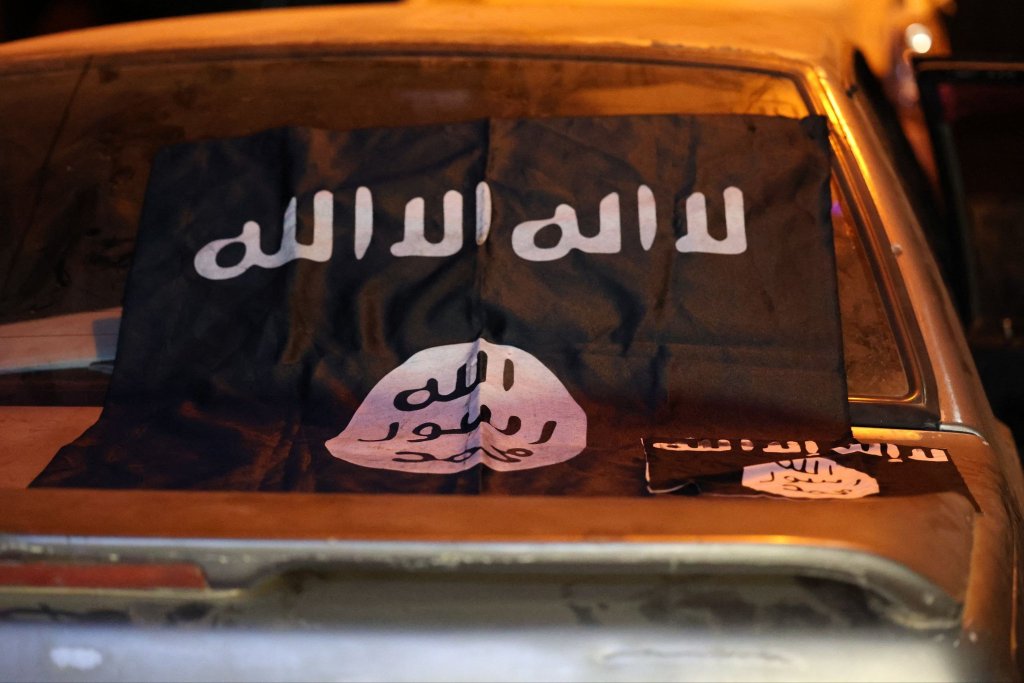
Syrian authorities accused the Islamic State group (ISIS), also known as Daesh, of carrying out the attack. But a little-known faction, Saraya Ansar al-Sunnah — described as linked to ISIS — claimed responsibility. Some experts have questioned whether ISIS directly orchestrated the bombing.

Concerns of an ISIS comeback
The new president, Ahmed al-Sharaa, faces a fragile security situation and tensions with Israel.
The Damascus church attack, along with other recent incidents, has revived fears that ISIS could be regaining strength.

A senior Syrian commander told local media the group was “moving from the desert towards cities” and trying to activate sleeper cells.
In response, the Syrian Interior Ministry launched a “Precision Operation” targeting these cells, claiming to have foiled a plot to take over key cities and strike religious sites of minorities.
“ISIS is the biggest security challenge now,” said Interior Minister Anas Khattab. “The government faces a daunting task of state-building — and groups like ISIS threaten a peaceful and stable Syria.”
A regional and global threat
This task is not just a priority for Al-Sharaa but also of considerable importance to the regional as well as the global actors especially the United States.
In March 2025, Jordan hosted foreign and defense ministers including intelligence chiefs from Turkiye, Lebanon, Syria and Iraq to discuss the resurgence threat of ISIS. In the five-nation security summit, the Iraqi foreign minister called for “joint action to address this escalating threat.”
Following the summit, the establishment of a joint regional operation committee against ISIS was announced to confront the ISIS threat and maintain stability in the region. This move holds considerable importance especially after President Trump announced slashing the number of U.S. troops in Syria to thousand.
After the fall of the last strongholds of ISIS in Iraq (year) and Syria in 2019, activities of the group were overlooked due to the Assad regime’s priorities towards stability of his regime resulting in their re-emergence in the Central Syrian Desert, from where they continued their attacks.
After his fall, some say the attacks have reduced but not entirely. Since the beginning of 2025, there are reports of attacks being throttled by the Syrian and Iraqi security forces alike.
What’s at stake for the regional and global players?
Since September 2014, the Global Coalition against ISIS (also known as ‘Daesh’ in Arabic) led by the United States including 88 other nations and organizations has been involved in fighting the group.
The Global Coalition has been focused on degrading Daesh’s capabilities and ensuring its enduring defeat. The Coalition’s 89 members are committed to tackling the group on all fronts including dismantling its networks and countering its global ambitions. Beyond the military campaign in Iraq and Syria, the Coalition aims to weaken Daesh’s financing and economic infrastructure; prevent the flow of foreign terrorist fighters across borders; support stabilization and the restoration of essential public services to areas liberated from Daesh; and counter the group’s propaganda.
These efforts were considerably significant in thwarting the so-called caliphate established by ISIS in 2014. Recently, in March 2025, President Trump announced the killing of the group’s second in command in Iraq, signaling active operations against the group by the Coalition.
ISIS has always considered the West and allies, one of hypocrites. The infamous leader of the group, Abu Bakr al Baghdadi (who was killed in an U.S airstrike), in his speeches urged Muslims around the world to rise against the West and avenge the injustices done on the Muslims lands by the West. This has been evident in the brutal killings of westerners, especially Americans apart from the religious minorities and non-confirmist to ISIS ideology.
After the fall of the caliphate, and loss of last territories in Baghuz eastern Syria in 2019, the group has recalibrated its strategies and expanded to different regions globally especially Africa and continues to maintain a persistent presence on social media. The group has also been involved in attacks worldwide, for example, the 2024 Crocus city hall attack in Moscow which killed hundreds.
As for the regional players like Jordan, Syria, Iraq and Turkiye, it is of much importance that stability remains in the region and especially for Syria since the new government is trying to gain trust of the region as well as the international community for national revival. Countries who are allies with the West have also been targeted by the group, especially Turkiye.
Thus, the group is not just a threat to Syria but other regional powers as well. Thus, a possible resurgence could very much destabilize the region and whitewash the efforts done by the Global coalition and regional powers. It could again ignite destruction and suffering in the region, which no regional or global power wants.
The question of ISIS detainees amidst a possible resurgence
The challenge of 50,000 IS-affiliated individuals (41,000 in camps, 9,000 in prisons) detained ISIS fighters including their women and children in north-eastern Syria, is often overlooked and has recently sparked debates again, amidst possible speculation about the groups’ resurgence.
The Kurdish led- Syrian Democratic Forces (SDF) and allied forces control more than twenty-six camps and prisons. These are funded by the countries part of the Global coalition. There are often reports of fighting, killings and grave conditions in these camps, which are often denied by the SDF. There have also been prison break attempts and in-prison riots like the Hasaka Prison attack in January 2022.
It is indeed a significant issue that no concrete plan of action is in place about the future of these detainees even after more than 5 years of their detainment. Firstly, there is much consensus that former fighters need to be prosecuted for terror crimes. There is no clarity as to who will conduct these trials since the International Criminal Court (ICC) does not have jurisdiction in Iraq and Syria as they are not parties to Rome Statute 9 (the founding document of ICC).
According to a UN Report published in 2020, trials conducted under Iraq’s anti-terrorism laws were recognized for the considerable efforts taken to ensure accountability for the atrocities committed by ISIL fighters, yet raised serious concerns about unfair trials placing defendants at a serious disadvantage.
Secondly, there have been no systematic plans to integrate the forced families back into the society through proper rehabilitation and de-radicalization programs. Gen. Erik Kurilla, head of the US military’s Central Command, said in a statement after one of his visits to Al-Hol camp (one of the many detainees and prisoner camps) in 2022 that the camp was “a ticking time bomb.” He also stated that these young people were vulnerable to radicalization because of the poor quality of life in the camp. Detaining them without proper conditions and future plans for assimilation in society, puts them at risk of being more radicalized. Some have grown up in the camps and do not even know what they are detained for and what their fault is.
These camps and prisons consist of fighters from around almost 60 countries. Although many countries, for example the UK, France, Russia, Saudi Arabia, United States, Turkiye among others include deradicalization, rehabilitation and resettlement programs (with stringent checks and vetting) for their citizens who formerly joined ISIS. The repatriation process according to many has been too slow. These countries have also refused to take a large chunk of their citizens back and putting them on trial, some terming it as ‘Political suicide’.
Conclusion
The amount of attention that has been towards fighting the ISIS remnants on the ground, much less focus has been on the detainees. If ISIS is planning to re-emerge, these fighters could play a significant role in building the group’s strengths.
The future of these detained fighters holds more so ever significance now since the group is planning a possible comeback. According to top commanders of the Syrian Democratic Forces, after the fall of the Assad Regime in Syria the ISIS threat has increased in and outside the camps and more prison break attempts have been observed. They also report weapons smuggling inside the camps by outside networks and helping people especially children escape from the camp for training the next generation of ISIS fighters.
The officials have also expressed concerns about the lack of proper rehabilitation facilities and deradicalization programs for the young, making it extremely important for regional as well as global players to take stringent steps, especially amidst the current environment.



Leave a comment