
In the tumultuous theater of international relations, where nations rise and fall on the strength of whispered conversations and carefully crafted treaties, few figures command the stage with the presence of Ambassador Reuven Azar.
Born in the shadow of Argentina’s political upheaval in 1967, this man would grow to become one of Israel’s most formidable diplomatic weapons—a master strategist whose career spans the most pivotal moments in Middle Eastern history and whose influence now reaches across continents to shape the future of Indo-Israeli relations.
Exodus from the Land of Silver (1967-1980)
The year 1967 marked not only the birth of Reuven Azar but also Israel’s stunning victory in the Six-Day War—a cosmic alignment that would prove prophetic.
Born into Argentina’s once-thriving Jewish community, Azar emerged during an era when Latin America’s Jewish populations faced mounting pressures. Argentina, the “Land of Silver,” had welcomed Jewish refugees for generations, but by the 1960s, economic chaos and rising antisemitism cast dark shadows over their future.
The Argentina of Azar’s childhood was a nation in turmoil.
Military coups, hyperinflation, and the brutal “Dirty War” created an atmosphere of fear that permeated Jewish households. Families whispered of disappeared neighbors, of businesses seized, of dreams shattered by political violence. For the Azar family, like thousands of other Argentine Jews, the ancient call of Aliyah—the ascent to the promised land—became not just a spiritual yearning but a matter of survival.
The decision to abandon Argentina was not made lightly.
It meant severing ties with extended family, abandoning established businesses, and venturing into the unknown. Yet in 1980, when thirteen-year-old Reuven stood at the airport clutching his few possessions, he was not just leaving Argentina—he was stepping into destiny.
Jerusalem Awakening (1980-1985)
The Jerusalem that welcomed young Reuven Azar was a city of contradictions—ancient stones bearing witness to modern struggles, holy sites surrounded by military checkpoints, and neighborhoods where Hebrew, Arabic, and a dozen other languages created a symphony of human diversity. For a teenage immigrant still dreaming in Spanish, the adjustment was nothing short of revolutionary.
The 1980s Jerusalem was electric with tension and possibility. The city still vibrated with the aftershocks of Anwar Sadat’s historic visit in 1977 and the Camp David Accords of 1978, yet the Lebanon War of 1982 reminded all residents that peace remained fragile. Young Azar absorbed these lessons viscerally—learning that diplomacy was not an abstract concept but a daily reality that determined whether neighbors lived in harmony or conflict.
His adolescent years were spent mastering Hebrew while retaining his fluent Spanish, developing the linguistic dexterity that would later prove invaluable in diplomatic negotiations.
Forged in Fire – The Paratrooper Years (1985-1988)
When Reuven Azar donned the red beret of the Israeli Paratroopers in 1985, he joined one of the IDF’s most elite units—warriors who had liberated Jerusalem in 1967 and whose motto “After Me” epitomized Israeli military leadership philosophy.
Azar’s military service coincided with some of the most dangerous years in recent Israeli history. The Lebanon security zone was a powder keg, Palestinian resistance was intensifying, and the specter of the First Intifada loomed on the horizon. His three years in uniform were not spent in peaceful barracks but in the crucible of conflict—patrolling volatile borders, conducting operations in hostile territory, and learning firsthand the price of Israel’s survival.
The Paratroopers training was legendarily brutal—night jumps over enemy territory, urban combat simulations in mock Arab villages, survival exercises in the Negev desert. But more than physical conditioning, it was psychological forging. Azar learned to make life-and-death decisions under pressure, to lead men in combat, and to understand that failure was not just personal defeat but could mean the destruction of his nation.
The eruption of the First Intifada in December 1987, during his final year of service, provided Azar with profound insights into the Palestinian-Israeli conflict. Unlike politicians who debated from comfortable offices, he witnessed the human cost on both sides—Israeli soldiers torn between duty and conscience, Palestinian youth driven by desperation and hope.
Continuing as a reserve combat Sergeant until 2008 meant that for over two decades, Azar maintained his warrior credentials even as he climbed diplomatic ranks. This unique combination—diplomat by day, warrior by calling—gave him credibility that few foreign ministry officials possessed.

The Scholar-Warrior Emerges (Late 1980s-1994)
The Hebrew University of Jerusalem, where Azar pursued his Bachelor’s and Master’s degrees in International Relations, was more than an academic institution—it was Israel’s intellectual nerve center, where former generals studied alongside future ambassadors, where theories of international relations were tested against the harsh realities of Middle Eastern politics.
During his university years, Azar was immersed in an academic environment electrified by historic developments. The Berlin Wall fell, the Soviet Union collapsed, and the Madrid Peace Conference of 1991 brought Arabs and Israelis to the same negotiating table for the first time. The Oslo Channel was secretly developing, promising breakthrough agreements that would reshape the region.
His Master’s degree research likely focused on the emerging Palestinian-Israeli dynamic, as the PLO transformed from a terrorist organization to a potential peace partner. This academic foundation would prove invaluable as he later found himself implementing policies he had once studied as theoretical exercises.
The completion of his Ministry of Foreign Affairs cadet training in 1994 marked the end of his preparation phase and the beginning of a career that would span three decades of Middle Eastern turbulence.
Baptism by Fire – Cairo and the Arab Crucible (1996-2000)
Azar’s assignment as Head of the Economic and Trade Department at the Israeli Embassy in Cairo from 1996 to 2000 was his diplomatic baptism by fire. Egypt was not just another posting—it was the heavyweight champion of the Arab world, the country that had fought Israel in four wars before making the revolutionary decision to pursue peace.
Cairo in the late 1990s was a city of contradictions that perfectly encapsulated the challenges of Arab-Israeli normalization. While President Hosni Mubarak maintained the cold peace established by Anwar Sadat, Egyptian society remained largely hostile to Israel. Diplomats worked under constant security threats, business deals were negotiated in an atmosphere of mutual suspicion, and every economic agreement had to overcome decades of ingrained hostility.
For four crucial years, Azar navigated this treacherous terrain, building trade relationships that would transform Israel-Egypt economic ties from theoretical possibility to practical reality. He negotiated agreements on industrial zones, agricultural cooperation, and technology transfers.
His Arabic fluency proved invaluable—not just for communication but for cultural understanding. He could read Egyptian newspapers, follow television debates, and understand the subtle currents of public opinion that influenced government policy.
The Iran Shadow – Sanctions and Strategic Warfare (2000-2003)
Returning to Jerusalem, Azar assumed the critical role of Head of the Iran Sanctions Team and Director of Middle East Economic Research—positions that placed him at the center of what would become the defining strategic challenge of the 21st century. Iran’s nuclear program was accelerating, its proxy forces were gaining strength across the region, and its revolutionary rhetoric threatened not just Israel but the entire Middle Eastern order.
As head of the sanctions team, Azar became Israel’s point man in the global economic war against Iran. This was diplomacy as warfare by other means—identifying Iranian financial networks, convincing international banks to cease transactions, coordinating with allied intelligence services to track weapons shipments, and building the legal frameworks that would later evolve into crushing international sanctions.
His work required the analytical skills of an economist, the strategic thinking of a general, and the persistence of a detective. Iranian financial networks were sophisticated and constantly evolving, using front companies, shell corporations, and complicit banks to circumvent restrictions.
Simultaneously, his role as Director of Middle East Economic Research meant monitoring regional developments that could affect Israeli security. The Second Intifada had erupted in 2000, transforming the optimism of the Oslo years into bitter disillusionment.
Azar’s research teams tracked the economic dimensions of conflict—how Palestinian unemployment fueled violence, how Israeli security measures disrupted commerce, how regional instability deterred investment. His reports influenced government policy on everything from checkpoint procedures to settlement construction, always weighing security needs against economic consequences.
The American Crucible – Washington Power Politics (2003-2006)
The embassy posting to Washington from 2003 to 2006 placed Azar at the epicenter of global power during one of its most turbulent periods. The United States was reeling from 9/11, prosecuting wars in Iraq and Afghanistan, and grappling with a transformed security environment. For Israeli diplomats, this created both unprecedented opportunities and dangerous complications.
As Counselor for Political Affairs, Azar operated in the highest echelons of American power. His days were spent in congressional briefings, State Department meetings, National Security Council consultations, and think tank presentations. This was diplomacy at its most consequential—where casual conversations could influence billion-dollar aid packages and policy papers could determine military cooperation agreements.
The Iraq War dominated the political landscape, with Israel walking a delicate line between supporting its American ally and avoiding responsibility for a controversial conflict.
The Palestinian issue remained central to American Middle East policy, with the Bush administration launching multiple peace initiatives. Azar found himself defending Israeli positions on settlements, security barriers, and military operations while simultaneously seeking American support for Israeli security needs. This required extraordinary diplomatic skill—acknowledging Palestinian suffering while justifying Israeli actions, promising peace while preparing for continued conflict.
Perhaps most importantly, Azar helped lay the groundwork for what would become the closest American-Israeli relationship in history. The post-9/11 security cooperation, intelligence sharing, and military coordination that defined this era were built through thousands of hours of detailed negotiations in which Azar played a crucial role.
Amman Intrigues – The Hashemite Balancing Act (2010-2012)
The assignment to Amman as Deputy Head of Mission represented a different kind of diplomatic challenge. Jordan was officially at peace with Israel, but it was also a kingdom walking a tightrope between competing pressures—Palestinian refugees who comprised a majority of its population, Arab nationalist sentiment that remained hostile to Israel, economic dependence on Western aid, and security cooperation with both Israel and the United States.
King Abdullah II had inherited a delicate balancing act from his father, maintaining the peace treaty while managing domestic opposition. For Azar, this meant navigating relationships with a government that publicly cooperated while privately maintaining distance, security services that shared intelligence while official media criticized Israeli policies, and a population that included Palestinian refugees still dreaming of return.
The Arab Spring erupted during Azar’s tenure, transforming the regional landscape almost overnight. Tunisia’s revolution sparked uprisings across the Arab world, threatening established orders from Cairo to Damascus. Jordan faced its own protests, though King Abdullah’s reforms and security apparatus prevented the regime change that swept other Arab capitals.
For Israeli diplomats, the Arab Spring represented both opportunity and existential threat. The fall of Mubarak eliminated a predictable partner, the Syrian civil war created chaos on Israel’s northern border, and the rise of Islamic movements threatened secular peace treaties. Azar found himself managing crisis after crisis, maintaining Jordanian cooperation even as regional allies collapsed.
His Arabic fluency proved crucial in reading the mood on the Jordanian street, understanding tribal dynamics, and building relationships with officials who might be suspicious of American or European diplomats but found common ground with someone who spoke their language and understood their culture.
The Analyst’s Throne – Middle East Research Command (2012-2014)
The appointment as Head of Middle East Research in 2012 elevated Azar to one of the most influential positions in Israeli foreign policy. This was not merely an academic role but the nerve center of Israeli strategic thinking about its most dangerous neighborhood. His research teams monitored developments from Tehran to Tunis, analyzed threat levels from state and non-state actors, and provided the intelligence assessments that guided cabinet decisions on war and peace.
The timing was critical. The Syrian civil war was devastating Israel’s northern neighbor, creating refugee crises, chemical weapons threats, and opportunities for Iranian proxy forces. Egypt was experiencing revolutionary upheaval that toppled Mubarak and brought the Muslim Brotherhood to power. Libya had collapsed into chaos following NATO intervention. The entire regional order that had provided relative stability since the 1970s was disintegrating.
Azar’s teams tracked Syrian chemical weapons stockpiles, monitored Hezbollah’s growing arsenal, analyzed ISIS’s territorial gains, and assessed Iran’s nuclear progress. Their reports landed on the Prime Minister’s desk within hours of major developments, influencing decisions on military deployments, diplomatic initiatives, and intelligence operations.
The Deputy’s Power – Washington Redux (2014-2018)
Returning to Washington as Deputy Ambassador in 2014, Azar entered the most challenging period in American-Israeli relations since the 1970s. President Obama’s administration was determined to reach a nuclear agreement with Iran, despite Israeli objections. The relationship between Obama and Netanyahu had deteriorated into public acrimony, with disagreements over settlements, Iran policy, and Middle East strategy playing out in media headlines.
As Deputy Ambassador, Azar was responsible for maintaining operational cooperation even as political relationships frayed. This required extraordinary diplomatic skill—working with Pentagon officials on security cooperation while State Department counterparts criticized Israeli policies, coordinating with Congress while the White House maintained distance, and managing American Jewish community concerns while avoiding appearance of election interference.
The 2016 election transformed American-Israeli relations overnight. The Trump administration’s pro-Israel positions represented the most dramatic policy shift since the Carter-Reagan transition. Suddenly, years of difficult negotiations yielded to unprecedented American support—embassy relocation to Jerusalem, recognition of Israeli sovereignty over the Golan Heights, withdrawal from the Iran nuclear deal, and normalization agreements with Arab states.
Azar played crucial roles in implementing these policy shifts, working with Trump administration officials to translate campaign promises into operational reality.

The Inner Circle – National Security Advisor (2018-2021)
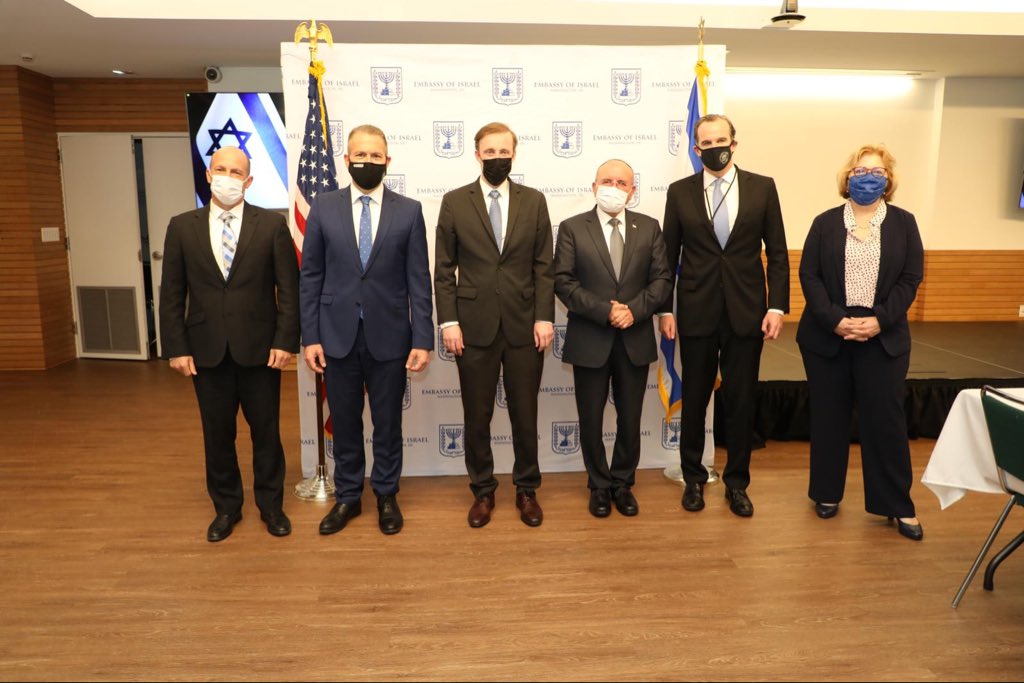
The appointment as Deputy National Security Advisor for Foreign Policy and Foreign Policy Advisor to Prime Minister Netanyahu represented the pinnacle of Azar’s career. This was not just another posting but entry into Israel’s inner circle—the small group of advisors who shaped national strategy, managed international crises, and influenced decisions that affected millions of lives.
Working directly with Netanyahu during his final years in office, Azar helped orchestrate some of Israel’s most significant diplomatic achievements. The Abraham Accords, normalizing relations with the UAE, Bahrain, Morocco, and Sudan, represented the most dramatic breakthrough in Arab-Israeli relations since the Egypt and Jordan peace treaties.
The COVID-19 pandemic created additional diplomatic challenges, as traditional face-to-face diplomacy gave way to virtual meetings and travel restrictions complicated international engagement. Azar helped adapt Israeli diplomatic practices to this new environment while managing the international aspects of Israel’s pandemic response.
Perhaps most significantly, this period saw the emergence of the China challenge in Israeli foreign policy. Chinese investment in Israeli technology and infrastructure had created concerns among American allies, leading to the establishment of screening mechanisms for foreign investment. Azar helped develop policies that balanced economic opportunities with security considerations.
The China Conundrum – Triangular Diplomacy (2021-2022)
Leading the Israel-US-China Internal Task Force represented one of the most complex diplomatic challenges of the modern era. China had become Israel’s second-largest trading partner, a major investor in Israeli technology, and a crucial market for Israeli exports. Simultaneously, American concerns about Chinese technology transfer and strategic competition created pressure for restrictions on China-Israel cooperation.
The task force had to navigate competing pressures from multiple directions. Israeli businesses wanted continued access to Chinese markets and investment. American officials demanded restrictions on Chinese access to Israeli technology, particularly in sectors with security applications. Chinese diplomats warned against discriminatory policies that could damage bilateral relations.
Azar’s team developed screening mechanisms for Chinese investment, established committees to review technology transfers, and created diplomatic channels for managing tensions. The solutions required legal expertise, economic analysis, and political sensitivity—understanding that poorly designed policies could damage Israel’s relationships with both superpowers.
The challenge was compounded by broader U.S.-China competition, as Washington increasingly viewed economic relationships through strategic lenses. Israeli policies had to account for American concerns while avoiding the appearance of choosing sides in a competition that would define 21st-century international relations.
Romanian Interlude – European Foundations (2022-2024)
The Romanian ambassadorship provided Azar with European Union experience essential for a complete diplomatic portfolio. Romania, with its tragic Holocaust history and complex relationship with Jewish communities, represented both challenges and opportunities for Israeli engagement.
Romania’s position within the EU made it a valuable partner for Israeli diplomatic initiatives. As Azar worked to build relationships with Romanian officials, he also gained insights into European Union decision-making processes, understanding how consensus-building worked among 27 different national perspectives.
The Holocaust legacy remained central to Romanian-Israeli relations, with ongoing efforts to preserve historical sites, educate younger generations, and maintain memorial activities. Azar participated in ceremonies, supported educational programs, and worked with Jewish community organizations to strengthen these connections.
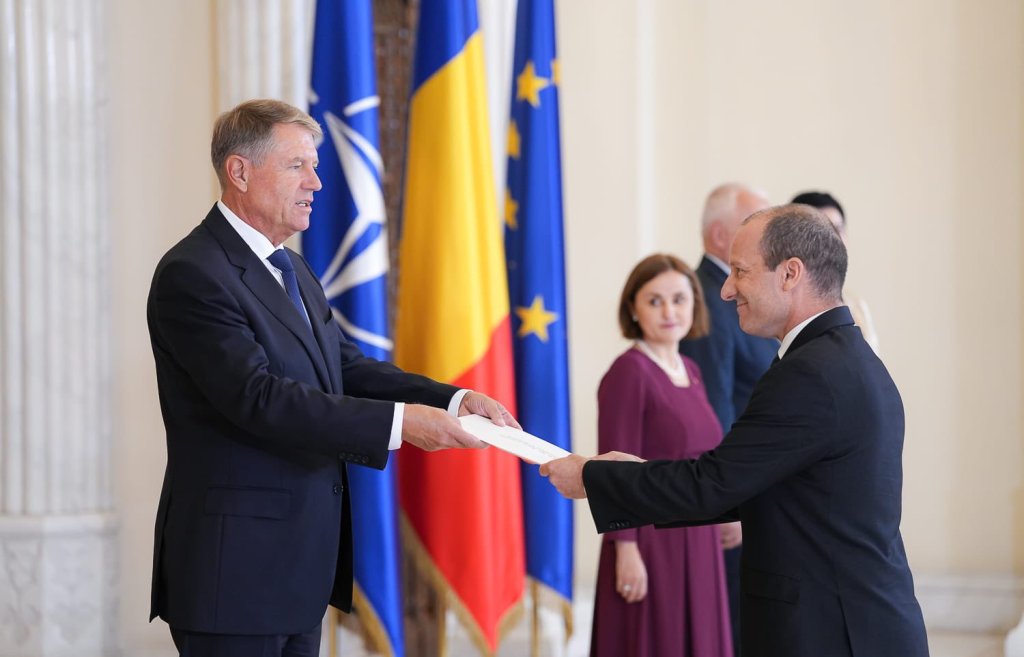
Economic cooperation focused on technology transfer, agricultural innovation, and defense collaboration. Romanian interest in Israeli expertise in cybersecurity, precision agriculture, and defense systems created opportunities for expanded bilateral cooperation.
Learning Romanian demonstrated Azar’s continued commitment to cultural diplomacy—understanding that language skills create personal connections that transcend formal diplomatic protocols. This approach would prove valuable as he prepared for his next assignment.
The Indian Gambit – Strategic Partnership (2024-Present)
The appointment as Ambassador to India in August 2024 marked not just a career culmination but Israel’s recognition that the Indo-Pacific region would define 21st-century geopolitics. India’s transformation from Non-Aligned Movement leader to strategic partner represented one of Israel’s greatest diplomatic achievements, and Azar’s mission was to deepen this relationship across all dimensions.
Arriving in New Delhi amid regional tensions and global uncertainties, Azar brought three decades of Middle Eastern experience to bear on Indo-Pacific challenges. India’s continued relationships with Iran and Arab states required careful management, while growing China-India tensions created opportunities for enhanced Israeli-Indian cooperation.
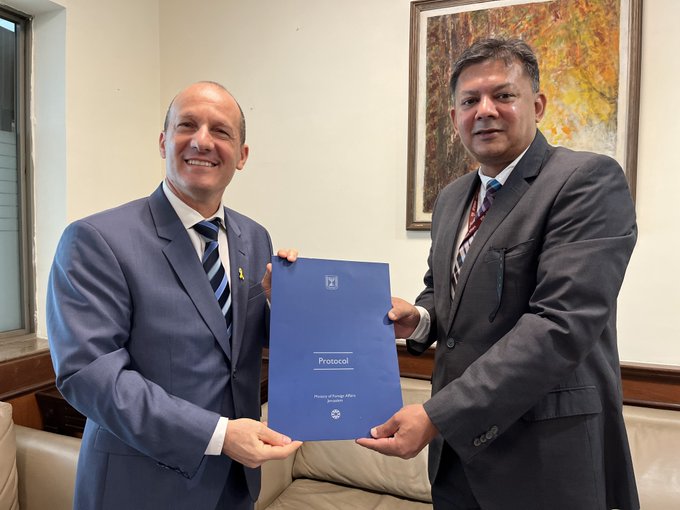
The scope of bilateral cooperation had expanded far beyond traditional diplomatic relations. Defense partnerships included joint development of advanced weapons systems, intelligence sharing on regional threats, and military exercises involving both countries’ forces. Technology cooperation spanned artificial intelligence, cybersecurity, space exploration, and agricultural innovation.
Azar’s leadership of the record-breaking business delegation of 100 Israeli companies in 2025 demonstrated his understanding that modern diplomacy required economic foundations. Trade relationships create constituencies for continued cooperation, while technological partnerships build dependencies that strengthen political ties.
His concurrent responsibilities as non-resident Ambassador to Sri Lanka and Bhutan reflected India’s regional influence and Israel’s desire for comprehensive South Asian engagement. These relationships, while smaller in scale, provided additional diplomatic tools and regional insights.
The Cultural Bridge – Personal Diplomacy in Action
Throughout his career, Azar’s approach to diplomacy has emphasized personal relationships and cultural understanding. His linguistic abilities—Hebrew, English, Spanish, Arabic, Romanian, and emerging Hindi—reflect a deeper philosophy that effective diplomacy requires genuine cultural engagement.
This approach has proven particularly valuable in societies where personal relationships matter more than formal protocols. Middle Eastern and South Asian cultures emphasize trust, respect, and long-term commitments—values that align with Azar’s diplomatic philosophy.
Epilogue: The Architect’s Legacy
As Ambassador Reuven Azar continues his mission in New Delhi, his career represents more than individual achievement—it embodies Israel’s diplomatic evolution from regional pariah to global partner. His journey from teenage immigrant to senior ambassador mirrors his country’s transformation from embattled startup to technological powerhouse.
The challenges ahead remain formidable. Regional conflicts continue to threaten stability, great power competition creates diplomatic complexities, and technological changes demand new approaches to international relations.
The boy who arrived from Argentina with dreams of belonging has become an architect of nations—building bridges across cultures, creating partnerships among former enemies, and demonstrating that skilled diplomacy can achieve what military force alone cannot. In an era when international cooperation faces unprecedented challenges, Ambassador Reuven Azar stands as proof that individual dedication, cultural sensitivity, and strategic vision can still shape the destiny of nations.
Disclaimer:
This report is based on the author’s knowledge and research, not aimed to defame. Image sources are the Ambassador’s Twitter account.



Leave a comment