
Introduction
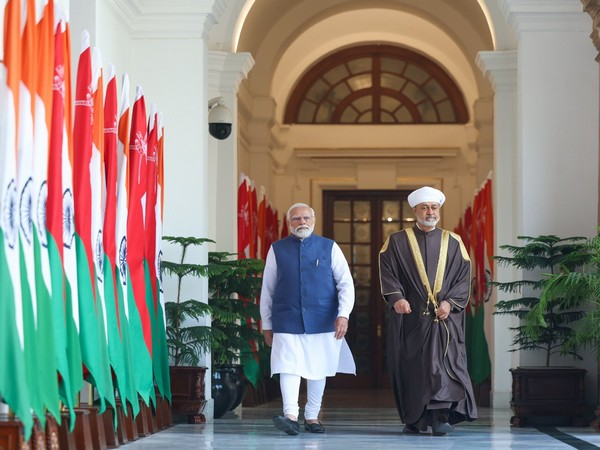
The relationship between India and Oman represents one of the oldest and most enduring partnerships in the history of international relations.
Spanning over millennia, this relationship has evolved from ancient maritime trade connections along the spice and silk routes to a comprehensive modern partnership encompassing economic, cultural, strategic, and people-to-people ties.
The geographical proximity of these nations across the Arabian Sea has facilitated continuous interaction, making their relationship a testament to the enduring power of commerce, culture, and diplomacy in shaping bilateral relations.
Ancient Foundations: The Spice Route Era (3000 BCE – 1500 CE)
Early Maritime Connections
The relationship between the Indian subcontinent and the Omani coast dates back to the Bronze Age, around 3000 BCE, when the ancient Harappan civilization established trade links with Mesopotamia through Omani ports.
Archaeological evidence from sites like Sohar and Sur in Oman reveals artifacts of Indian origin, including pottery, beads, and textiles, indicating regular commercial exchanges. The strategic location of Oman as a maritime gateway between the Indian Ocean and the Persian Gulf made it a natural partner for Indian merchants seeking access to Middle Eastern and Mediterranean markets.

During this period, Omani traders served as crucial intermediaries in the spice trade, connecting Indian producers with consumers in Persia, Arabia, and beyond.
The monsoon winds that governed maritime travel in the Indian Ocean created a natural rhythm of trade, with merchants from both regions timing their voyages to maximize favorable weather conditions. This seasonal pattern fostered regular contact and gradually developed into established trade relationships that would persist for centuries.
The Classical Spice Route Network
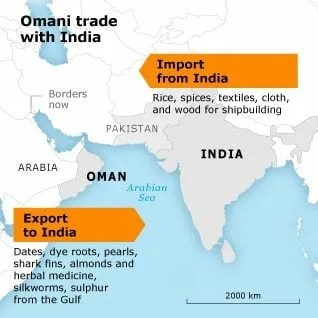
The classical period (500 BCE – 1000 CE) witnessed the formalization of trade routes that connected India with the Roman Empire, Persia, and Arabia through Omani ports. Indian spices, particularly black pepper, cardamom, and cinnamon, were highly prized commodities that commanded premium prices in distant markets. Omani merchants, renowned for their seafaring skills and commercial acumen, established trading posts along the Indian coast, particularly in Kerala, Karnataka, and Gujarat.
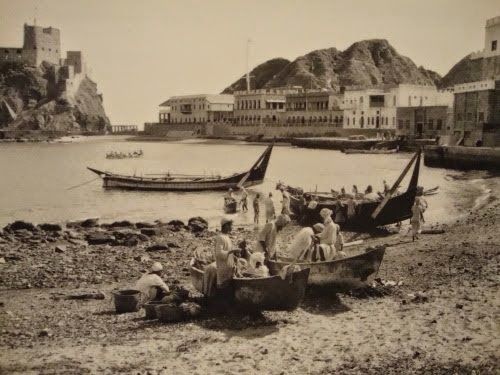
The Periplus of the Erythraean Sea, a first-century CE maritime trading manual, documents the systematic nature of this trade. It describes how Omani and Arab merchants would arrive at Indian ports during the northeast monsoon season, laden with gold, silver, and dates, and return with their ships filled with spices, precious stones, textiles, and other luxury goods.
This trade was not merely transactional but fostered deep cultural exchanges, with Indian merchants establishing communities in Omani ports and Omani traders setting up permanent bases in Indian coastal cities.
Cultural and Religious Exchanges
Beyond commercial transactions, the ancient period saw significant cultural and religious exchanges between India and Oman. The spread of Islam to the Indian subcontinent in the 8th century CE was facilitated partly through maritime routes controlled by Omani and other Arab traders. These merchants not only brought goods but also ideas, religious practices, and cultural influences that would profoundly impact the Indian subcontinent.
Similarly, Indian cultural influences, particularly in the areas of mathematics, medicine, and philosophy, traveled westward through these same routes. The famous Omani city of Sohar became a melting pot of cultures, where Indian, Persian, Arab, and later European influences merged to create a unique cosmopolitan character that reflected the diversity of the Indian Ocean trading network.
Medieval Period: Consolidation and Expansion (1000 – 1500 CE)
The Golden Age of Arab-Indian Trade
The medieval period marked the golden age of Arab-Indian trade, with Omani merchants playing an increasingly prominent role. The establishment of powerful Indian Ocean trading networks by Arab merchants, including those from Oman, created unprecedented prosperity for both regions. During this period, Omani control over key ports like Muscat, Sohar, and Sur allowed them to dominate much of the western Indian Ocean trade.
The rise of powerful Indian kingdoms, particularly the Chola Empire in South India, led to more sophisticated trade relationships. The Cholas’ naval expeditions to Southeast Asia created a vast commercial network that connected Indian ports with those of Oman and the broader Arabian Peninsula. This period saw the establishment of formal diplomatic relations between Indian rulers and Omani leaders, with exchange of ambassadors and formal trade agreements becoming common.

Technological and Navigation Advances
Medieval India-Oman relations were significantly enhanced by advances in navigation technology and shipbuilding. The development of the dhow, a type of sailing vessel perfectly adapted to Indian Ocean conditions, revolutionized maritime trade. These ships, built using techniques that combined Indian, Arab, and Persian innovations, became the backbone of the spice trade network.
The refinement of celestial navigation techniques, including the use of the kamal (a navigation device) and detailed knowledge of monsoon patterns, allowed for more reliable and efficient voyages. Indian mathematicians and astronomers contributed significantly to these advances, with their work being adopted and further developed by Omani navigators.
Establishment of Trading Communities
This period witnessed the establishment of permanent Indian trading communities in Oman and Omani communities in India. The Gujarati merchant community, in particular, established a strong presence in Omani ports, where they engaged in trade financing, shipping, and retail commerce. These communities served as cultural bridges, facilitating not just trade but also the exchange of languages, customs, and religious practices.
The concept of the “Indian Ocean as a single commercial zone” became reality during this period, with Oman serving as a crucial hub connecting the Arabian Peninsula, East Africa, and the Indian subcontinent. This integration created mutual dependencies that would prove resilient even during periods of political upheaval.
The Portuguese Interlude and Omani Resurgence (1500 – 1744)
Portuguese Disruption of Traditional Trade
The arrival of Portuguese navigators in the Indian Ocean in the late 15th century dramatically altered the traditional India-Oman trade relationship. The Portuguese, under Vasco da Gama and subsequent expeditions, sought to control the lucrative spice trade by establishing fortified positions along key trade routes. Their capture of strategic ports including Goa in India and Muscat in Oman disrupted the established trading networks that had functioned for centuries.
The Portuguese imposed a cartaz system, requiring all merchant vessels to obtain licenses and pay duties, effectively monopolizing trade routes that had previously operated under more flexible arrangements. This system particularly affected Omani merchants, who found their traditional trading privileges curtailed and their access to Indian markets regulated by Portuguese authorities.
Resistance and Adaptation
However, both Indian and Omani merchants proved remarkably adaptable to these new circumstances. Many Omani traders developed alternative routes and formed alliances with local Indian rulers who resisted Portuguese control. The Zamorin of Calicut, for instance, maintained strong ties with Omani merchants despite Portuguese pressure, viewing them as essential partners in maintaining economic independence.
During this period, smaller Indian Ocean ports gained prominence as merchants sought to avoid Portuguese-controlled major ports. This dispersion of trade activity actually strengthened the overall network by making it more resilient to disruption. Omani merchants, in particular, developed expertise in operating in politically complex environments, skills that would serve them well in later centuries.
The Omani Reconquest
The expulsion of the Portuguese from Muscat by Imam Nasir bin Murshid in 1650 marked the beginning of Omani resurgence in the Indian Ocean. Under the Ya’ariba dynasty, Oman not only regained control of its own territory but also extended its influence along the East African coast and renewed its traditional ties with India. This period saw a remarkable revival of the India-Oman trading relationship, with both sides eager to restore their profitable commercial connections.
The Omani reconquest coincided with the rise of the Maratha Empire in India and the gradual decline of the Mughal Empire, creating new opportunities for partnership. Omani naval power, rebuilt after the Portuguese expulsion, provided security for merchant vessels traversing the Arabian Sea, while Indian merchants provided the goods and capital necessary for long-distance trade.
The Al Busaidi Era and British Colonial Period (1744 – 1947)
The Founding of the Al Busaidi Dynasty
The establishment of the Al Busaidi dynasty in Oman in 1744 under Ahmad bin Said marked a new chapter in India-Oman relations. The Al Busaidis proved to be astute rulers who understood the importance of maintaining strong ties with India for Oman’s prosperity and security. Under their rule, Oman expanded its influence in the Indian Ocean, establishing control over Zanzibar and other East African territories while maintaining close commercial ties with the Indian subcontinent.
Imam Ahmad bin Said and his successors actively courted Indian merchants, offering them favorable trading conditions and protection for their commercial activities. This policy proved highly successful, attracting significant Indian investment in Omani trade and contributing to a period of unprecedented prosperity for the Sultanate.
Sayyid Said bin Sultan and the Indian Ocean Empire
The reign of Sayyid Said bin Sultan (1804-1856) represented the pinnacle of Omani power in the Indian Ocean and the closest integration between Omani and Indian commercial networks. Sayyid Said’s decision to move his capital to Zanzibar reflected his understanding that Oman’s future lay in leveraging its Indian Ocean connections rather than focusing solely on Arabian Peninsula affairs.
During this period, Indian merchants, particularly Gujaratis and Kutchis, became integral to Omani commercial operations. They provided capital, commercial expertise, and connections to broader Indian and global markets. The relationship was symbiotic: Omani political protection and naval power provided security for Indian commercial ventures, while Indian commercial networks and capital enabled Omani territorial expansion and political influence.
Sayyid Said’s court in Zanzibar became a cosmopolitan center where Indian, Arab, African, and European influences merged. Indian merchants held positions of significant influence, with some serving as customs officials and financial advisors to the Sultan. This period demonstrated the potential for Indo-Arab cooperation when political and commercial interests aligned.
British Colonial Impact
The gradual establishment of British control over India had profound implications for India-Oman relations. Initially, the British East India Company sought to work with existing trading networks rather than disrupt them entirely. Omani merchants, with their established connections and local knowledge, became valuable partners for British commercial expansion in the Indian Ocean.
However, as British control tightened, the nature of India-Oman relations began to change. The British imposed their own commercial regulations and gradually reduced the autonomy that had previously characterized Indian Ocean trade. The opening of the Suez Canal in 1869 further altered traditional trade patterns by providing a more direct route between Europe and Asia, reducing the relative importance of Arabian Peninsula ports.
Despite these changes, significant Indian communities remained in Oman, and Omani merchants continued to operate from Indian ports. The British, recognizing the importance of maintaining regional stability, generally sought to preserve existing arrangements while gradually increasing their own control. This period saw the formalization of many previously informal relationships, with treaties and agreements replacing the traditional, more flexible arrangements that had characterized earlier periods.

Economic Transformation and Continuity
The colonial period brought significant economic changes to both India and Oman. The introduction of steamships and telegraphs revolutionized communication and transportation, making trade more predictable and efficient. However, these technological advances also made traditional intermediary roles less necessary, affecting the position of traditional trading communities.
Omani merchants adapted by diversifying their activities and investing in new sectors such as modern shipping and banking. Many established operations in British India, taking advantage of the colonial administration’s efforts to standardize commercial law and procedures. This period saw the emergence of Indian business houses with significant operations in Oman and Omani merchants with permanent establishments in India, creating a truly integrated commercial network.
Independence Era and Modern Partnership (1947 – Present)
Early Post-Independence Relations
India’s independence in 1947 marked the beginning of a new chapter in India-Oman relations. The newly independent Indian government, led by Prime Minister Nehru, was eager to establish strong ties with fellow Asian and Middle Eastern nations as part of its Non-Aligned Movement strategy. Oman, under Sultan Said bin Taimur, was still largely isolated from the modern world, but the historical connections with India provided a foundation for renewed diplomatic engagement.
The early post-independence period was characterized by gradual reconnection as both countries adjusted to changing global circumstances. India’s emergence as a democratic republic and its growing international profile provided new opportunities for partnership, while Oman’s strategic location and natural resources offered potential benefits for India’s economic development.
The Qaboos Era Transformation
The accession of Sultan Qaboos bin Said in 1970 revolutionized Oman’s approach to international relations and marked the true beginning of modern India-Oman partnership. Sultan Qaboos’s modernization program, known as the Omani Renaissance, sought to transform Oman into a modern state while preserving its cultural heritage and traditional values.
One of Sultan Qaboos’s first initiatives was to strengthen ties with India, recognizing the potential for mutually beneficial cooperation. The Sultan’s visit to India in 1975 was a watershed moment, establishing the framework for comprehensive bilateral engagement that continues to this day. During this visit, both sides identified key areas for cooperation including trade, investment, energy, and cultural exchange.
The establishment of formal diplomatic relations was followed by a series of agreements covering various aspects of bilateral cooperation. The cultural affinity between the two nations, rooted in centuries of interaction, provided a solid foundation for rapidly expanding ties. Both leaders recognized that their historical connections offered a competitive advantage in developing modern partnerships.
Economic Partnership and Energy Cooperation
The discovery and development of Oman’s oil resources provided new dimensions for India-Oman economic cooperation. India’s growing economy and increasing energy needs made Oman an attractive partner for long-term energy security. The development of long-term oil supply agreements in the 1980s and 1990s created stable economic ties that benefited both nations.
Beyond oil trade, both countries recognized the potential for broader economic cooperation. Indian companies began investing in Omani infrastructure projects, while Omani sovereign wealth funds explored investment opportunities in India’s growing economy. The establishment of the India-Oman Joint Commission in 1985 provided a formal mechanism for coordinating economic cooperation and resolving trade issues.
The 1990s saw significant expansion in bilateral trade and investment. Indian exports to Oman diversified beyond traditional goods to include manufactured products, pharmaceuticals, and food items. Omani investments in India, particularly in the energy and infrastructure sectors, demonstrated the Sultanate’s confidence in India’s economic potential.
Strategic and Defense Cooperation
The end of the Cold War and changing regional security dynamics created new opportunities for India-Oman strategic cooperation. Both nations faced similar challenges from regional instability and recognized the benefits of coordinating their security policies. The signing of a Memorandum of Understanding on Defense Cooperation in 2005 formalized military ties that had been developing informally for several years.
This cooperation includes joint military exercises, training programs, and intelligence sharing arrangements. The Indian Navy’s access to Omani ports for refueling and maintenance has enhanced India’s ability to project power in the Indian Ocean, while Omani security forces have benefited from Indian expertise in counterterrorism and maritime security.
The strategic partnership reflects both nations’ commitment to maintaining stability in the Indian Ocean region. Their cooperation in anti-piracy operations and maritime security initiatives demonstrates the practical benefits of their partnership for regional and global security.
Contemporary Challenges and Opportunities
The 21st century has brought new challenges and opportunities for India-Oman relations. The global war on terrorism, regional conflicts in the Middle East, and changing energy markets have required both nations to adapt their partnership to new circumstances. The signing of the Strategic Partnership Agreement in 2008 demonstrated their commitment to deepening cooperation across all areas of bilateral engagement.
Recent developments have focused on expanding cooperation in renewable energy, technology transfer, and people-to-people exchanges. Oman’s Vision 2040 development strategy emphasizes economic diversification, creating opportunities for Indian companies in sectors such as manufacturing, logistics, and tourism. Similarly, India’s Make in India and Digital India initiatives offer opportunities for Omani investment and participation.
The COVID-19 pandemic tested the resilience of bilateral ties but also demonstrated their strength. Both countries coordinated their response efforts, with India providing medical supplies and expertise to Oman while Omani authorities ensured the welfare of the large Indian expatriate community. This cooperation during crisis conditions reinforced the depth of their partnership.
The Indian Diaspora in Oman
Historical Presence
The Indian community in Oman represents one of the most significant and well-integrated diaspora populations in the Middle East. With roots dating back centuries to the ancient trading connections, the modern Indian community in Oman numbers over 700,000 people, making Indians the largest expatriate group in the country. This community plays a crucial role in Oman’s economy and serves as a living bridge between the two nations.
The historical integration of Indian merchants and traders into Omani society created a foundation of trust and mutual respect that continues to benefit contemporary relations. Unlike some other Gulf countries where Indian workers are primarily recent arrivals, the Indian community in Oman includes families with generations of residence in the Sultanate, creating deeper cultural and emotional ties.
Economic Contribution
The Indian diaspora in Oman contributes significantly to both economies. Indians occupy important positions across all sectors of Oman’s economy, from senior management roles in major corporations to skilled technical positions in the oil and gas industry. Indian entrepreneurs have established successful businesses that contribute to Oman’s economic diversification efforts.
Remittances from the Indian community in Oman constitute a significant component of India’s foreign exchange earnings. These financial flows, estimated at over $3 billion annually, support millions of families in India and contribute to India’s economic development. The stability and reliability of these remittances reflect the established position of the Indian community in Omani society.
Cultural Bridge
The Indian community serves as a cultural bridge between India and Oman, facilitating understanding and cooperation at multiple levels. Indian cultural events, festivals, and educational institutions in Oman help maintain cultural connections while also introducing Omani society to Indian traditions and values. Similarly, the Indian community’s integration into Omani society helps Indians better understand and appreciate Omani culture and values.
This cultural exchange extends to areas such as cuisine, arts, and entertainment, creating a shared cultural space that enriches both societies. The presence of Indian schools, cultural centers, and religious institutions in Oman ensures that cultural ties remain strong across generations.
Regional and Global Context
Geopolitical Significance
The India-Oman partnership has gained increased geopolitical significance in the context of great power competition in the Indian Ocean region. Both nations share an interest in maintaining a multipolar regional order that prevents any single power from dominating crucial sea lanes and trade routes. Their cooperation contributes to regional stability and provides alternatives to potentially destabilizing power competition.
Oman’s policy of neutrality and non-interference, combined with India’s commitment to strategic autonomy, creates natural synergies in their approach to regional issues. Both nations have avoided taking sides in regional conflicts and instead focused on promoting dialogue and peaceful resolution of disputes.
Multilateral Cooperation
India and Oman cooperate in various multilateral forums, including the United Nations, Non-Aligned Movement, and Indian Ocean Rim Association. Their shared perspectives on many global issues enable them to coordinate positions and amplify their collective influence in international affairs. This cooperation extends to issues such as climate change, sustainable development, and international trade.
The two nations have also worked together to promote regional integration initiatives that benefit all Indian Ocean littoral states. Their support for multilateral approaches to regional challenges reflects their understanding that unilateral action is often insufficient to address complex transnational issues.
Economic Dimensions of Modern Partnership
Trade and Investment Flows
Contemporary India-Oman trade relations reflect both the historical foundations and modern economic realities of their partnership. Bilateral trade has grown exponentially since the 1990s, reaching over $12 billion annually by 2020. This growth reflects the diversification of trade beyond traditional commodities to include manufactured goods, services, and technology products.
Indian exports to Oman include textiles, pharmaceuticals, food products, and engineering goods, while imports from Oman are dominated by crude oil and petroleum products. However, both nations recognize the need for further diversification to create more balanced and sustainable trade relations.
Investment flows between the two countries have also expanded significantly. Indian companies have invested in Omani manufacturing, infrastructure, and service sectors, while Omani sovereign wealth funds have made strategic investments in Indian companies and infrastructure projects. These investment flows create long-term interests that strengthen bilateral ties and provide resilience against short-term political or economic disruptions.
Energy Partnership
Energy cooperation remains a cornerstone of modern India-Oman relations, but both nations are working to expand this cooperation beyond traditional oil and gas trade. Oman’s abundant renewable energy resources, particularly solar and wind power, offer opportunities for Indian companies to invest in clean energy projects. Similarly, India’s growing expertise in renewable energy technology provides opportunities for technology transfer and joint development projects.
The development of green hydrogen production capabilities in Oman, with Indian technical and financial participation, represents the future direction of their energy partnership. This cooperation aligns with both nations’ commitments to reducing carbon emissions and developing sustainable energy systems.
Technology and Innovation
The technology sector represents a new frontier for India-Oman cooperation. India’s strengths in information technology, telecommunications, and digital services complement Oman’s efforts to develop a knowledge-based economy. Indian IT companies have established operations in Oman, while Omani organizations have partnered with Indian firms to develop digital transformation initiatives.
Cooperation in emerging technologies such as artificial intelligence, blockchain, and renewable energy systems offers opportunities for both nations to leapfrog technological development stages and position themselves advantageously in the global economy.
Future Prospects and Challenges
Opportunities for Expanded Cooperation
The future of India-Oman relations appears bright, with numerous opportunities for expanded cooperation across multiple sectors. Oman’s Vision 2040 development strategy emphasizes economic diversification, creating opportunities for Indian companies and expertise in manufacturing, logistics, tourism, and technology sectors. India’s growing economy and technological capabilities position it well to support Oman’s diversification efforts.
The development of new transportation and logistics corridors connecting India, Oman, and other regional partners offers opportunities for enhanced trade and economic integration. The India-Middle East-Europe Economic Corridor, if successfully implemented, could significantly enhance the strategic importance of India-Oman ties.
Cultural and educational cooperation also offers significant potential for expansion. The establishment of Indian educational institutions in Oman and Omani cultural centers in India could deepen people-to-people ties and create new foundations for future cooperation.
Challenges and Potential Obstacles
Despite the positive trajectory of India-Oman relations, several challenges could affect their future development. Regional conflicts and instability in the Middle East could create pressures that test the partnership’s resilience. Both nations will need to navigate carefully to maintain their cooperative relationship while managing their respective regional interests and obligations.
Economic challenges, including fluctuating oil prices and global economic uncertainties, could affect the pace of bilateral cooperation. Both nations will need to work together to develop more diversified and resilient economic ties that can withstand external shocks.
Demographic changes, including the potential reduction in expatriate workers due to nationalization policies, could affect people-to-people ties. Both countries will need to find new ways to maintain and strengthen their cultural and social connections.
Conclusion
The relationship between India and Oman represents a remarkable example of how historical connections can evolve and adapt to changing circumstances while maintaining their essential character. From the ancient spice routes to modern strategic partnerships, this relationship has demonstrated remarkable resilience and adaptability. The foundations laid by centuries of trade, cultural exchange, and mutual respect have provided a solid base for contemporary cooperation across multiple sectors.
The success of India-Oman relations offers important lessons for international diplomacy and regional cooperation. Their partnership demonstrates that shared history and cultural affinity can provide competitive advantages in developing modern relationships, but only when combined with pragmatic policies and mutual benefits. The evolution of their relationship from purely commercial ties to comprehensive strategic partnership illustrates the potential for organic development of international relationships based on mutual respect and shared interests.
Looking toward the future, India-Oman relations are well-positioned to continue their positive trajectory. Both nations have demonstrated their commitment to deepening cooperation while respecting each other’s sovereignty and interests. Their shared approach to regional and global challenges, combined with complementary economic capabilities and mutual cultural appreciation, provides a strong foundation for continued partnership.
The India-Oman relationship serves as a model for how nations can build upon historical connections to create modern partnerships that benefit both peoples and contribute to regional stability and prosperity. As both nations face the challenges and opportunities of the 21st century, their time-tested partnership provides a valuable asset for navigating an increasingly complex and interconnected world.
The story of India-Oman relations is ultimately one of continuity and adaptation, demonstrating how human connections forged through commerce and culture can transcend political boundaries and historical changes. As both nations continue to develop and modernize, their partnership will undoubtedly evolve further, but the fundamental bonds of friendship and mutual benefit that have sustained their relationship for millennia will continue to provide the foundation for future cooperation and shared prosperity.



Leave a comment