By Dr. Shubhda Chaudhary, MEI News, Middle East and South Asia Analyst
15 May 2025
US President Donald Trump’s announcement on 13 May 2025 to lift sanctions on Syria and his subsequent meeting with Syrian interim President Ahmed al-Sharaa in Riyadh have sent ripples across the Middle East.

The push for Syria to join the Abraham Accords, a US-brokered framework for normalising ties with Israel, marks a bold shift in regional dynamics.
While the move aims to stabilise Syria and counter Iranian influence, it raises questions about its impact on Iran-India relations, given India’s strategic ties with both Iran and the Gulf states.
What might this mean for New Delhi’s delicate balancing act in the region?

A New Syrian Chapter
Trump’s decision to lift sanctions, urged by Saudi Crown Prince Mohammed bin Salman and Turkish President Recep Tayyip Erdogan, is a significant policy reversal.
Syria, long isolated under Bashar al-Assad’s regime, has been crippled by US sanctions since 1979, with further measures imposed during the civil war. The new leadership under Ahmed al-Sharaa, a former rebel with a controversial past, has expressed openness to Western engagement and even hinted at normalised ties with Israel via the Abraham Accords, mediated by the UAE.
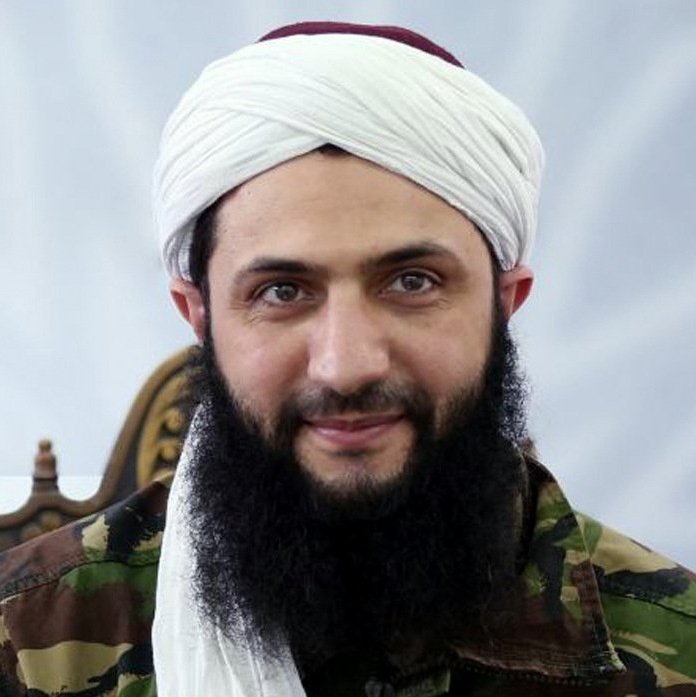
For Syria, the lifting of sanctions could unlock Gulf investment and US business opportunities, potentially transforming its war-torn economy.
Sharaa’s vision of Syria as a trade hub, akin to Qatar or the UAE, aligns with Trump’s emphasis on “commerce, not chaos.”
However, the push for Syria to join the Abraham Accords—already signed by the UAE, Bahrain, Morocco, and Sudan—introduces a new variable in the Middle East’s geopolitical chessboard, particularly for Iran and its regional allies.
Iran’s Diminishing Leverage
Iran, a long-standing ally of the Assad regime, faces a strategic setback with Syria’s pivot.
Tehran’s influence in Syria, bolstered by military and economic support during the civil war, is at risk as Gulf states and the US seek to pull Damascus away from Iran’s orbit.
The Abraham Accords, if extended to Syria, would further isolate Iran, aligning another Arab state with Israel, its regional adversary. Trump’s simultaneous offer of an “olive branch” to Iran—contingent on halting support for proxies like Hezbollah and limiting its nuclear programme—underscores a broader US strategy to weaken Iran’s regional clout.
For Iran, losing Syria as a key ally could disrupt its “Axis of Resistance,” which includes Hezbollah and other proxies.
The prospect of a Syria-Israel normalisation deal, even if preliminary, threatens Iran’s ability to project power through Damascus. Moreover, Trump’s reported demands for Syria to expel foreign fighters and assume control of ISIS detention centres signal a US intent to curb Iran’s military presence in the region
India’s Strategic Tightrope
India, with its deep economic and strategic ties to Iran, faces a complex scenario.
New Delhi has invested heavily in Iran’s Chabahar port, a cornerstone of its connectivity strategy to access Afghanistan and Central Asia while bypassing Pakistan.
The port, part of the International North-South Transport Corridor (INSTC), is critical for India’s trade ambitions. In 2024, India signed a 10-year agreement to operate Chabahar, committing $370 million to its development. Any escalation in US-Iran tensions, potentially exacerbated by Syria’s realignment, could lead to tighter sanctions on Iran, complicating India’s operations at Chabahar.
Conversely, India enjoys robust relations with the Gulf states, particularly Saudi Arabia and the UAE, both key players in the Abraham Accords and supporters of Syria’s new direction.
The India-Middle East-Europe Economic Corridor (IMEC), launched in 2023, reveals India’s growing economic alignment with the Gulf and Israel. Saudi Arabia’s $600 billion investment commitment to the US and its $142 billion arms deal, announced during Trump’s visit, highlight the Gulf’s economic clout, which India cannot ignore.
A Syria aligned with the Abraham Accords could enhance the IMEC’s prospects by stabilising a critical regional node, potentially benefiting India’s trade routes.
However, this comes at the cost of straining Iran-India relations.
Tehran, already wary of India’s warming ties with Israel and the Gulf, may view New Delhi’s silence or tacit support for Syria’s shift as a betrayal.
Iranian state media has already called Trump’s overtures “deceitful,” reflecting Tehran’s sensitivity to regional realignments.
Balancing Act or Breaking Point?
India has historically navigated its relations with Iran and the Gulf through strategic ambiguity, maintaining ties with both without fully committing to either camp.
Trump’s Syria policy, however, may force New Delhi to clarify its stance.
If US sanctions on Iran tighten in response to Tehran’s refusal to negotiate, India could face pressure to scale back its Chabahar operations, risking economic losses and strained ties with Iran. Conversely, endorsing a Syria-Israel deal could bolster India’s standing with the US, Saudi Arabia, and Israel, aligning with its broader geopolitical ambitions.
Regional and Global Implications
The broader implications of Trump’s policy extend beyond Iran and India.
A Syria integrated into the Abraham Accords could reduce Russian and Chinese influence in the region, as both have sought to fill the vacuum left by Assad’s fall.
For India, this aligns with its goal of countering China’s Belt and Road Initiative, but it risks alienating Iran, a key partner in its anti-China strategy in Central Asia.
Moreover, Israel’s opposition to lifting sanctions on Syria, driven by concerns over Sharaa’s past and potential threats, adds another layer of complexity.
Prime Minister Benjamin Netanyahu’s reported request to maintain sanctions highlights tensions in US-Israel relations, which could indirectly affect India’s ties with Israel.
What’s Next?
The lifting of sanctions and Syria’s potential entry into the Abraham Accords are not immediate game-changers but signal a long-term US strategy to reshape the Middle East.
In fact, it is still a far-fetched idea.
For Iran-India relations, the immediate risk lies in heightened US-Iran tensions, which could disrupt India’s Chabahar project and strain diplomatic ties.
However, India’s strong relations with the Gulf and its growing partnership with Israel provide a buffer, allowing New Delhi to hedge its bets.
As Trump’s Middle East tour continues, with stops in Qatar and the UAE, the focus will remain on deal-making and regional stability.
For India, the challenge will be to maintain its strategic autonomy while navigating a region increasingly polarised between US-aligned states and Iran.
The coming months will test New Delhi’s diplomatic agility as it seeks to preserve its interests in a rapidly evolving Middle East.




Leave a reply to Kalarickal Fabian Cancel reply